Quick answer
Yes, you can safely layer a flatwoven rug over wall-to-wall carpet, but you need the right rug pad and a careful placement strategy. Use a thin, non-slip rug pad designed for carpet-to-rug grip, and avoid thick or rubber-backed pads that can damage carpet fibers. Position the rug away from high-traffic edges and vacuum regularly to keep both layers flat.
Why layering over carpet needs a different approach
Layering a rug over wall-to-wall carpet is a popular way to define a seating area, add color, or protect high-wear zones like hallways. But the same rug pad that works on hardwood can cause bunching or indentation on carpet. The key is to choose a pad that grips the rug without shifting the carpet underneath. Flatwoven rugs, which are thinner and more flexible, are especially good candidates because they lie close to the floor and don't create a tripping hazard at the edges.
What to look for in a rug pad for carpet
Most standard rug pads are designed for hard floors and use rubber or latex that can discolor or crush carpet fibers. For layering over carpet, look for a pad labeled "carpet-to-carpet" or "carpet-safe." These are usually made from a thin felt or a non-slip mesh that grips the rug without adhesive residue. Avoid any pad thicker than 1/4 inch, as it can create a bumpy surface and make the rug slide more.
Step-by-step: Layering a flatwoven rug over carpet
- Choose a carpet-safe rug pad: Select a thin, non-slip pad specifically made for use over carpet. Avoid rubber or latex pads that can damage carpet fibers. Cut the pad to be about 1 inch smaller than the rug on all sides so it doesn't show at the edges. Common mistake: using a thick pad meant for hard floors. This can cause the rug to bunch and the carpet to mat.
- Vacuum and flatten the carpet first: Thoroughly vacuum the area where you'll place the rug, especially if the carpet has deep pile. Use a carpet rake or your hand to lift and separate the fibers so they lie evenly. Any bumps or wrinkles in the carpet will transfer to the rug. Checkpoint: run your hand over the carpet. If you feel any ridges, they'll show through the rug.
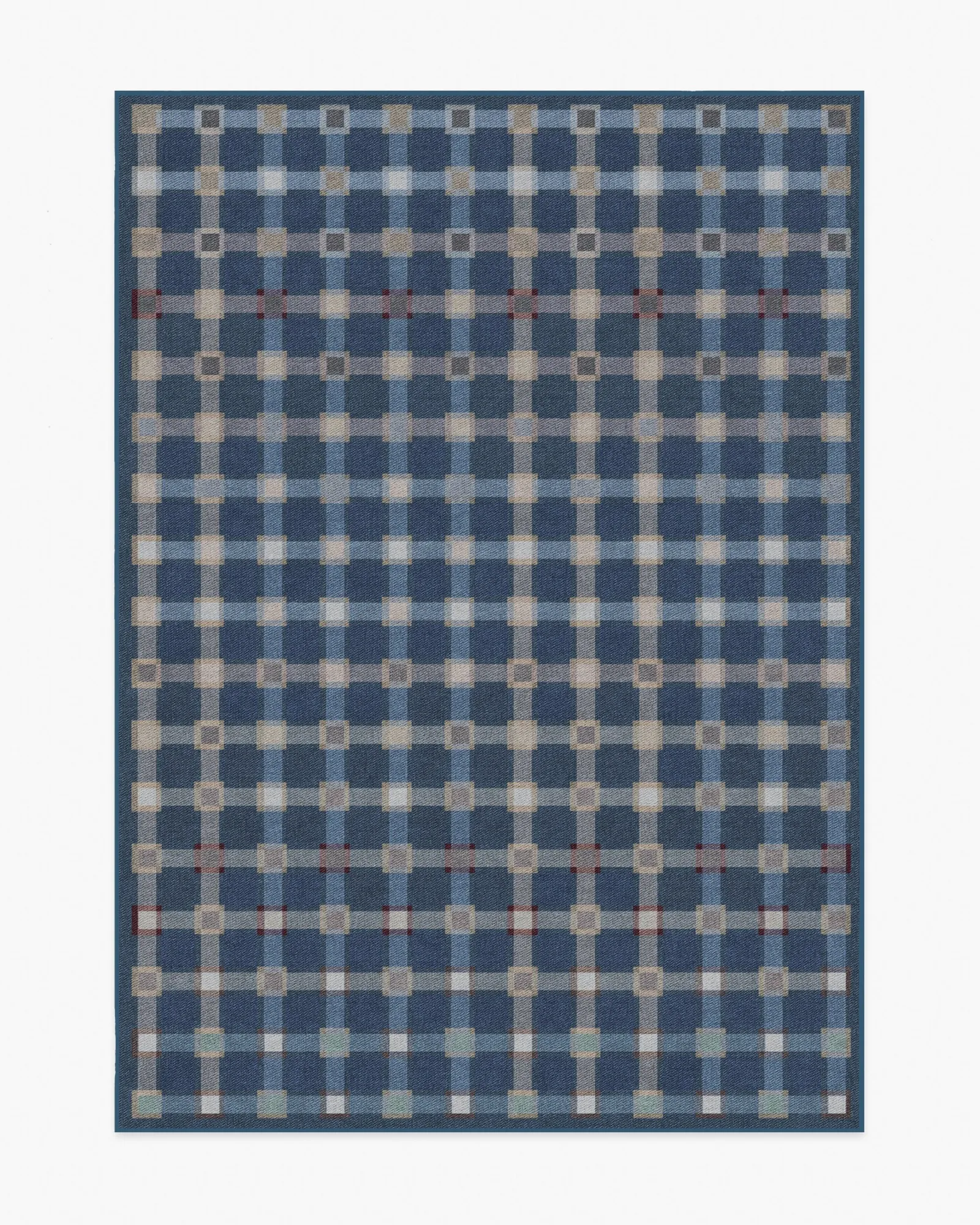
- Position the rug pad and rug together: Lay the pad on the carpet, then place the rug on top. For a flatwoven rug like the Pierre Navy or Maja Navy, smooth it from the center outward to remove any air pockets. The rug's own weight and the pad's grip should hold it in place. Common mistake: placing the rug too close to a doorway or high-traffic path. The edge can catch and curl.
- Let the rug settle for 24 hours: After positioning, allow the rug to sit undisturbed for a day. This gives the fibers time to relax and the pad to bond with the carpet. If you notice any curling at the edges, place a heavy book or furniture leg on the corner for a few hours. Checkpoint: after 24 hours, walk on the rug. If it still shifts, the pad may be too thick or the carpet pile too long.
- Vacuum both layers regularly: Vacuum the rug and the exposed carpet around it at least once a week. Use a suction-only setting on the rug to avoid pulling the fibers. This prevents dirt from building up between the layers, which can cause the rug to slide. Common mistake: neglecting to vacuum under the rug. Dirt and dust trapped between layers can wear down both the rug and the carpet.
Rugs that work well for layering
- Pierre Navy Flatwoven Rug: Light, structured, and serene. The Pierre Navy Rug layers light blue motifs over a deep navy ground, forming a classic grid of thin lines. Water-resistant, stain-resistant, and fully machine-washable. The thin, flatwoven construction of this rug makes it ideal for layering over carpet because it won't create a bulky edge. Its water-resistant backing also helps it stay put without a heavy pad.
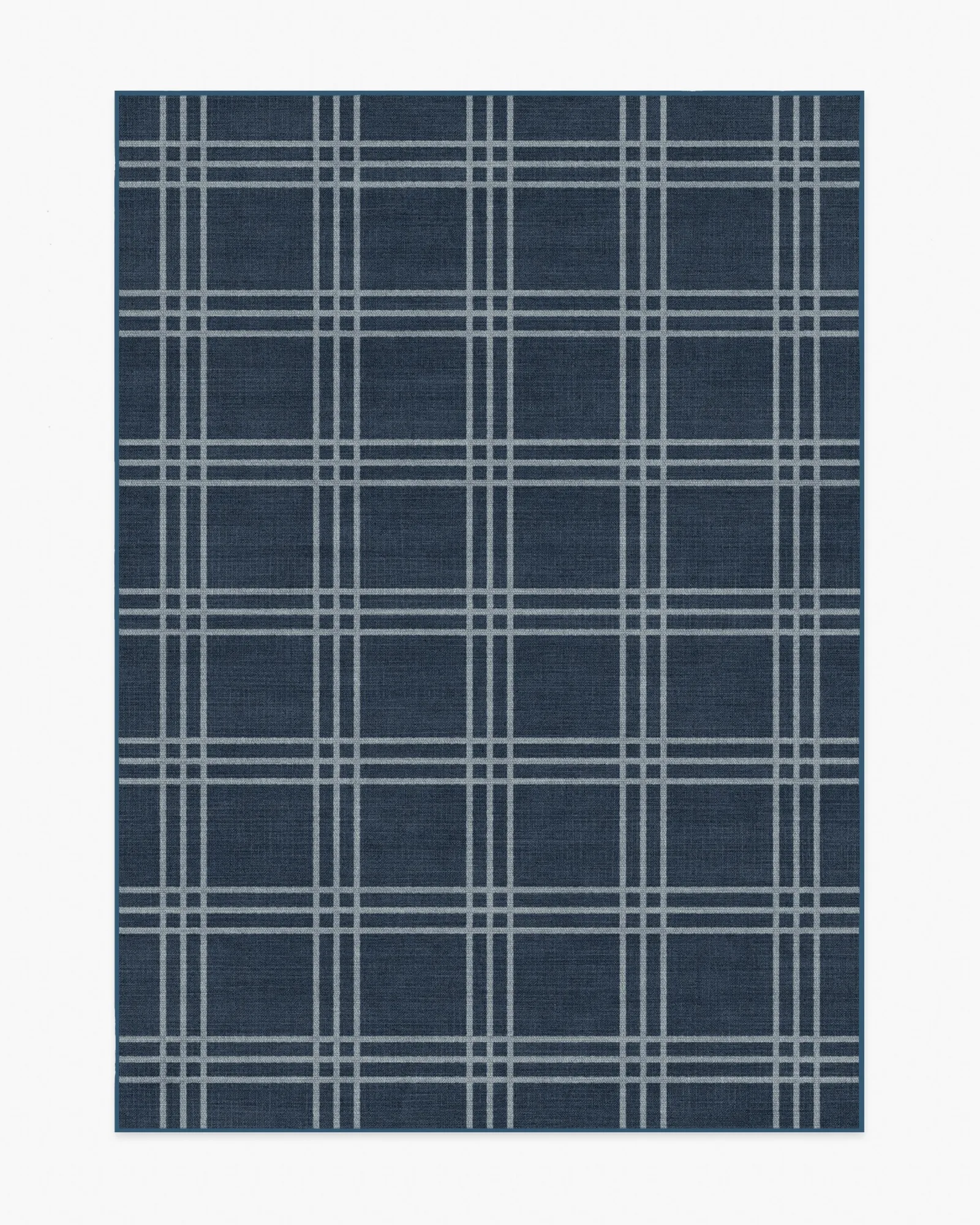
Pierre Navy Rug
- Maja Navy Multicolor Flatwoven Rug: The Maja Navy Multicolor Rug features a geometric pattern of overlapping squares and thick lines. Water-resistant, stain-resistant, and fully machine-washable. The geometric pattern helps hide any slight shifting that can happen with rug-on-carpet layering, and the flatwoven design keeps the profile low.