Quick answer
Apply scalp serum after shampooing and conditioning, not before. Shampoo removes buildup and preps the scalp; serum delivers actives that would otherwise be rinsed away. If you use a scalp soak, do that before shampoo. Leave serum in—do not rinse it out.
Why order matters more than you think
Shampoo is a cleanser. Its job is to lift oil, dead skin, and mineral residue so the scalp is a clean canvas. Serum is a leave-on treatment. Its job is to stay put and deliver ingredients over hours, not minutes. If you apply serum before shampoo, you wash away the very actives you paid for. If you apply serum to a scalp still coated in conditioner or styling product, it sits on top of the film instead of reaching skin.
This is especially true with water-triggered concerns. Minerals like calcium and magnesium can bond to the scalp and hair, making it harder for treatment ingredients to penetrate. A clean, mineral-neutralised base gives any serum a better chance to work. That is the logic behind using a dedicated scalp soak or a shampoo formulated to address water minerals before you apply a leave-on serum.
What changes when you use a scalp soak
A scalp soak is a pre-shampoo step. It is designed to loosen flakes and buildup so shampoo can rinse them away more easily. If you use a soak, apply it to a dry or damp scalp before you wet your hair in the shower, leave it on for the time stated on the label, then shampoo as usual. Do not skip shampoo after a soak unless the instructions say otherwise—some formulas leave a residue that can interfere with serum absorption.
Soaks are not daily treatments for most people. Once or twice a week is enough for maintenance. If your scalp is very oily or you use a lot of styling product, you may need it more often; if your scalp is dry or sensitive, less. Watch how your scalp feels after each use and adjust.
How to apply serum so it actually reaches your scalp
Most people apply serum to their hair, not their scalp. That is the most common mistake. Part your hair in sections—four to six parts is usually enough—and apply the serum directly to the skin along each part. Use the dropper or nozzle to place small drops, then press and massage with your fingertips. Do not rub vigorously; you are spreading the product, not stimulating blood flow.
The amount matters less than the coverage. A few drops per section is typical, but follow the product instructions. If your scalp is very dry, you might be tempted to use more, but excess serum can leave a film that attracts dirt and makes your next wash less effective. Start with the recommended amount and adjust only if your scalp still feels tight or flaky after a week.
Timing: morning vs. night
Night is usually better because you are not layering other products on top, and the serum has hours to absorb while you sleep. If you wash your hair in the morning, apply serum right after and let it dry before styling. If you use a leave-in conditioner or heat protectant, apply serum first, wait a minute, then apply the other products—but keep them off your scalp where possible.
One exception: if your serum makes your scalp feel greasy or you sweat a lot at night, switch to morning application. The goal is consistency, not perfection. A routine you actually follow beats an ideal routine you skip.
Step-by-step scalp serum routine
- 1. Pre-treatment (optional): scalp soak: On dry or damp hair, apply a scalp soak directly to the scalp. Massage gently and leave on for the time stated on the label. Common mistake: treating the soak as a shampoo and skipping the wash after. Checkpoint: your scalp should feel clean but not tight before you move on. Use once or twice a week, or as needed for flaky, buildup-prone scalps.
- 2. Cleanse: shampoo: Wet your hair thoroughly, then apply shampoo to your scalp—not your ends. Massage with fingertips for 30–60 seconds, then rinse. If you use conditioner, apply it to mid-lengths and ends only, avoiding the scalp. Common mistake: using too much shampoo or scrubbing with nails, which can irritate the scalp. Checkpoint: your scalp should feel clean and free of residue, not squeaky or stripped. Rinse until the water runs clear; leftover shampoo can block serum absorption.
- 3. Treat: scalp serum: Towel-dry your hair gently. Part your hair in sections and apply serum directly to the scalp along each part. Use the recommended amount—usually a few drops per section—and press it in with your fingertips. Do not rinse. Common mistake: applying serum to your hair instead of your scalp, or using so much that it leaves a greasy film. Checkpoint: your scalp should feel damp, not dripping. Leave the serum in. If you use other leave-in products, apply them after the serum and keep them off your scalp.
- 4. Style and repeat: Style as usual, but avoid heat tools directly on the scalp. Repeat this routine according to the serum instructions—typically daily or every other day. Common mistake: skipping days because you do not see immediate results. Checkpoint: give any new routine at least four weeks before judging results, and adjust frequency based on how your scalp feels. Consistency matters more than the number of products you use.
Products that fit this routine
- Fresh Start Anti-Dandruff Scalp Serum: Fresh Start Anti-Dandruff Scalp Serum is a lightweight serum with exfoliating salicylic acid and mineral-neutralising Klean ComplexTM. Salicylic acid helps lift flakes, while Klean ComplexTM targets minerals in water that can irritate the scalp. Apply after shampooing and leave it in.
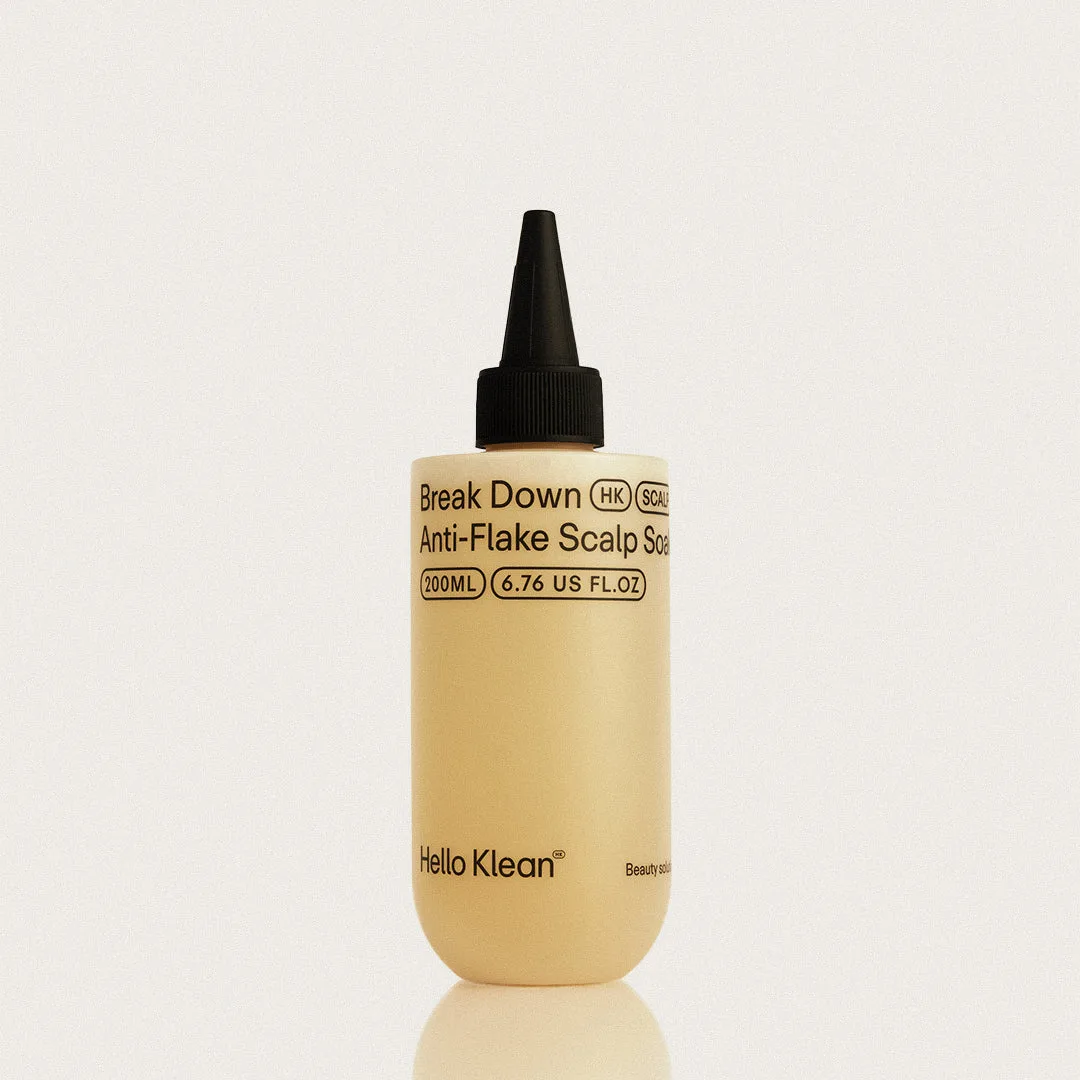
- Break Down Anti-Flake Scalp Soak: Break Down Anti-Flake Scalp Soak is a gentle, low-foam clarifying treatment that clears buildup without leaving the scalp tight. Use this as a pre-shampoo step once or twice a week to remove flakes and product residue so your serum can absorb better.