Quick answer
Start with a breathable, thermoregulating base layer such as a cotton stretch V-neck t-shirt, add an insulating mid-layer, then a wind-resistant outer layer. Remove or add layers as your activity level changes to avoid sweating, which makes you colder when you stop moving.
Why layering works better than one thick shirt
A single heavy shirt traps heat but also traps moisture. When you move between a cold street and a heated shop or bus, that moisture stays against your skin and chills you. Layering lets you peel off one piece at a time so your body stays at a comfortable temperature without drastic swings.
The base layer is the most important piece because it touches your skin. It should move sweat away, dry quickly, and feel smooth under a mid-layer. A thermoregulating cotton blend is a good middle ground: it feels natural like cotton but manages moisture better than a standard cotton tee.
Choose the right base layer for your activity
For low-activity days like commuting or walking, a cotton-rich base layer is comfortable and breathable. For higher activity like hiking or cycling, a synthetic or wool blend may dry faster. If you tend to overheat indoors, a V-neck gives you ventilation without exposing your chest to cold air when you add a scarf or zip-up.
Fit matters as much as fabric. A base layer should sit close to the body without squeezing. If it bunches under your arms or rides up, it will create cold spots and rub when you move.
Build the mid and outer layers around your base
The mid-layer traps warmth. A fleece, thin sweater, or flannel shirt works well. It should be loose enough to slide over your base layer without pulling it out of place. The outer layer blocks wind and light rain. A shell jacket or a dense coat is enough for most winter days.
Avoid wearing a tight outer layer directly over a loose base layer. The friction can make the base ride up, and the compression reduces the insulating air gap between layers.
Adjust layers as your day changes
The biggest mistake in winter layering is keeping everything on all day. If you start sweating, remove your mid-layer or open your outer layer before you get damp. When you stop moving, add the mid-layer back on before you cool down.
Keep a lightweight bag or backpack so you can store removed layers instead of carrying them. This makes it easier to adjust quickly and keeps your hands free.
Step-by-step layering for cold weather
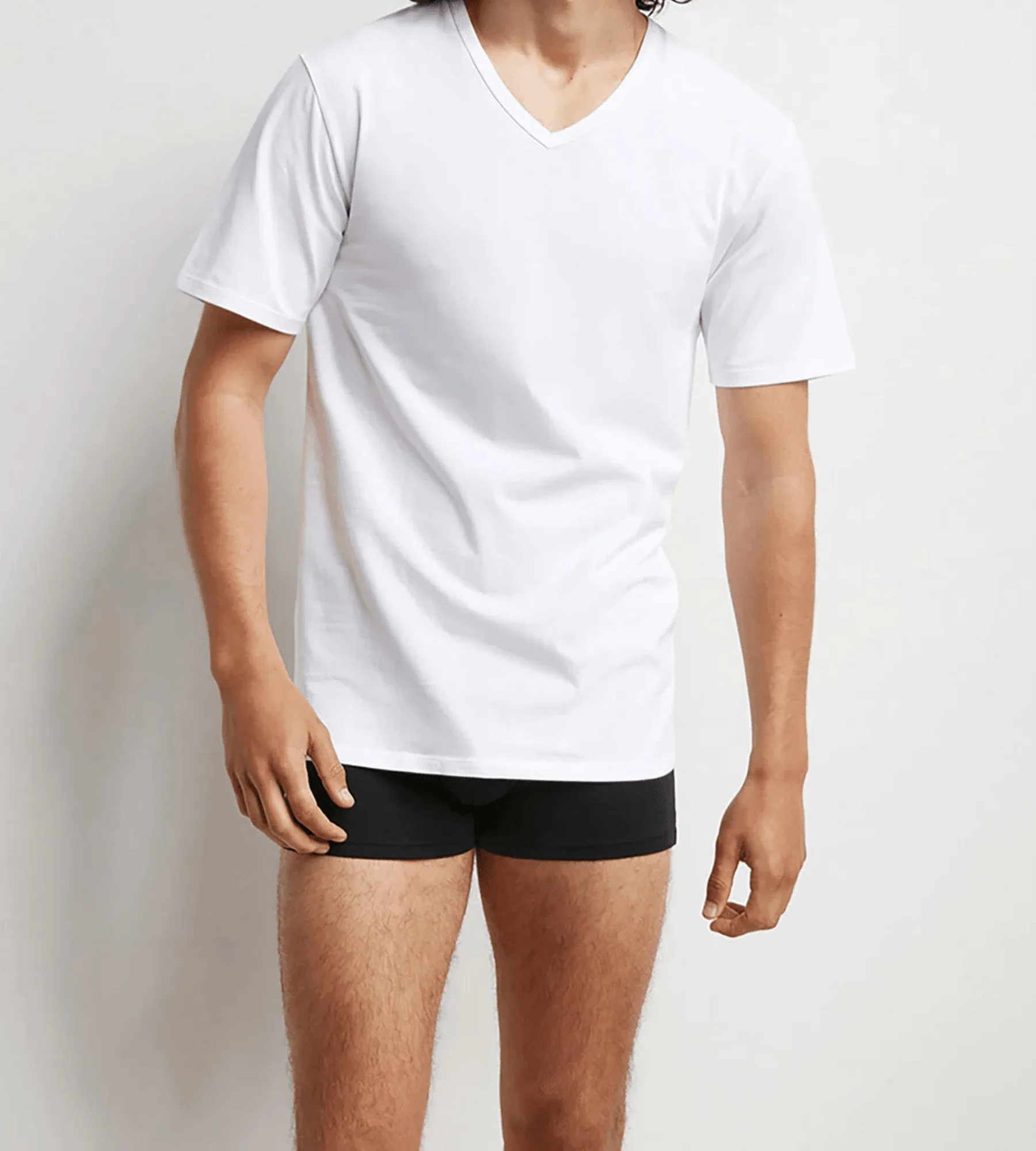
- Start with a clean, dry base layer: Put on a thermoregulating t-shirt like the DIM Regul Activ V-neck. Make sure it fits close to the body without being tight. Checkpoint: the shirt should lie flat under your arms and not bunch at the waist.
- Add a mid-layer for insulation: Choose a fleece, thin sweater, or flannel shirt. It should be easy to remove without taking off your outer layer. Mistake to avoid: wearing a mid-layer so thick that you sweat as soon as you go indoors.
- Put on a wind-resistant outer layer: A shell jacket or dense coat blocks wind and light rain. Leave it slightly open if you are active. Checkpoint: you should be able to zip or button it without compressing the layers underneath.
- Adjust as you go: Remove your mid-layer or open your outer layer before you start sweating. Add layers back when you stop moving. Next step: carry a small bag so you can store layers when you take them off.
Product facts to consider
- Lot de 2 Tshirts homme thermorégulateur en coton blanc col V Regul Activ: Lot de 2 Tshirts homme thermorégulateur en coton blanc col V Regul Activ: cotton stretch thermoregulating fabric, V-neck, lightweight and quick-drying. A breathable V-neck base layer that helps regulate temperature and dries quickly, so you stay dry when moving between cold and warm environments.