Quick answer
Load 120 film in dim, indirect light: drop the supply spool into the feed chamber, thread the paper leader into the take-up spool slot, turn the wind crank until the start arrow lines up with the camera's mark, then close the back and advance to frame one. The two failures that ruin most rolls are loading in direct sun and stopping the leader short of the alignment mark.
Why 120 loading goes wrong more often than 35mm
120 film has no cassette and no leader tongue. The roll is held only by backing paper, so the entire load happens with the emulsion exposed to whatever light is in the room. That is why medium format film loading punishes bright conditions far more than 35mm does. The paper is also wider and floppier, so it is easier to misalign in the take-up slot or let the spool slip out of its chamber while you are threading.
A second difference is the start mark. On 35mm the camera grabs the leader automatically. On 120 you must visually align the manufacturer's arrow or 'START' text with a mark inside the film gate or on the camera body. If you overshoot or undershoot, the first frame can overlap the paper edge or the camera can refuse to fire because the counter never engages.
Set up before the spool leaves the foil
Work at a table, not standing in a doorway. Open the camera back, remove the insert or magazine if your model uses one, and confirm the take-up spool is empty and clean. Check that the pressure plate and rollers are free of grit, because a single grain of sand will scratch every frame on the roll. If your camera has a removable back, load the insert on the table and then seat the whole assembly, which keeps the spools from shifting mid-thread.
Have your next roll and a changing bag within reach. If the load goes wrong halfway, you want to be able to seal the film rather than stand there deciding what to do with an open roll.
Loading steps, in order
- 1. Move out of direct light: Stand in shade, indoors, or under a jacket. 120 backing paper blocks light for the wound portion of the roll, but the exposed tail and the first few inches are vulnerable while you thread. Checkpoint: if you can see a hard shadow on the film, you are in the wrong place.
- 2. Seat the supply spool in the feed chamber: Drop the full spool into the feed side with the leader peeling off toward the take-up side. Confirm both spool ends sit fully in their retainers so the roll cannot rock. Mistake to avoid: a spool that is only half-seated will pop out when you close the back and fog the roll.
- 3. Slot the leader into the take-up spool: Feed the tapered paper leader into the slot on the empty take-up spool. Push it through until a short tab emerges, then fold or hook it so it cannot pull back out under tension. Checkpoint: give a gentle tug. If the leader slides free, reseat it before winding.
- 4. Wind until the start mark aligns: Turn the winding crank slowly and watch for the arrow or START marking printed on the backing paper. Stop when it lines up with the index mark inside the camera, not when it merely appears in the gate. Mistake to avoid: overshooting the mark wastes the first frame and can cause uneven frame spacing for the rest of the roll.
- 5. Close the back and check tension: Snap or latch the back firmly, then advance to frame one using the normal stroke. The crank should feel even resistance, not slack or grinding. Checkpoint: a loose, spinning crank usually means the leader slipped out of the take-up slot.
- 6. Confirm the counter engaged before shooting: Look for frame 1 on the counter or red window. If the camera will not fire, the start mark was likely missed and the mechanism has not registered the roll. Next step: if the counter never moves, open the back in shade and repeat from step 3 rather than forcing the shutter.
Film and gear notes
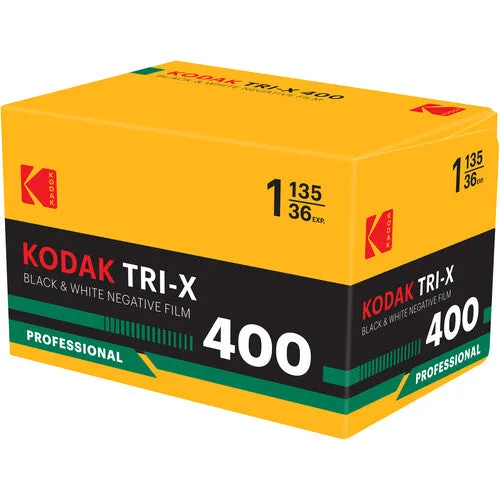
- Eastman Kodak Professional Tri-X 400 Black and White Negative Film (35mm Roll Film, 36 Exposures): Eastman Kodak Professional Tri-X 400 is a black and white negative film supplied as 35mm roll film with 36 exposures, part of Kodak's Professional line. Useful if you shoot 35mm alongside medium format and want one familiar black and white emulsion for both, though the loading process described here applies to 120 spools rather than this 35mm format.