Quick Answer
After a wet ride, rinse off grit, dry the bike, clean and relube the drivetrain, and apply a protective coating to keep your bike looking and performing its best.
Why Wet-Ride Maintenance Matters
Rainwater mixes with road grime and grit to form an abrasive slurry that accelerates wear on your chain, cassette, and derailleur pulleys. Moisture also seeps into cable housings, bearings, and suspension seals, leading to corrosion and premature failure. A quick post-ride routine prevents these issues and keeps your bike shifting smoothly and braking reliably.
The key is to act before the grime dries. Wet dirt is easier to rinse off than baked-on mud, and a dry chain left with moisture will rust within hours. Even if you plan to ride again the next day, a five-minute rinse and wipe-down buys you long-term durability.
Choosing the Right Products for the Job
Not all bike cleaners are equal. A dedicated bike cleaner uses a pH-neutral or nano-tech formula that lifts grease without stripping factory lubricants or damaging seals. For example, the Muc-Off Clean, Protect, Dry Lube Bundle includes a nano-tech bike cleaner that cuts through grime quickly, a protective spray to shield paint and components, and a dry lube formulated for clean, efficient drivetrains in wet conditions.
For long-term protection, consider a ceramic coating. The Muc-Off Ceramic Protection Kit creates a durable, silicon-infused hydrophobic layer that bonds to your paintwork, making future cleaning much easier and keeping your bike looking newer longer.
Post-Wet-Ride Maintenance Steps
- Rinse the bike with low-pressure water: Use a gentle spray from a hose or a bucket of water to remove loose mud and grit. Avoid high-pressure washers, as they can force water into bearings and seals. Start from the top and work down. Do not let mud dry on the frame—rinse immediately after the ride.
- Clean the drivetrain: Apply a bike-specific cleaner (like the one in the Muc-Off bundle) to the chain, cassette, and derailleurs. Use a brush to scrub each link and the sprocket spaces. Rinse thoroughly with low-pressure water. A common mistake is using degreaser every time—it strips needed lubricant. Use a gentle cleaner unless the drivetrain is heavily greasy.
- Dry the bike completely: Wipe down the frame, wheels, and components with a clean microfiber cloth. Pay special attention to the chain, brake rotors, and suspension stanchions. Let the bike air-dry for a few minutes in a ventilated area. Leaving moisture on the chain is the fastest route to rust. Dry it thoroughly before lubing.
- Lubricate the chain: Apply a wet-weather or dry lube (depending on conditions) to each chain link while rotating the pedals backward. Wipe off excess lube with a rag after a minute to prevent attracting dirt. Too much lube is worse than too little—excess lube collects grit and accelerates wear.
- Apply a protective coating to the frame: If you have a ceramic coating kit, follow the instructions to apply a hydrophobic layer to the paintwork. This step is optional but highly recommended for riders who frequently ride in wet conditions. Ceramic coatings need a clean, dry surface to bond properly. Apply only after the bike is fully clean and dry.
Products That Help
-
Muc-Off Clean, Protect, Dry Lube Bundle: This bundle includes Muc-Off's Nano Tech bike cleaner, a protectant spray, and a dry lube. It covers the three essential stages of post-ride care—clean, protect, lube—in one convenient package, saving you time and ensuring you have the right product for each step.
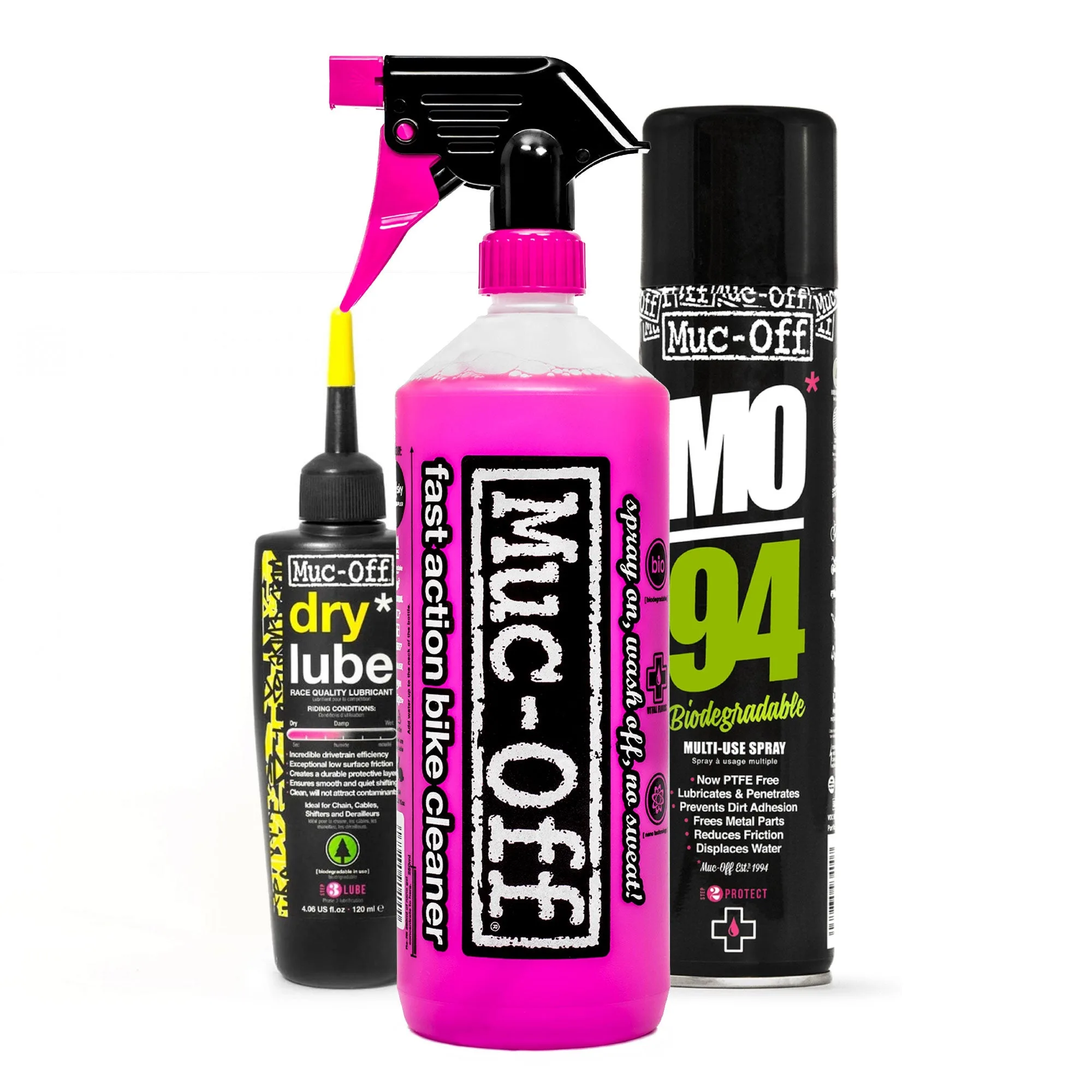
Muc-Off Clean, Protect, Dry Lube Bundle
-
Muc-off Ceramic Protection Kit: The ceramic coating is a silicon-infused protective layer that chemically bonds to paintwork, creating a hydrophobic surface that sheds water and dirt. After a wet ride, a ceramic coating drastically reduces the time you spend cleaning because dirt and water slide off instead of sticking to the frame.
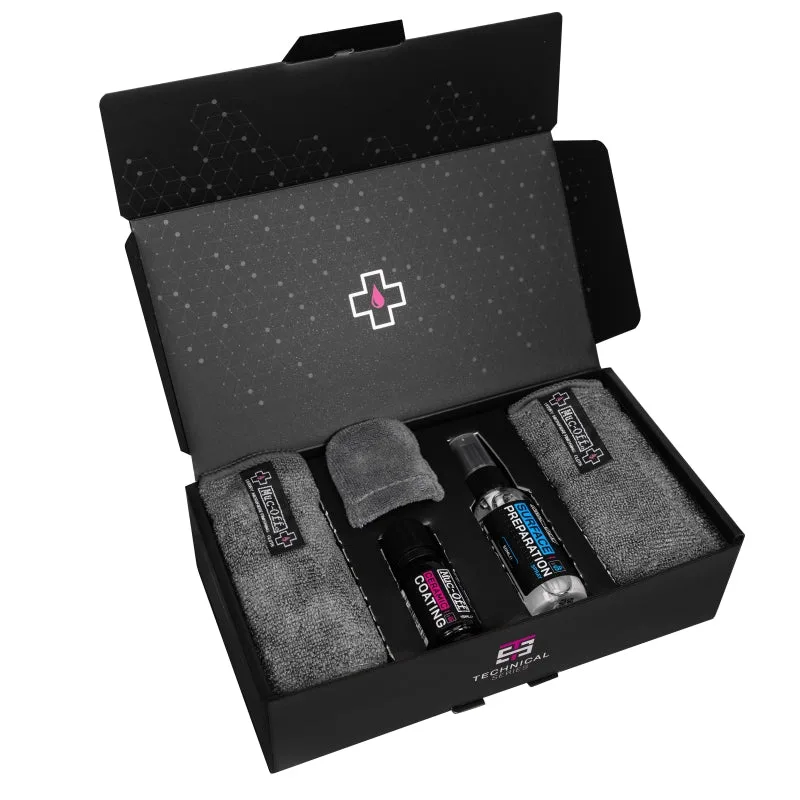
Muc-off Ceramic Protection Kit