Quick answer
Use a round, fully cooled country sourdough loaf with a firm crust. Cut a shallow lid, hollow the interior leaving a 1/2-inch shell, brush the inside with oil or butter, and toast it at 375°F for 8–10 minutes before filling. This prevents sogginess and keeps the bowl sturdy for soup or dip.
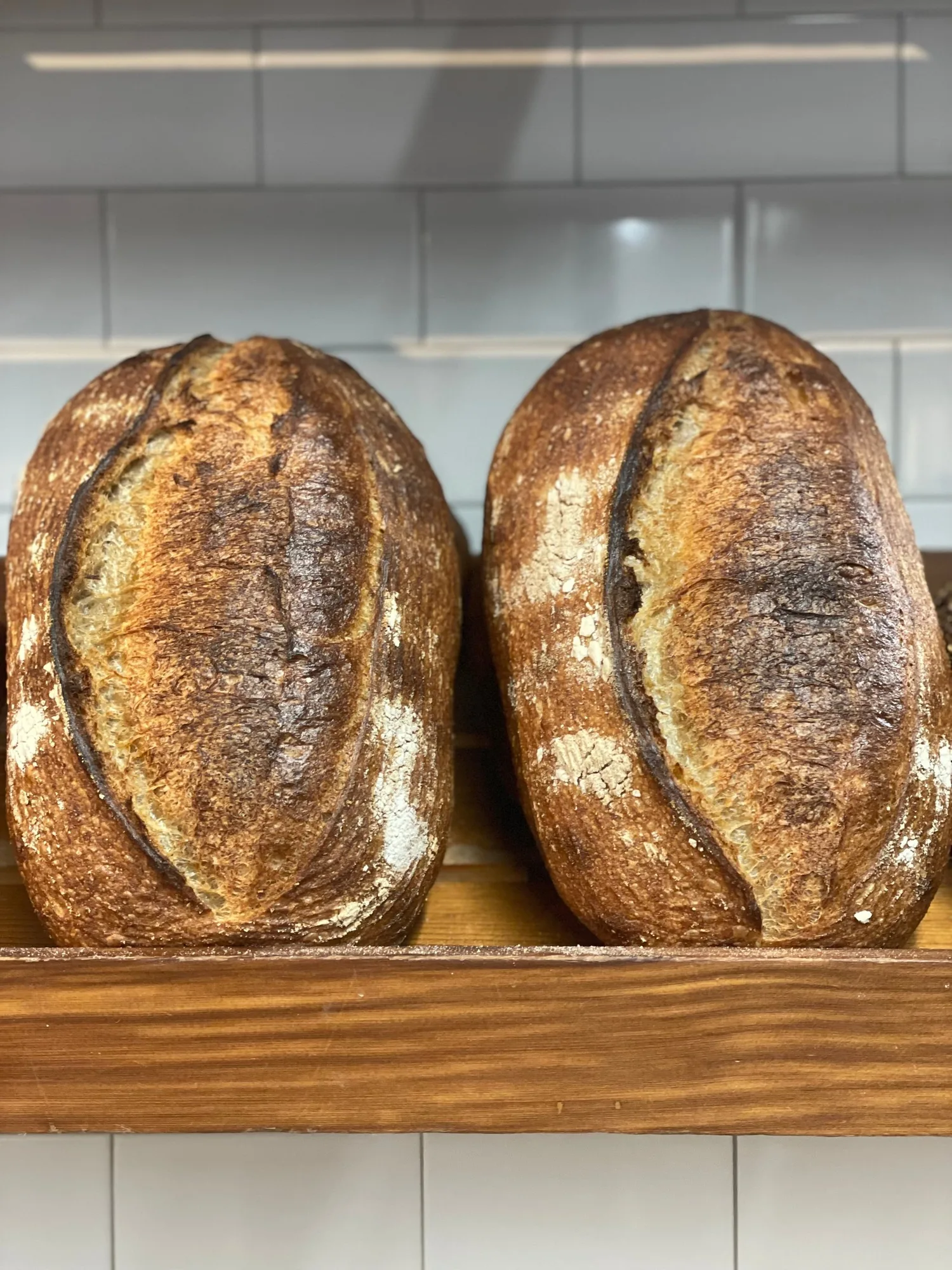
country sourdough
A sourdough bread bowl turns a simple soup or dip into a satisfying, edible centerpiece. The key is choosing the right loaf and treating the interior so it stays crisp under hot, wet fillings.
This guide walks through every step, from picking a round country sourdough to hollowing, toasting, and filling. You'll also find practical bread bowl ideas and a few common mistakes to avoid.
Why country sourdough works best for bread bowls
Country sourdough has a thick, dry crust and a tight crumb that holds up to moisture far better than soft sandwich bread or baguettes. Its natural acidity also adds flavor that complements creamy soups and savory dips. Look for a round loaf at least 4 inches tall and 6 inches wide so the walls are thick enough to support filling.
If you bake your own, choose a recipe with moderate hydration (around 70–75%) and bake it dark. A pale crust tends to soften too quickly. The same qualities that make a loaf good for slicing—strong gluten and a well-developed crust—make it ideal for hollowing.
- Avoid loaves with a soft, shiny crust; they collapse under hot soup.
- A slightly stale loaf (1–2 days old) actually hollows more cleanly than a fresh one.
How to hollow out a bread bowl without tearing it
Start by cutting a shallow circle on top, angling your knife inward like a lid. Remove the lid and set it aside. Use your fingers or a spoon to pull out the soft interior, working from the center outward. Stop when the shell is about 1/2 inch thick all around; any thinner and it may leak.
Resist the urge to dig too deep. A common mistake is hollowing until you see light through the bottom. Instead, leave a solid base. Save the torn bread pieces in a bowl—they make excellent croutons or dipping soldiers.
- A grapefruit spoon or serrated knife works well for delicate hollowing.
- If you accidentally poke a hole, patch it with a small piece of bread and a dab of butter before toasting.
Toasting the shell: the step that prevents sogginess
Brush the inside of the hollowed bowl (and the lid) with melted butter or olive oil. Place the bowl and lid cut-side up on a baking sheet and toast at 375°F for 8–10 minutes, until the interior feels dry and slightly crisp. This creates a moisture barrier so the bread doesn't turn to mush.
For extra protection, you can add a thin layer of cheese or a brush of egg wash before toasting, but it's not required. Let the toasted bowl cool for a few minutes before filling—hot bread absorbs liquid faster than cooled bread.
- Toast the lid alongside the bowl so it stays crisp for serving.
- If you're short on time, a quick 5-minute broil works, but watch it closely to avoid burning.
Filling and serving ideas for sourdough bowls
Thick, creamy soups like broccoli cheddar, potato leek, or chili are classic choices. For dips, spinach artichoke, buffalo chicken, or a warm cheese dip all work well. Fill the bowl just before serving—if it sits, the bread will start to soften. Place the filled bowl on a plate to catch drips.
For a party, set up a bread bowl bar with different fillings and let guests choose. You can also use smaller rolls for individual portions. The lid can be served on the side for dipping, or cut into strips for croutons.
- Avoid thin, broth-based soups; they soak through faster than creamy ones.
- If you're serving a hot dip, keep it warm in a chafing dish and refill the bread bowl as needed.
Step-by-step: making a sourdough bread bowl
- Choose and cool your loaf: Select a round country sourdough at least 6 inches wide. Let it cool completely if freshly baked—warm bread tears easily and steams when hollowed. Checkpoint: the crust should feel hard and sound hollow when tapped.
- Cut the lid: Use a serrated knife to cut a shallow circle on top, angling the blade inward. Lift off the lid and set aside. Mistake to avoid: cutting straight down, which creates a thin, weak rim.
- Hollow the interior: Pull out the soft crumb with your fingers or a spoon, leaving a 1/2-inch-thick shell. Stop before you reach the bottom crust. Checkpoint: you should see a solid base with no light shining through.
- Brush and toast: Brush the inside with melted butter or olive oil. Toast at 375°F for 8–10 minutes, until dry and crisp. Cool slightly before filling. Mistake to avoid: skipping the toast—it's the best defense against sogginess.
- Fill and serve: Ladle in hot soup or spoon in dip just before serving. Place on a plate to catch drips. Serve the lid on the side for dipping. Next step: enjoy immediately; leftovers can be torn into croutons.
Bakery and pantry items that help
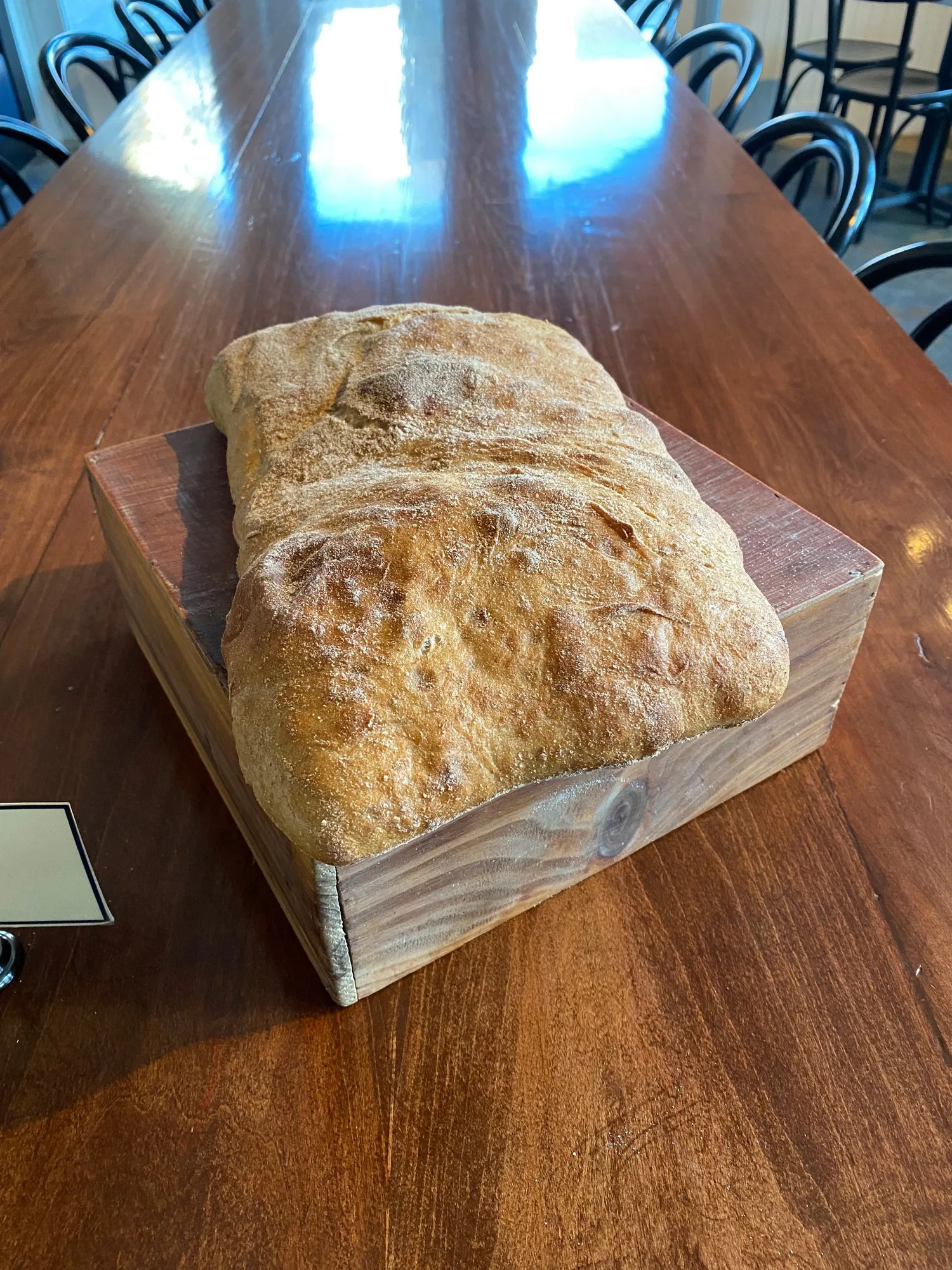
- Ciabatta: Ciabatta is a rustic loaf from Kneads • Bakery • Café • Mill, offered in the Breads & Buns category. The description notes a 90% extraction, a detail that speaks to how the flour is milled for this bread. If you prefer a slightly chewier, more open crumb, ciabatta can work as a bread bowl for thick dips, though its looser structure may absorb liquid faster than country sourdough.
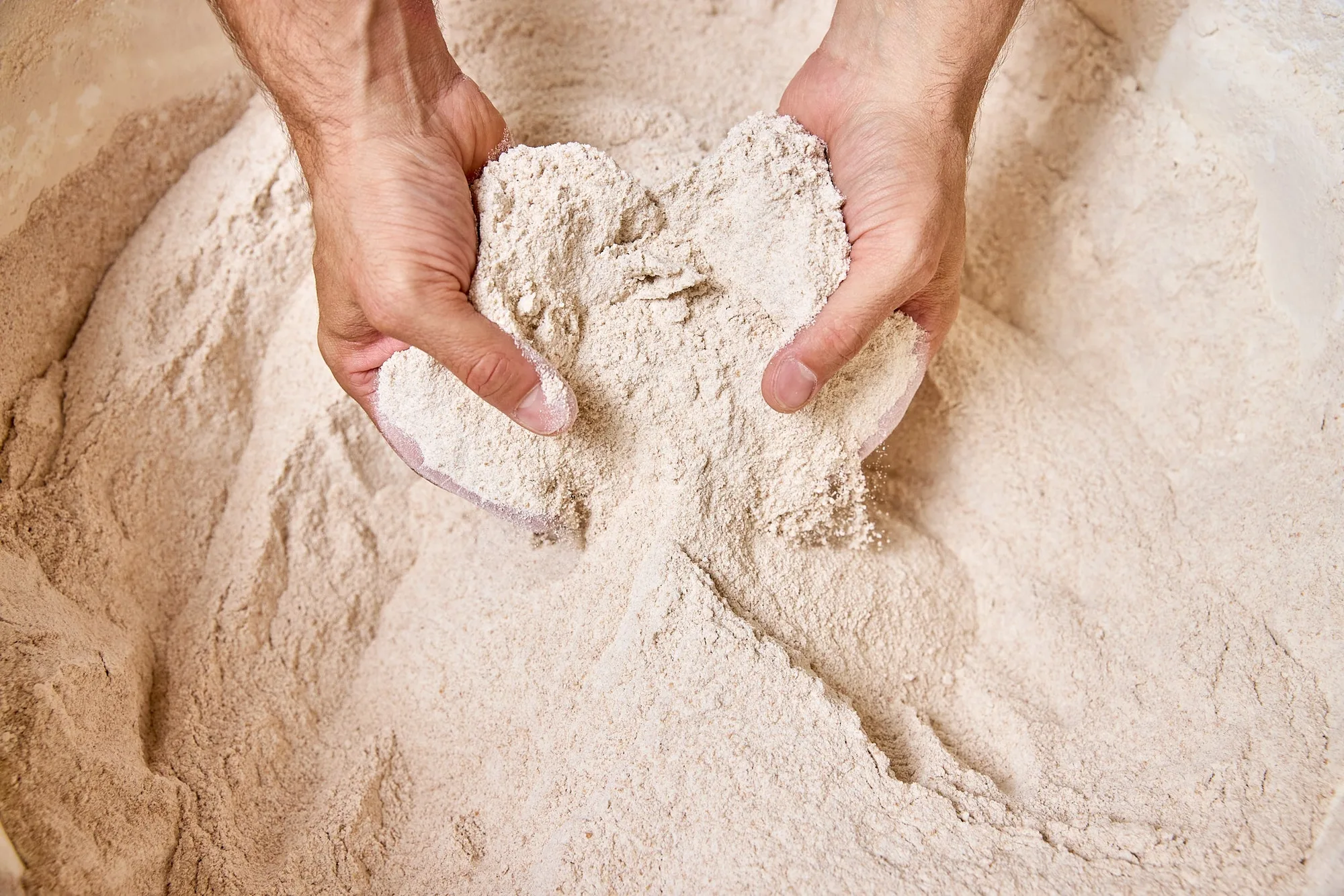
- Bulk Sifted Bread Flour Organic 25#: Bulk Sifted Bread Flour Organic 25# is freshly milled and sifted hard red spring wheat flour from Kneads • Bakery • Café • Mill, produced using the in-store New American Stone Mill. If you bake your own sourdough bowls, this flour gives you a consistent, sifted base for strong gluten development and a sturdy crust.
A sourdough bread bowl is easy to make once you know the right loaf and the toasting trick. Pick a sturdy country sourdough, hollow it carefully, and always toast before filling. Your soup or dip will stay hot and the bowl will stay crisp to the last bite.