Quick answer
Measure the width and depth of your entryway floor space, then subtract a few inches for clearance so the mat sits comfortably without blocking the door or catching on thresholds.
Why coir mats need a precise fit
Coir door mats are naturally stiff and thick, so they don’t bend to fit awkward spaces like softer mats do. A mat that’s too wide can catch under the door or push against a wall, while one that’s too small leaves dirt and moisture tracking past it. Measuring first saves you from returning a mat and keeps your entryway looking intentional.
Because coir is a natural fibre, it also holds its shape over time. That means the size you measure today is the size you’ll live with for years, so it’s worth getting it right rather than guessing.
What to measure beyond the floor
The floor is only part of the equation. You also need to account for the door swing, any threshold or step, and how much clear space you want around the mat. A mat that sits under a door that opens inward will need extra clearance so it doesn’t scrape or block the swing.
If your entryway has a recessed nook, measure the full recess width and depth, then subtract about 2 inches on each side so the mat fits comfortably without being wedged in.
How to measure your entryway for a coir mat
- Measure the width and depth of the floor space: Use a tape measure to find the width (left to right) and depth (front to back) of the area where you want the mat. Measure the actual floor, not the door frame or wall trim. Write down both numbers before you shop; don’t rely on memory.
- Check door swing and clearance: Stand back and watch how the door opens. If it swings inward, leave at least 2 inches between the mat and the door’s path so it doesn’t scrape. If the door opens outward, the mat should sit fully inside the door’s sweep. A common mistake is forgetting to account for the door swing, which can cause the mat to bunch or block the door.
- Subtract for a comfortable margin: Subtract 2 to 3 inches from your width and depth measurements. This gives a small gap on all sides, making the mat look intentional and preventing it from catching on walls or thresholds. If your space is between sizes, choose the smaller mat—coir doesn’t flex to fit.
- Consider the threshold and step height: Measure the height of any threshold or step. If it’s taller than the mat’s thickness, the mat can sit flush. If the threshold is lower, you may need a mat with a slimmer profile or a recessed area to avoid a tripping hazard. A mat that creates a lip can be a safety issue, so always check the height difference.
- Test the mat in place before committing: Once your mat arrives, place it in the entryway and walk through the door a few times. Make sure it doesn’t slide, catch, or block the door. If it moves, consider a non-slip underlay. This final check helps you confirm the fit before the mat becomes a permanent fixture.
Coir door mats that fit your entryway
-
Tangier Days Coir Door Mat: The Tangier Days Coir Door Mat uses natural coir fibres to trap dirt effectively. Once you’ve measured your space, this mat’s dense coir surface works hard to keep dirt from entering your home, so the fit matters for both looks and function.
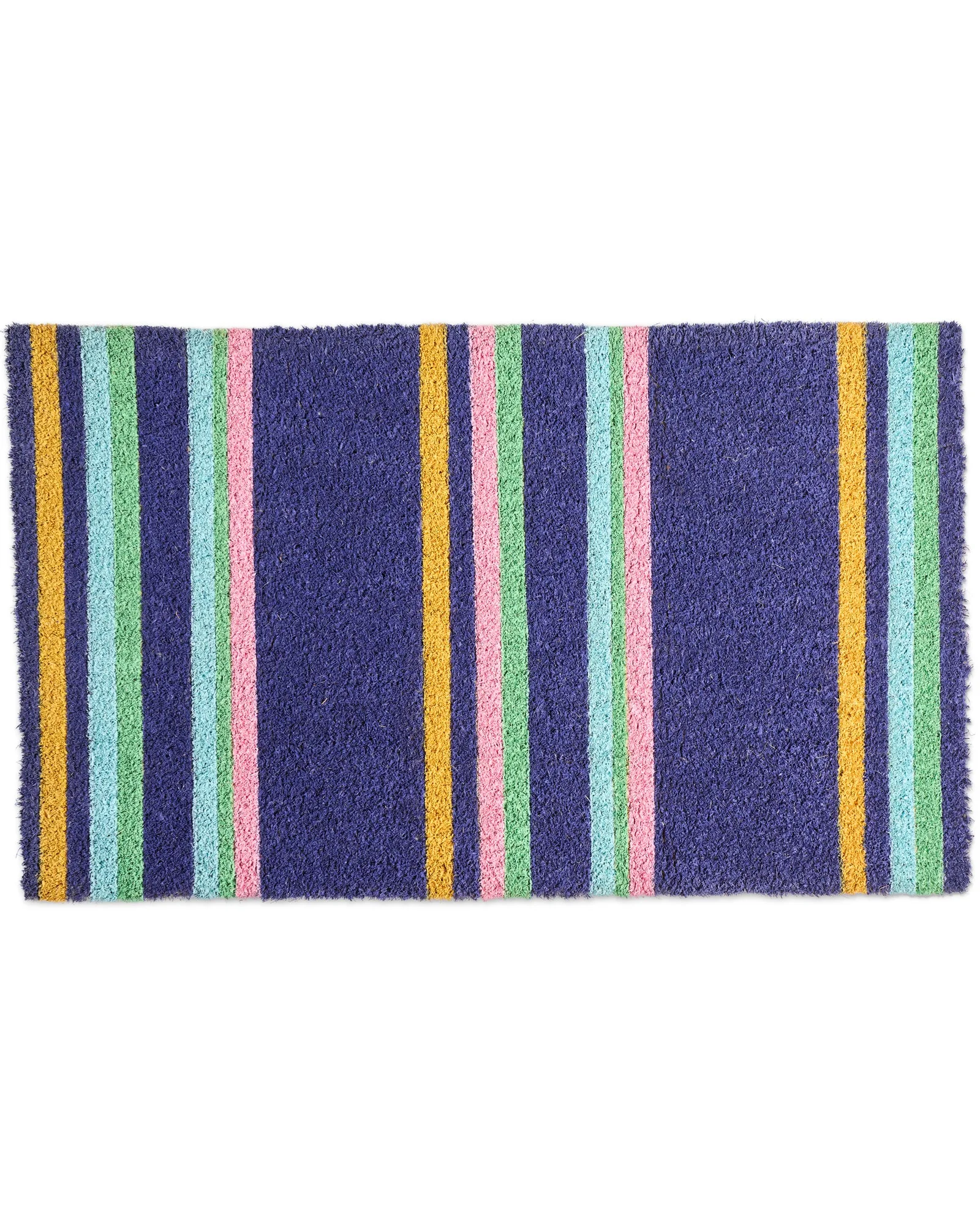
Tangier Days Coir Door Mat
-
Golden Peony Coir Door Mat: The Golden Peony Coir Door Mat is durable and suited to everyday foot traffic. A well-measured mat that takes daily use will keep its shape and colour, making it a long-lasting entryway addition.
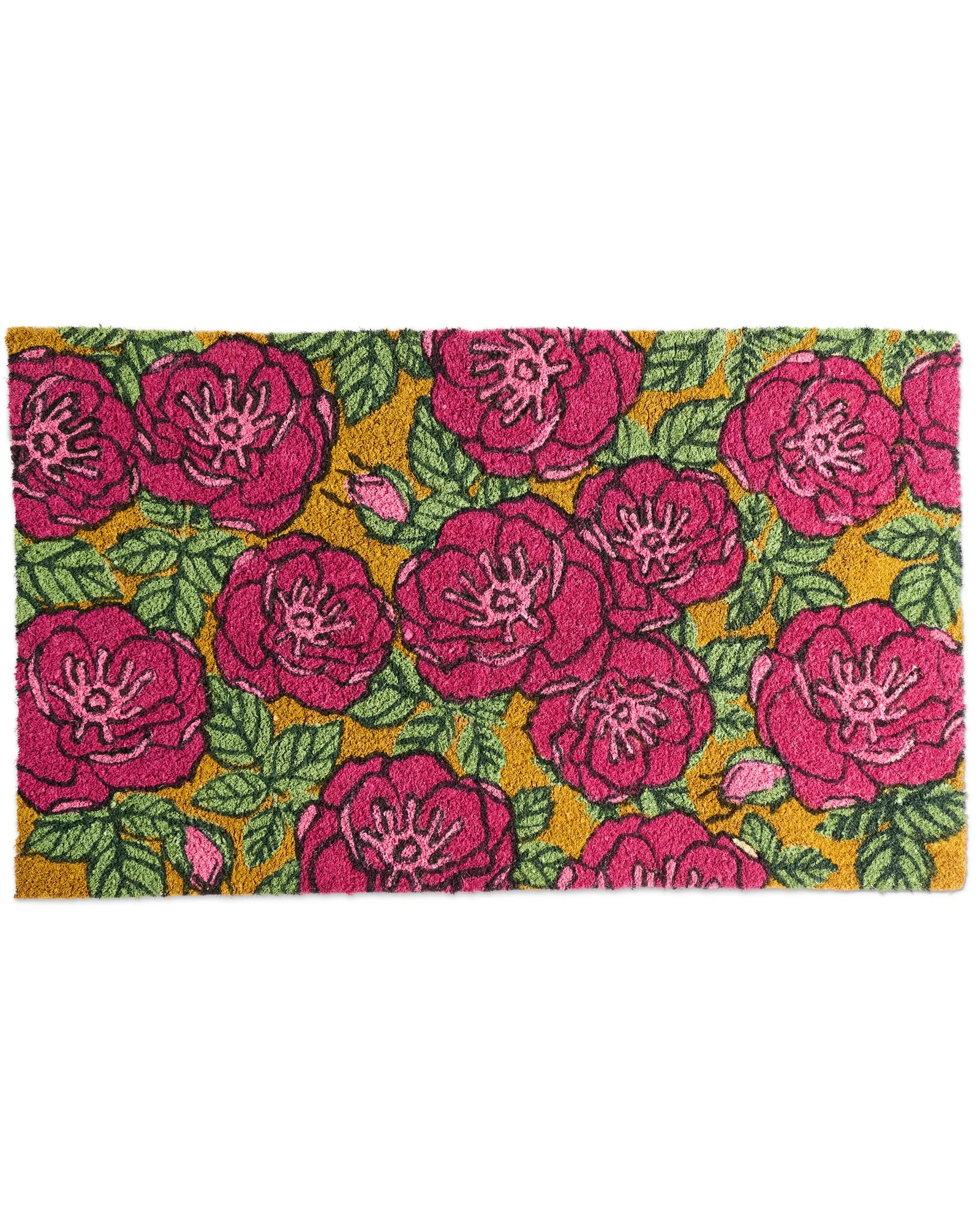
Golden Peony Coir Door Mat
-
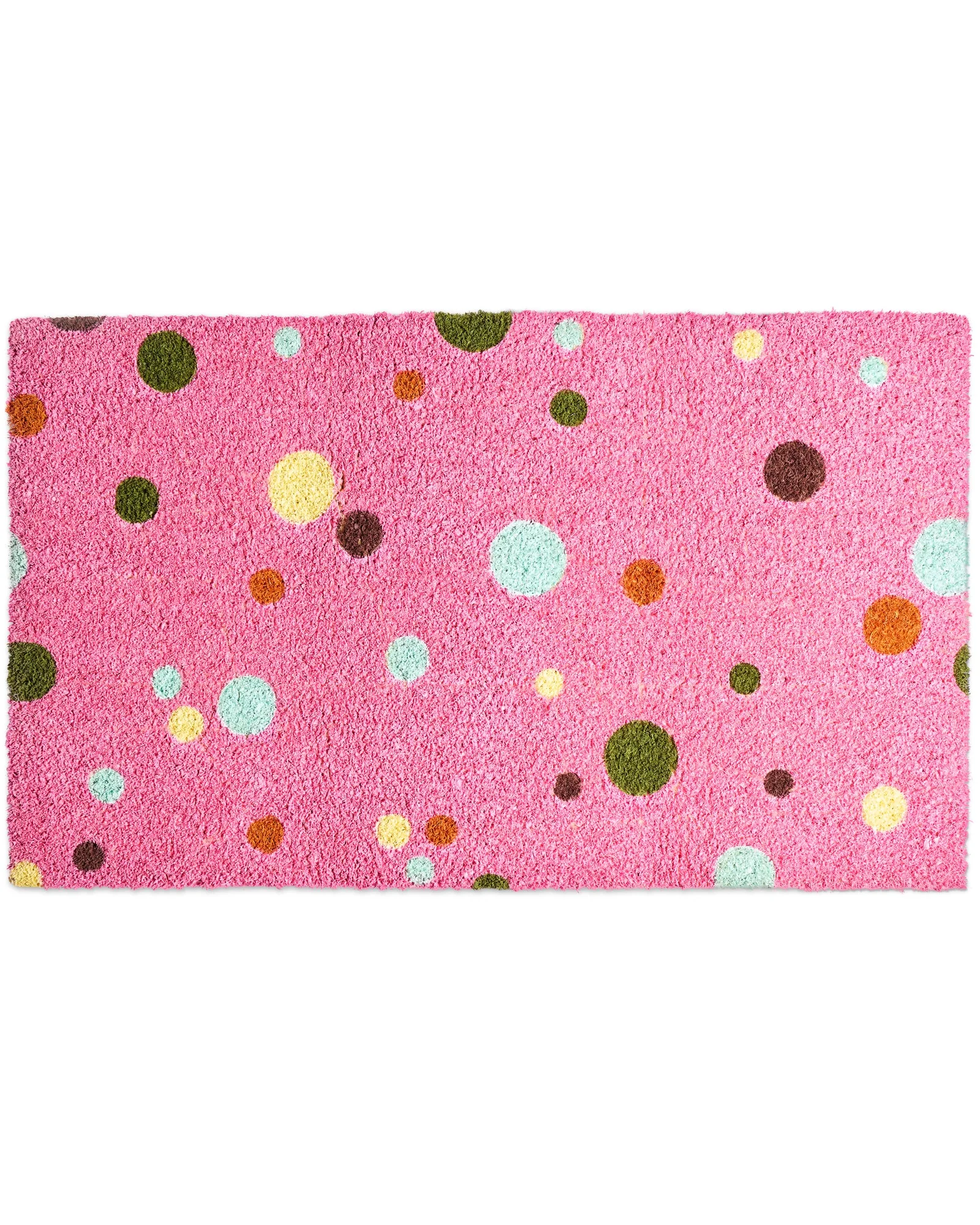
Polkadot Pink Coir Door Mat: The Polkadot Pink Coir Door Mat is tough enough for muddy shoes. If your entryway sees heavy use, this mat’s robust construction means the size you choose will continue to perform season after season.