Quick answer
Measure your dog from the tip of the nose to the base of the tail while they stand, then add 15–25 cm (6–10 in) for stretching room. For the Duke Memory Foam Sofa Bed, also check that the open front is wide enough for your dog to walk in and that the 10 cm memory foam base supports their full body. If your dog is between sizes, size up.
Why the Duke sofa shape changes how you measure
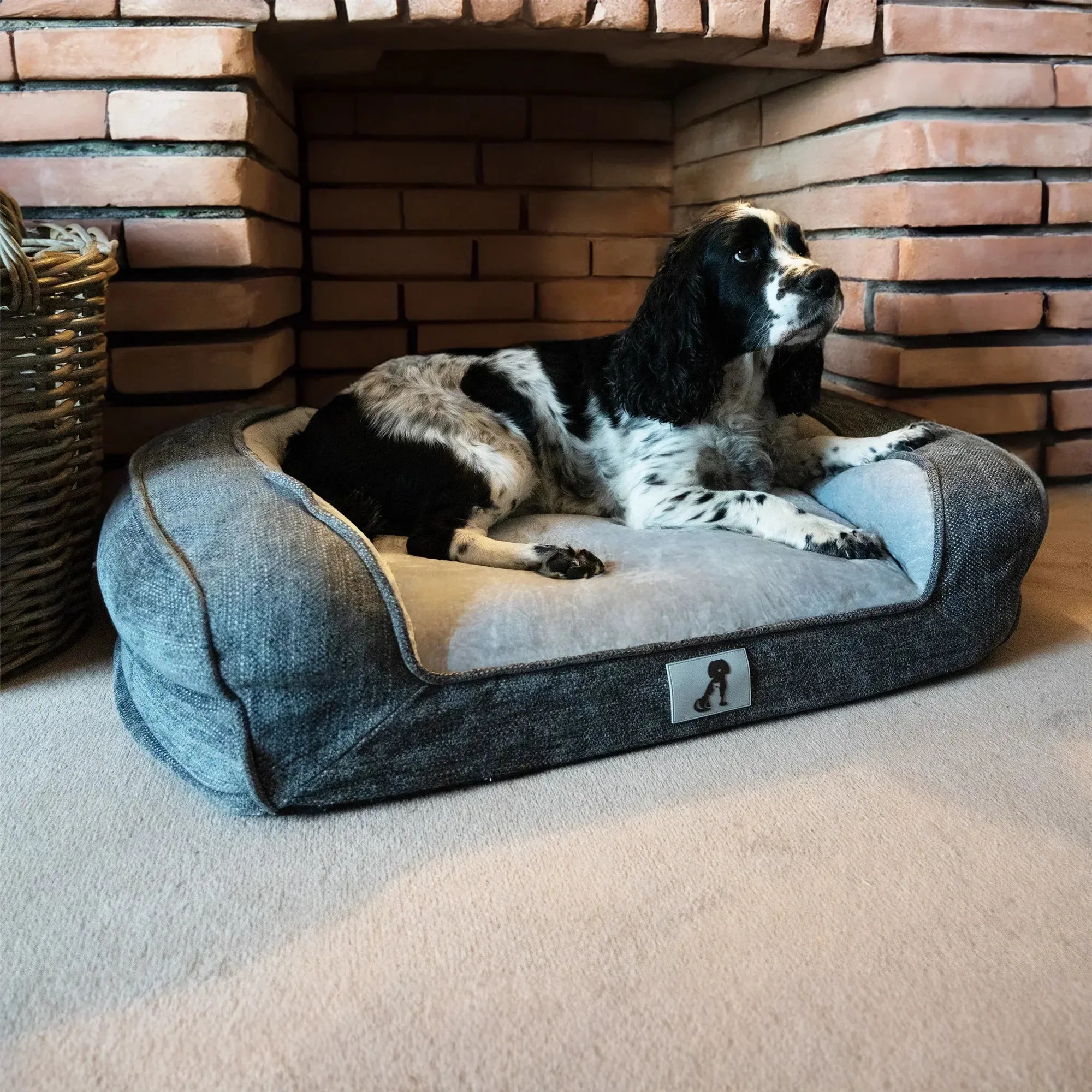
Most flat beds only need length and width, but the Duke Memory Foam Sofa Bed has a wrap-around bolster on three sides and an open front. That means your dog's sleeping length matters less than their ability to stretch out through the opening without their head or hips pressing against the bolsters. Measure your dog's standing length and shoulder height, then compare those numbers to the bed's internal sleeping area rather than the outer dimensions. If you don't have the internal measurements yet, treat the open front as the deciding factor: your dog should be able to lie flat with their nose past the front edge if they want to.
The two measurements that matter most
You only need two numbers: nose-to-tail length and shoulder height. Use a soft tape measure or a piece of string you can lay against a ruler. Measure while your dog stands naturally on a hard floor, not while they're curled up or lying down. For the Duke bed, add 15–25 cm to the nose-to-tail length so your dog can stretch out through the open front. Shoulder height helps you judge whether the 10 cm memory foam base will support their joints without them needing to step up too high. If your dog is a deep-chested breed or wears a jumper indoors, add a little extra length for comfort.
How to check the fit before your dog tries it
Once you have your dog's measurements, compare them to the Duke bed's sleeping area. The open front should be at least as wide as your dog's shoulder width. The memory foam base should be long enough that your dog's hips rest on the foam, not on the bolster. If your dog likes to sleep curled in a ball, a bed that matches their curled length is fine, but most dogs stretch out at some point during the night. A good test is to place a tape measure on the floor in the bed's shape and have your dog lie down next to it. If their nose or tail hangs off the foam, size up.
What to do if your dog is between sizes
If your dog's measurements fall between two sizes, choose the larger Duke bed. A bed that's slightly too big still gives your dog room to stretch out and rest their head on the bolster, while a bed that's too small can cause them to hang off the edge or avoid it altogether. The memory foam base will still mould to their shape even if there's extra space. For puppies, measure again in a few months and expect to size up as they grow. If you already have a jumper or lead that fits well, use those as a rough guide for your dog's build, but always rely on fresh measurements for the bed.
Step-by-step: measure your dog for the Duke sofa bed
- Measure nose to tail while standing: Use a soft tape or string from the tip of the nose to the base of the tail. Keep your dog standing naturally on a hard floor. Common mistake: measuring while your dog is curled up or sitting, which gives a shorter length than you need.
- Add stretch room for the open front: Add 15–25 cm (6–10 in) to the nose-to-tail measurement so your dog can stretch out through the Duke bed's open front without their head or hips hitting the bolsters. Checkpoint: if your dog likes to sleep sprawled out, use the larger end of that range.
- Measure shoulder width and height: Measure the widest part of the shoulders and the height from floor to shoulder. The open front should be at least as wide as the shoulders, and the 10 cm foam base should sit low enough for your dog to step in easily. Common mistake: ignoring shoulder width, which can make the entry feel tight even if the length is right.
- Compare to the bed's sleeping area, not the outer size: Use the internal sleeping area of the Duke bed. The memory foam base should be long enough that your dog's hips rest on the foam, not on the bolster. If you don't have internal measurements, use the open front width as a guide. Checkpoint: your dog should be able to lie flat with their nose past the front edge if they want to.
- Do a floor test with tape: Lay a tape measure on the floor in the shape of the bed's sleeping area and have your dog lie down next to it. If their nose or tail hangs off the foam, size up. Next step: if you're between sizes, choose the larger Duke bed. A jumper or lead that fits well can confirm your dog's build, but always use fresh measurements for the bed.
Duke Memory Foam Sofa Bed facts that affect sizing
- AllPetSolutions Duke Memory Foam Sofa Dog Bed - Grey - Large: 10 cm orthopaedic memory foam base that moulds to your dog's shape and helps prevent pressure points. Your dog's full body should rest on the foam, so measure nose-to-tail length and add stretch room to keep hips and shoulders supported.
- AllPetSolutions Duke Memory Foam Sofa Dog Bed - Grey - Large: Wrap-around bolster on three sides with an open front. The open front is the entry and stretch zone, so check that it's wide enough for your dog to walk in and lie flat without pressing against the bolsters.
- AllPetSolutions Duke Memory Foam Sofa Dog Bed - Grey - Large: A soft topper sits over the memory foam base for extra comfort. The topper adds a little height, so if your dog is very short-legged or elderly, make sure they can step into the bed comfortably.