Quick answer
Measure your dog's chest girth at the widest point behind the front legs, then match that number to the Julius-K9 size chart for the harness model you want. Use a soft tape, keep it snug but not tight, and measure twice. If your dog is between sizes, choose the larger size and adjust the straps.
Gather the right tools before you start
You need a soft measuring tape, a helper if your dog won't stand still, and a few treats. A cloth tape is best because it curves around the body; a rigid tape measure can give a false reading. If you only have a rigid tape, use a piece of string or a shoelace, mark the length, then measure the string flat.
Where to measure chest girth on a dog
Chest girth is the circumference of the rib cage at its deepest and widest point, usually right behind the front legs. This is the primary measurement for Julius-K9 harnesses because the harness rests across the chest and behind the front legs. For dogs with a deep chest, like Greyhounds or Boxers, this measurement can be much larger than the neck size suggests.
How to read the Julius-K9 harness size chart
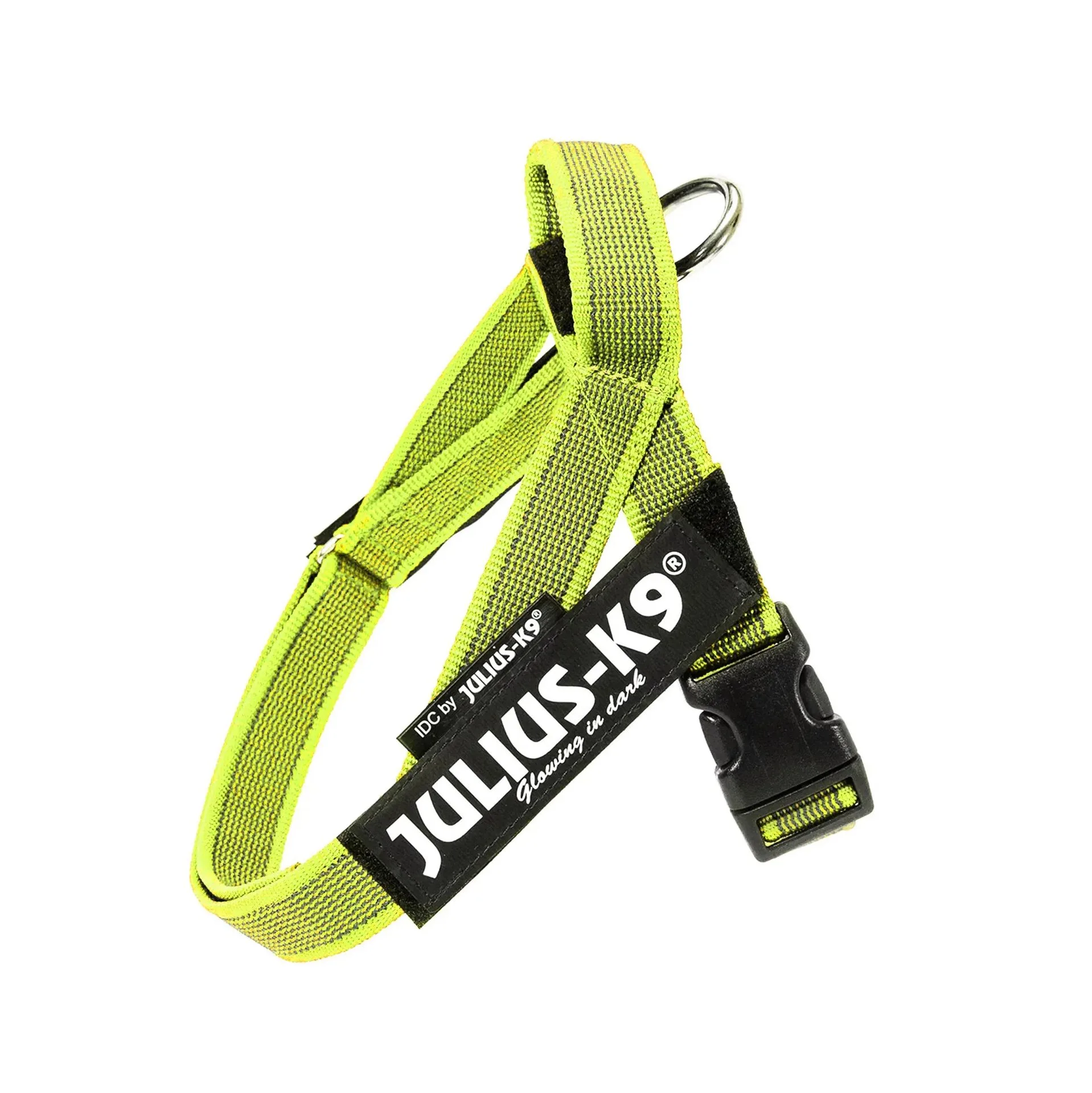
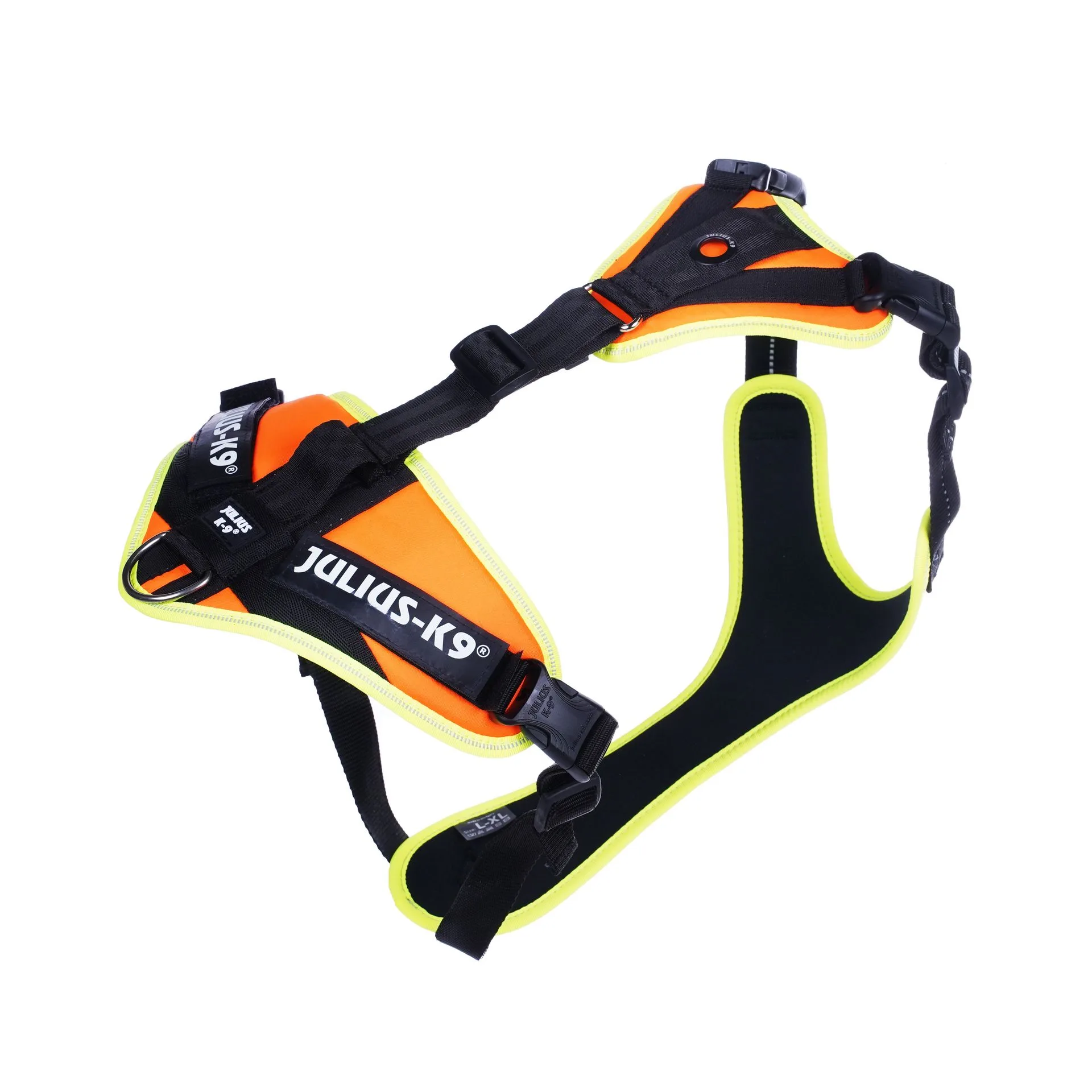
Julius-K9 harnesses use chest girth ranges, not breed or weight. The IDC Powerharness size chart lists sizes from mini to size 4, each covering a specific girth range. Always check the chart for the exact model, because sizing can vary slightly between the IDC Powerharness and the IDC Powair Summer Harness. If your dog falls between two sizes, size up for comfort and adjustability.
Fit check after you put the harness on
Once the harness is on, you should be able to slide two fingers under every strap. The chest strap should sit behind the front legs, not on the shoulders. The belly strap should be snug but not tight. Watch your dog move: if the harness shifts or rubs, adjust the straps or reconsider the size.
4 steps to measure your dog for a Julius-K9 harness
- Step 1: Measure chest girth: Wrap a soft tape around the widest part of the rib cage, just behind the front legs. Keep the tape snug but not tight. Record the measurement in centimeters or inches. Common mistake: measuring over a thick coat or bulky sweater. Measure directly against the fur or a thin base layer.
- Step 2: Measure neck and back length: Measure the neck circumference at the base of the neck where a collar would sit. Also measure from the base of the neck to the base of the tail for reference. These help confirm the harness style fits your dog's proportions. Checkpoint: if the neck is much smaller than the chest, you may need a harness with more neck adjustment.
- Step 3: Match to the Julius-K9 size chart: Use the chest girth measurement to find your dog's size on the Julius-K9 size chart for the specific harness model. If you are between sizes, choose the larger size. For example, if your dog measures 72 cm and the size range is 70-75 cm for size 2 and 75-80 cm for size 3, pick size 3. Common mistake: guessing based on breed or weight. Always use the tape measurement.
- Step 4: Try on and adjust: Put the harness on your dog and adjust all straps. You should be able to fit two fingers under each strap. The chest strap should sit behind the front legs, not on the shoulders. Have your dog walk, sit, and lie down to check for rubbing or slipping. Checkpoint: if the harness slides or twists, it is too loose or the wrong size. Re-measure and size up if needed.
Products that help with fit and safety
- Julius-K9 Original Custom Patches, 1 Piece: Julius-K9 Original Custom Patches, 1 Piece — custom printed patches for Julius-K9 harnesses, sold individually. Once you have the right size, you can personalize the harness with your dog's name or a service designation, which is especially useful for working dogs or dogs with medical needs.
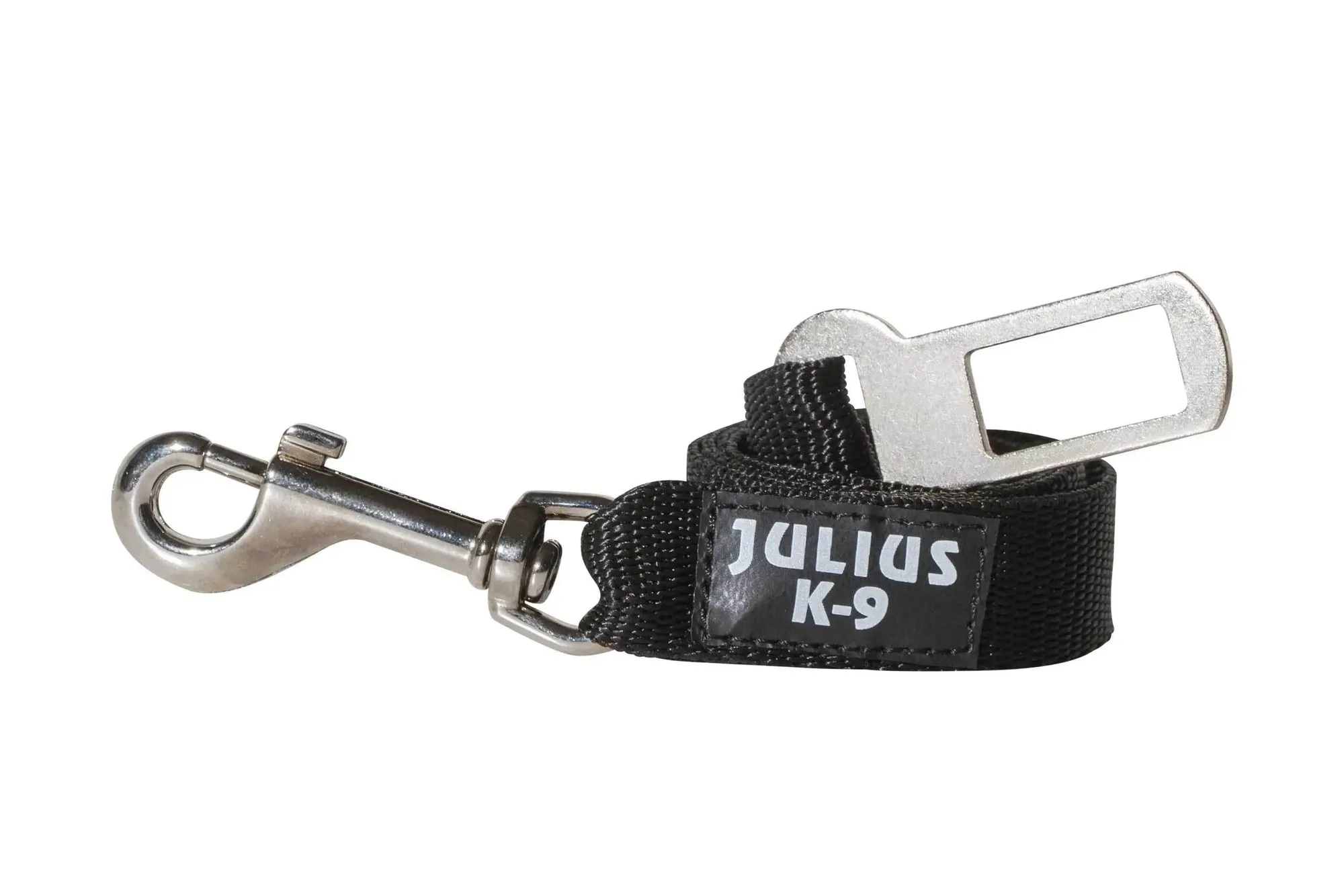
- Julius-K9 Mobility Control Car Tether For Dogs: Julius-K9 Mobility Control Car Tether For Dogs — a seat belt adapter that attaches to IDC Powerharnesses via a carabiner and latch. It has limited ability to save the dog in a car accident and is primarily intended to keep the dog away from the driver. A properly fitted harness is essential for this accessory to work as intended. If the harness is too loose, the tether may not hold the dog securely in place.