Quick answer
Measure your dog's girth at the widest part of the ribcage, back length from the base of the neck to the base of the tail, and paw width across the widest part of the front paw. Use a soft tape measure and record each number in centimeters or inches, then compare against the specific product's size chart. When a measurement falls between sizes, size up for coats and boots, but follow the harness maker's girth range closely for a secure fit.
Gather the right tools and set up your dog
You need a soft fabric tape measure, a helper, and a few treats. A rigid ruler or metal tape won't wrap around a dog's body accurately. If you don't have a soft tape, use a piece of string or a shoelace, mark the length, then measure the string flat against a wall or ruler. Work on a non-slip surface and keep the session short and positive. If your dog is wiggly, measure one area per session and write it down immediately. A helper can hold a treat at nose level while you measure.
Measure girth first
Girth is the single most important measurement for harnesses and coats. Wrap the tape around the widest part of the ribcage, just behind the front legs. The tape should be snug but not tight, and level all the way around. For deep-chested dogs, this point may be further back than you expect. Write down the girth in both inches and centimeters if you can, because different brands list sizes differently. Re-measure once to confirm the number before moving on.
Measure back length for coats
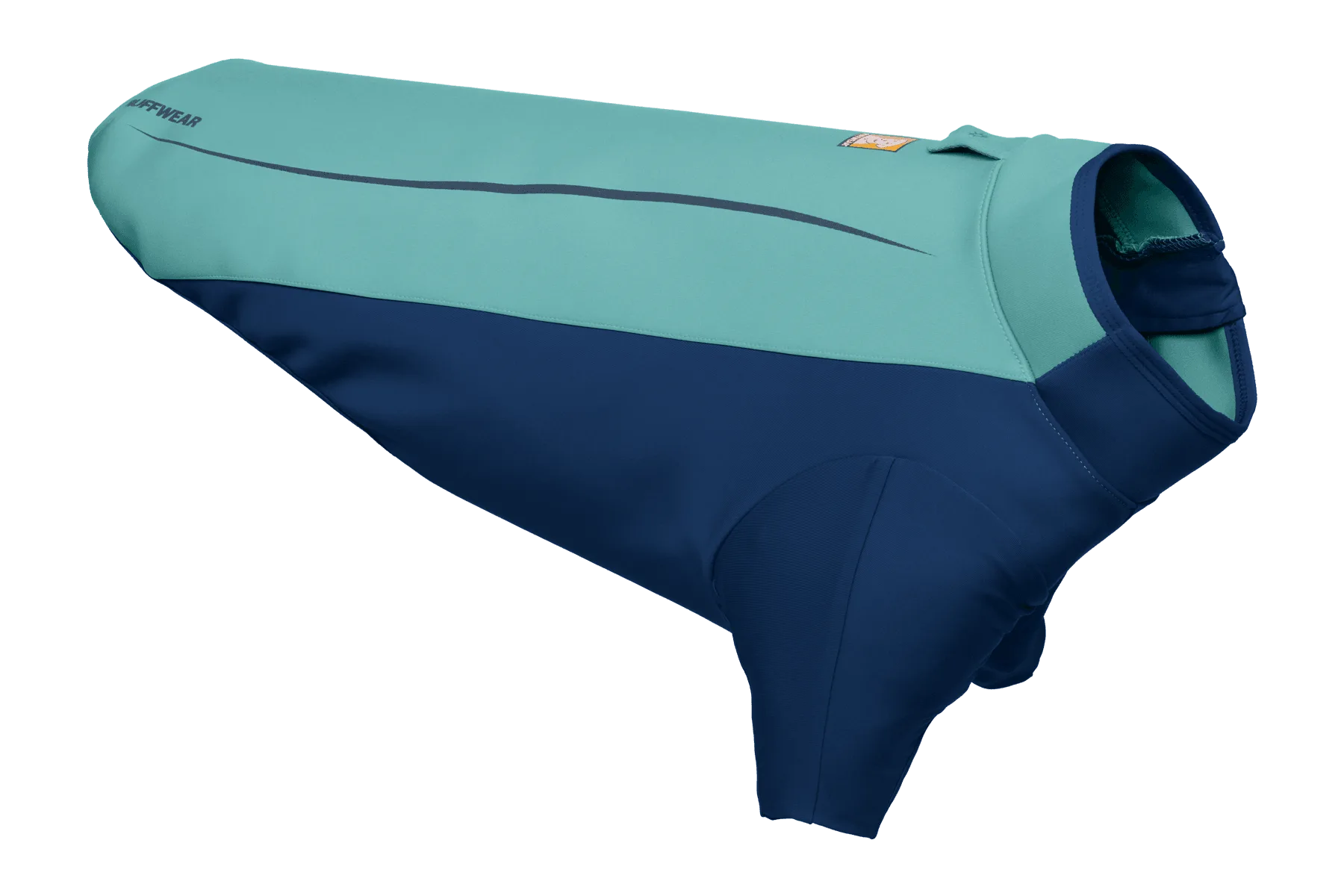
Back length runs from the base of the neck, where the collar sits, to the base of the tail. Keep the tape flat along the spine while your dog stands square. Don't measure down the curve of the back or around the tail. For coats, back length determines whether the hem covers the hips without dragging. If your dog has a thick coat or you plan to layer, add a small allowance. Note that some jackets, like the Undercoat Dog Water Jacket, use formfitting laminated neoprene that stretches and moves with the dog, so the size chart may prioritize girth over a loose back length.
Measure paws for boots
For boots, measure the widest part of the front paw while your dog is standing and weight-bearing. Place the tape or ruler across the widest point, usually just behind the toes. Measure both front paws, since many dogs have one paw slightly larger. If you're between sizes, size up and use the boot's closure system to adjust. Never guess from breed alone; paw width varies widely even within a breed. This is also a good time to check for dewclaws and nail length, which can affect boot fit.
Check the fit on the dog, not just the tape
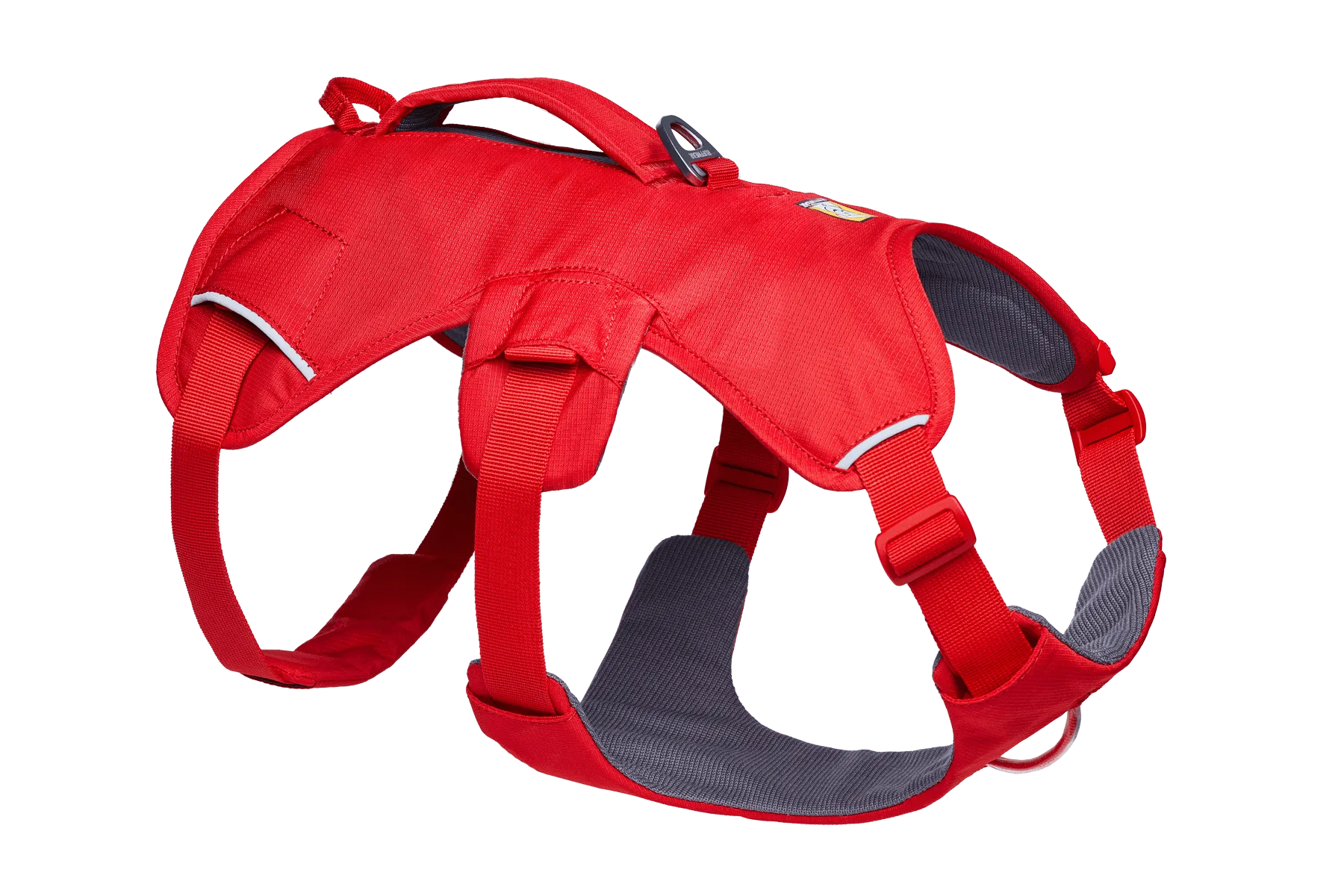
Numbers get you close, but the final check happens on your dog. For a harness, slide two fingers under each strap and confirm you can't pull the harness over the shoulders when it's clipped. For a coat, watch your dog walk, sit, and squat; the hem shouldn't catch on the hind legs. For boots, have your dog trot a few steps and look for heel lift or twisting. If a product has a front leash attachment point, test that the chest strap stays clear of the throat when the leash is tensioned. Ruffwear's Web Master Dog Harness with Handle uses a neck buckle to eliminate the over-the-head on/off experience, so check that the neck opening still sits comfortably after you adjust the chest and belly straps.
Step-by-step measuring routine
- Step 1: Measure girth at the widest ribcage point: Wrap a soft tape around the widest part of the ribcage, just behind the front legs. Keep it snug and level. Common mistake: measuring too far forward over the shoulders, which gives a smaller number and a tight harness.
- Step 2: Measure back length from neck base to tail base: Run the tape flat along the spine while your dog stands square. Don't follow the curve of the back or include the tail. Checkpoint: if your dog has a thick coat or you plan to layer, add a small allowance before comparing to the size chart.
- Step 3: Measure paw width across the widest part: With your dog standing, measure across the widest part of the front paw, usually just behind the toes. Measure both front paws. Common mistake: measuring a lifted paw, which spreads the toes and gives an oversized reading.
- Step 4: Compare each measurement to the specific product's size chart: Use the girth for harnesses, girth plus back length for coats, and paw width for boots. Don't assume your dog is the same size across brands. If you're between sizes, size up for coats and boots, but follow the harness maker's girth range for a secure fit.
- Step 5: Do a live fit check with the gear on: Put the item on your dog and watch them walk, sit, and squat. Check strap clearance and adjust as needed. Next step: re-measure every few months, especially for puppies and dogs whose weight changes seasonally.
Product facts that affect sizing
- Undercoat™ Dog Water Jacket: The Undercoat Dog Water Jacket uses formfitting laminated neoprene for insulation that stretches and moves with dogs as they romp and swim. Because the material is formfitting and stretchy, girth and back length matter more than a loose fit. Measure your dog's girth carefully and check the size chart rather than sizing up for room.
- Web Master™ Dog Harness with Handle: The Web Master Dog Harness with Handle has a front leash attachment point and a neck buckle to eliminate the over-the-head on/off experience for head-shy dogs. The neck buckle means you don't need to pull the harness over your dog's head, but you still need an accurate girth measurement so the chest and belly straps sit correctly.