Quick answer
Measure the limb at the exact point where the cuff will sit, keep the tape snug but not tight, and write down the circumference in inches. For leather cuffs, choose a size that matches that measurement or sits within the adjustable range; if you are between sizes, size up rather than down. Always measure both sides, because wrists, ankles, and thighs can differ by half an inch or more.
Why cuff fit matters more than the number on the label
A leather cuff that is too loose can slide down the ankle or allow a wrist to twist inside the restraint, which reduces control and can cause uncomfortable pressure points. A cuff that is too tight can pinch nerves, restrict circulation, or leave deep marks that last longer than the session. The goal is a close, even contact that stays in place without needing to be forced closed.
Because leather has very little stretch, sizing is less forgiving than with fabric or neoprene cuffs. That makes measuring the limb itself, not guessing from glove or shoe size, the only reliable method.
How to measure wrists, ankles, and thighs step by step
Use a soft tailor's tape. If you do not have one, wrap a strip of paper or a piece of string around the limb, mark where it overlaps, and measure that length against a ruler. Keep the tape parallel to the floor for ankles and wrists, and parallel to the thigh for thigh cuffs.
For wrists, measure just below the wrist bone on the side of the hand, not at the narrowest point of the forearm. For ankles, measure directly over the ankle bone. For thighs, measure at the point where you want the cuff to sit, usually a few inches below the groin; if you plan to wear thigh cuffs during suspension, measure the thigh at its fullest point so the cuff does not cut in when weight is applied.
- Measure both left and right limbs and use the larger number.
- Measure at the end of the day, when limbs are slightly larger.
- Keep one finger under the tape for a snug but not tight fit.
- Write measurements down in inches and centimeters to compare with product listings.
Reading a bondage cuff size chart without guessing
Most leather cuff listings give a circumference range rather than a single size, because the closure has multiple holes or a buckle. The range usually describes the smallest and largest comfortable fit. Your measurement should fall inside that range, ideally near the middle. If your measurement is at the very top of the range, the cuff will close on its last hole and may feel tight; if it is at the very bottom, the cuff may overlap excessively.
When a listing does not publish a range, treat that as a decision limitation. Ask the seller for the distance from the center of the buckle tongue to the first and last hole, then compare that to your measurement. Without that information, you cannot reliably choose a size.
Adjustable cuffs, padding, and layering
Padded cuffs add thickness, which reduces the effective inner circumference. If you are choosing a padded set, measure your limb and then add roughly the thickness of the padding on both sides before comparing to the listed range. For example, a wrist that measures 7 inches may need a cuff listed for 8 to 9 inches if the padding is thick.
Adjustable bondage cuffs with a buckle and multiple holes give you the most flexibility across different wearers, but they still need a correct base measurement. Lockable cuffs add security but usually have the same sizing rules as buckled cuffs; the lock replaces the buckle pin, not the fit.
Decision rules for choosing cuff sizes
- If your measurement is between two sizes: Choose the larger size when the cuff is padded or when you plan to wear it for longer sessions. A slightly larger cuff can be tightened; a too-small cuff cannot be made bigger. Size up for comfort and safety.
- If you are buying a complete set with thigh cuffs: Measure thighs at the fullest point, not at the narrowest point above the knee. Thigh cuffs that are sized to the narrow point will bind when you sit or when legs are pulled apart. Measure thighs where the cuff will actually rest.
- If the listing gives no size range: Ask the seller for the buckle-hole measurements before buying. Without a range or hole spacing, you cannot know whether the cuff will fit your wrist, ankle, or thigh. No measurements, no confident purchase.
- If you are buying suspension cuffs: Fit should be snug enough that the cuff cannot rotate around the limb when weight is applied, but you should still be able to slide one finger under the edge. Snug, not tight, is the suspension standard.
Product facts that affect sizing
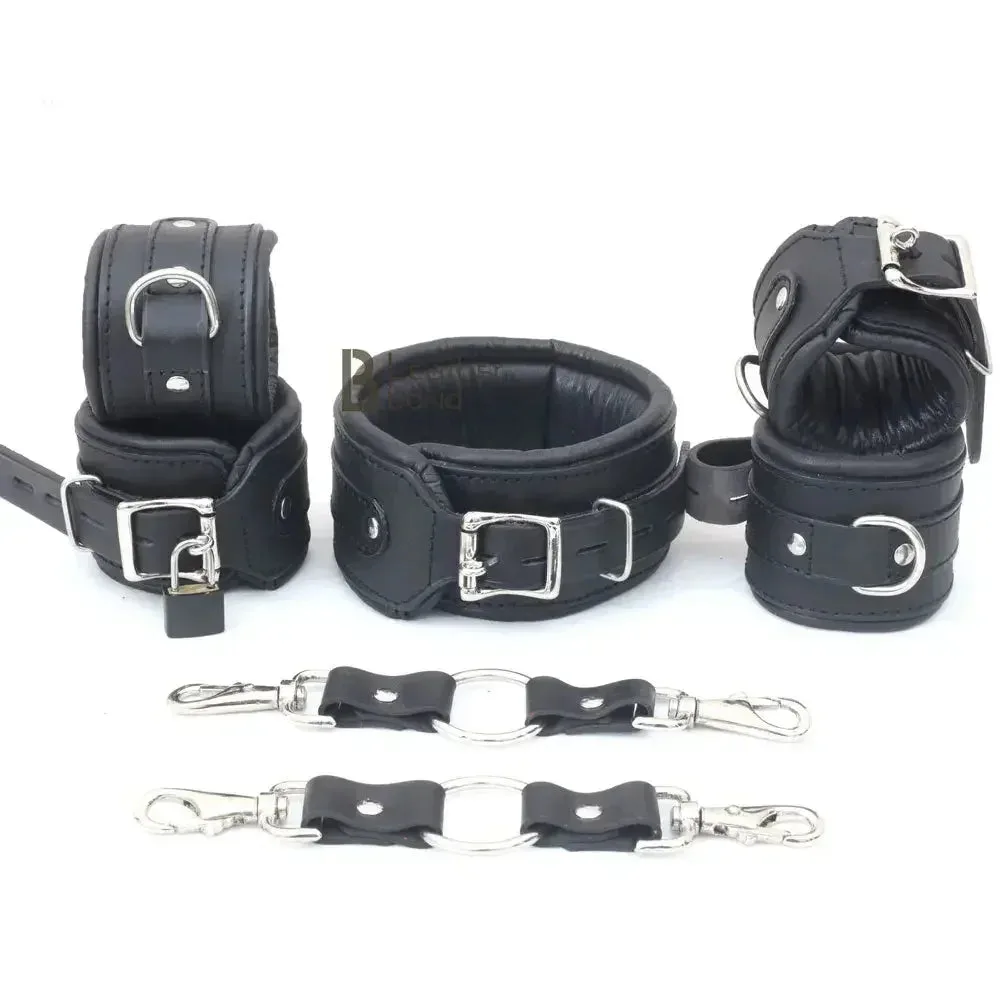
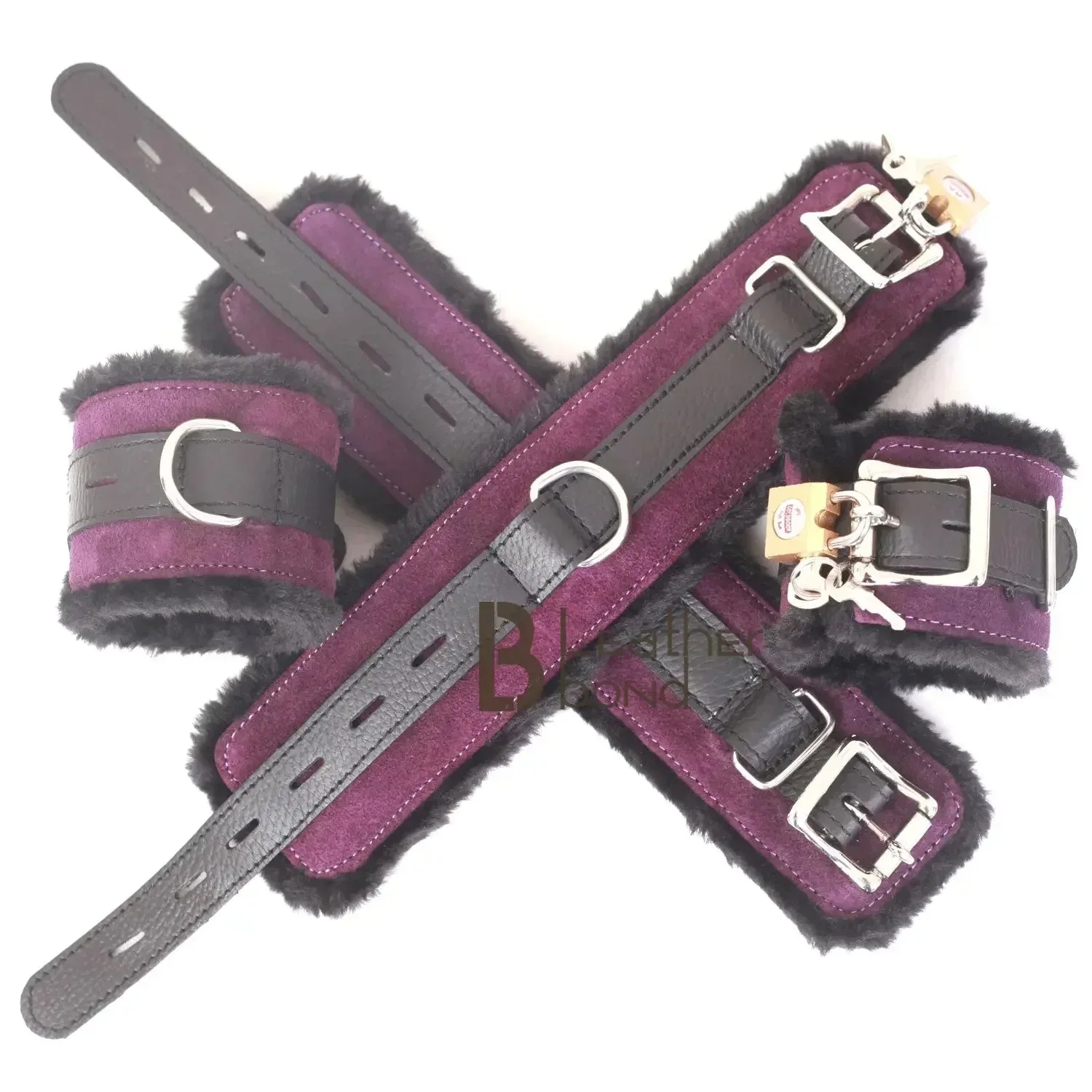
- Real Leather 7-Piece Padded Ankle Cuffs, Wrist Cuffs & Neck Collar Complete Restraint Bondage Set with Connectors | Black: Real Leather 7-Piece Padded Ankle Cuffs, Wrist Cuffs & Neck Collar Complete Restraint Bondage Set with Connectors is a seven-piece padded set made from genuine full-grain cowhide leather with reinforced stitching. Because the cuffs are padded, the inner circumference is smaller than the outer measurement. Measure your wrist and ankle, then check the listed range with padding in mind.
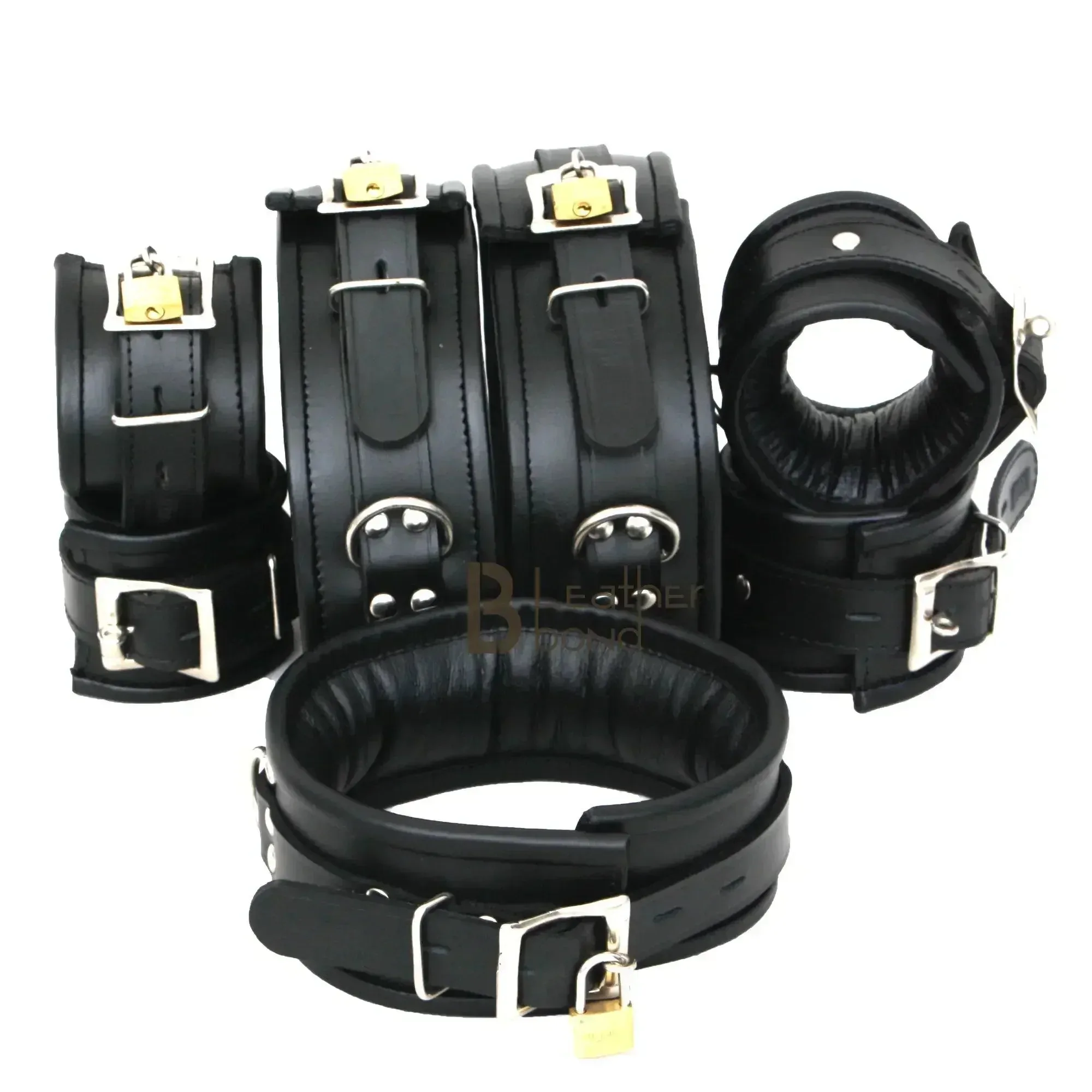
- Real Leather Wrist, Ankle & Thigh Cuffs with Collar & Hogtie Complete Restraint Bondage Set | Black: Real Leather Wrist, Ankle & Thigh Cuffs with Collar & Hogtie Complete Restraint Bondage Set includes collar, wrist cuffs, ankle cuffs, thigh cuffs, and a hogtie connector, all in padded cowhide leather. This set covers more limb points, so you need accurate thigh cuff measurements as well as wrist and ankle measurements. The hogtie connector also means the cuffs must stay put under tension.
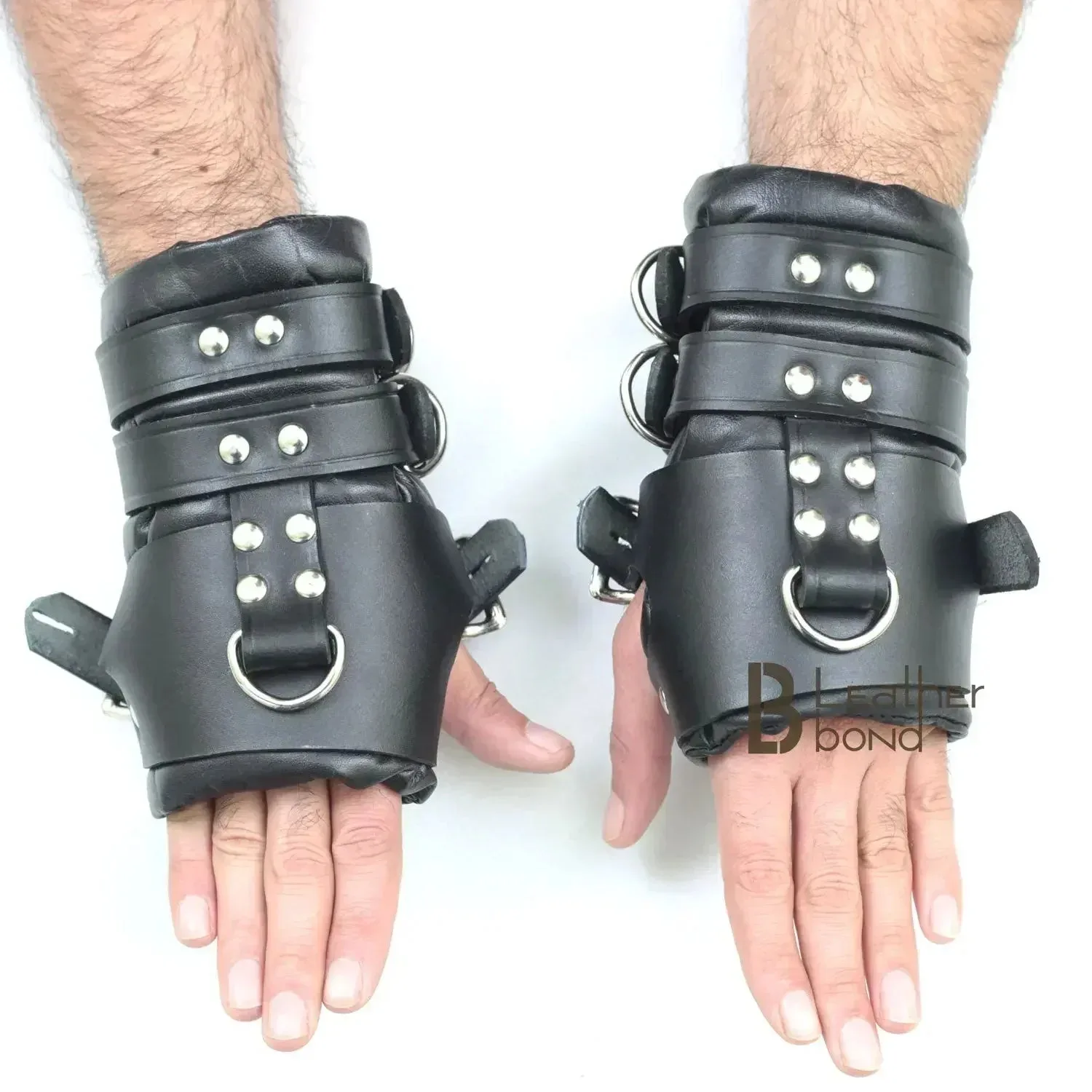
- Real Strong Lockable Leather Suspension Bondage Cuffs 2-Piece Heavy Duty Restraint Set | Black: Real Strong Lockable Leather Suspension Bondage Cuffs 2-Piece Heavy Duty Restraint Set is a lockable, reinforced full-grain cowhide suspension cuff set. Suspension cuffs carry body weight, so a precise fit is critical. A loose cuff can shift under load, and a too-tight cuff can concentrate pressure; measure the wrist or ankle exactly where the cuff will sit.
Who this sizing method is for
Best for
- Buyers choosing their first leather wrist, ankle, or thigh cuffs
- Couples who want a padded set that stays comfortable during longer wear
- Anyone replacing cuffs that slipped, pinched, or left marks
Not for
- Buyers who already know their exact size from a previous leather cuff purchase
- Shoppers looking for fabric or neoprene cuffs, which stretch and size differently