Quick answer
To measure yourself for lingerie at home, use a soft tape measure over bare skin or a thin layer. Measure your underbust, bust, natural waist, and fullest hip, keeping the tape level and snug but not tight. Compare your measurements to the DIM size chart for each garment type. If you fall between sizes, size up for comfort in underwear and consider your preferred coverage for bras.
Buying lingerie online can feel like a gamble if you don't know your measurements. But once you have your numbers, you can shop with confidence and avoid the hassle of returns. This guide walks you through measuring your bust, waist, and hips at home, then using those numbers to find your size in DIM bras and underwear.
You'll also learn how to measure your bra size at home, what to do when you're between sizes, and how to use the DIM size chart. No special tools needed—just a soft tape measure and a few minutes.
What you need before you start
Gather a soft tape measure, a mirror, and a notepad or your phone to record numbers. Wear a non-padded bra or go braless for bust measurements. For underwear, measure over bare skin or thin leggings. Stand straight and relax—don't hold your breath or pull the tape tight.
If you don't have a tape measure, use a string or ribbon and later measure it against a ruler. Always keep the tape parallel to the floor for waist and hip measurements. A mirror helps you check that the tape isn't twisted.
- Use a soft tape measure, not a metal one.
- Wear a non-padded bra for bust measurements.
- Record each measurement immediately to avoid confusion.
Step 1: Measure your underbust
Wrap the tape around your ribcage, directly under your bust. The tape should be snug and level all the way around. Breathe normally and exhale before reading the number. This measurement determines your band size.
Common mistake: pulling the tape too tight or letting it slip down your back. Check in a mirror that the tape is straight across. If you get an odd number, round down to the nearest even number for your band size. For example, 31 inches becomes a 30 band.
- Keep the tape snug but not compressing your ribs.
- Round down to the nearest even number for band size.
Step 2: Measure your bust
Wrap the tape around the fullest part of your bust, usually across the nipples. Keep the tape level and not too tight—it should rest gently against your body. Stand straight with arms at your sides. This measurement helps determine your cup size.
Common mistake: measuring over a padded bra or pushing your breasts up. That gives an inaccurate cup size. Also, don't let the tape dip at the back. If your bust measurement is the same as your underbust, you may be an AA cup; if it's several inches larger, you'll need a larger cup.
- Measure the fullest part of your bust.
- Subtract underbust from bust to find cup size (1 inch = A, 2 = B, 3 = C, etc.).
Step 3: Measure your natural waist
Find your natural waist by bending to one side—the crease that forms is your waistline. Wrap the tape around that point, keeping it level and snug but not tight. Breathe out normally before reading the number. This measurement is key for high-waisted underwear and bodysuits.
Common mistake: measuring over clothing or at the wrong spot (like where your jeans sit). Your natural waist is usually the narrowest part of your torso, above your belly button. Write down the number in inches or centimeters, and use the same unit throughout.
- Bend sideways to find your natural waist.
- Keep the tape parallel to the floor.
Step 4: Measure your hips
Stand with feet together. Wrap the tape around the fullest part of your hips and buttocks, usually about 8 inches below your waist. Keep the tape level and snug, but not tight enough to compress. This measurement determines your underwear size.
Common mistake: measuring at the hip bones instead of the fullest part. Also, don't pull the tape tight—it should glide over your skin. If you're between sizes, size up for comfort, especially for styles like high-waisted briefs that need to stay put.
- Measure the fullest part of your hips and buttocks.
- If between sizes, choose the larger size for comfort.
Step 5: Use the DIM size chart
Once you have your bust, waist, and hip measurements, compare them to the DIM size chart. DIM sizes are usually based on French sizing (e.g., 85B, 90C) for bras and numeric sizes (e.g., 38, 40, 42) for underwear. The chart converts your measurements into the right size for each garment type.
Common mistake: assuming your size is the same across all brands. DIM may fit differently than other labels. Also, check the specific product page—some styles like the Soutien-gorge corbeille Ivoire Dim Daily Coton may have a different fit due to their cut or fabric. When in doubt, read reviews or contact customer service.
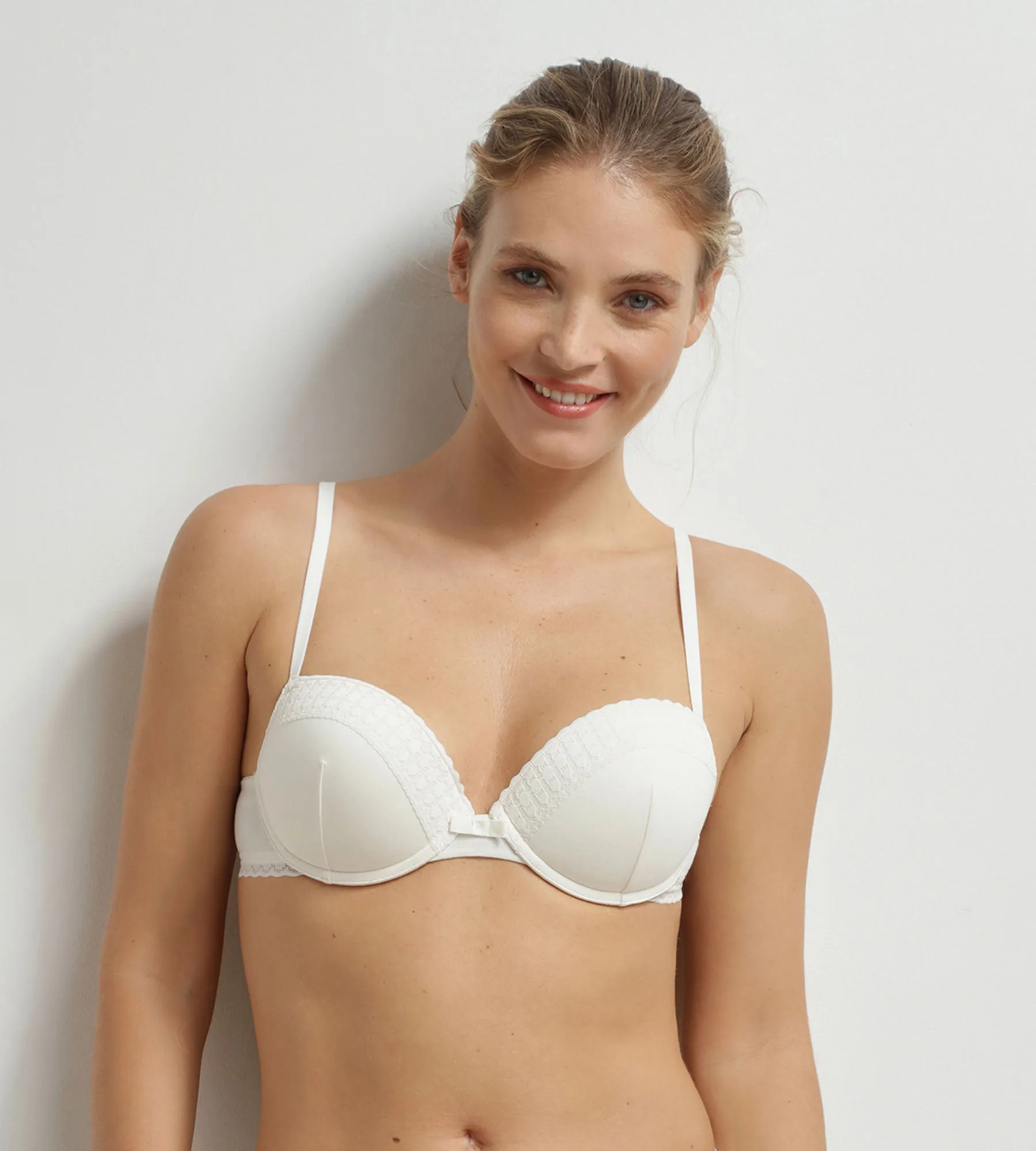
Soutien-gorge corbeille Ivoire Dim Daily Coton
- Always check the size chart for each product.
- DIM uses French sizing for bras and numeric sizing for underwear.
Step 6: Check the fit when your lingerie arrives
When your order arrives, try on the pieces over clean skin. For bras, the band should be snug on the loosest hook, and the center gore should lie flat against your sternum. The cups should contain your breasts without spillage or gaps. For underwear, the waistband shouldn't dig in, and the leg openings shouldn't cut into your skin.
Common mistake: keeping something that feels slightly off, thinking it will stretch. If a bra rides up in the back, the band is too big. If underwear rolls down, it's too small. Return or exchange before washing—most brands require tags attached.
- Band should be snug on the loosest hook.
- Underwear should lie flat without digging.
Your step-by-step measuring checklist
- Measure underbust: Wrap tape snugly around ribcage under bust, keep level, exhale, and round down to nearest even number. Check in mirror that tape is straight across back.
- Measure bust: Wrap tape around fullest part of bust, keep level and not tight, arms at sides. Subtract underbust from bust to find cup size (1 inch = A, 2 = B, etc.).
- Measure natural waist: Bend sideways to find crease, wrap tape around narrowest part, keep level and snug. Don't measure over clothing or where jeans sit.
- Measure hips: Stand with feet together, wrap tape around fullest part of hips and buttocks, keep level. If between sizes, choose larger for comfort.
- Compare to DIM size chart: Match your measurements to DIM's French bra sizes and numeric underwear sizes. Check individual product pages for fit notes.
- Try on and check fit: Band snug on loosest hook, gore flat, cups smooth; underwear lies flat without digging. Return before washing if fit is off.
Product facts to know
- Soutien-gorge corbeille Ivoire Dim Daily Coton: Made from cotton modal, with padded cups and underwire support, and a U-shaped back. The cotton modal is breathable and soft, while the padded cups and underwire provide structure. The U-back helps keep the band in place, which is useful if you have a smaller underbust but a fuller bust.
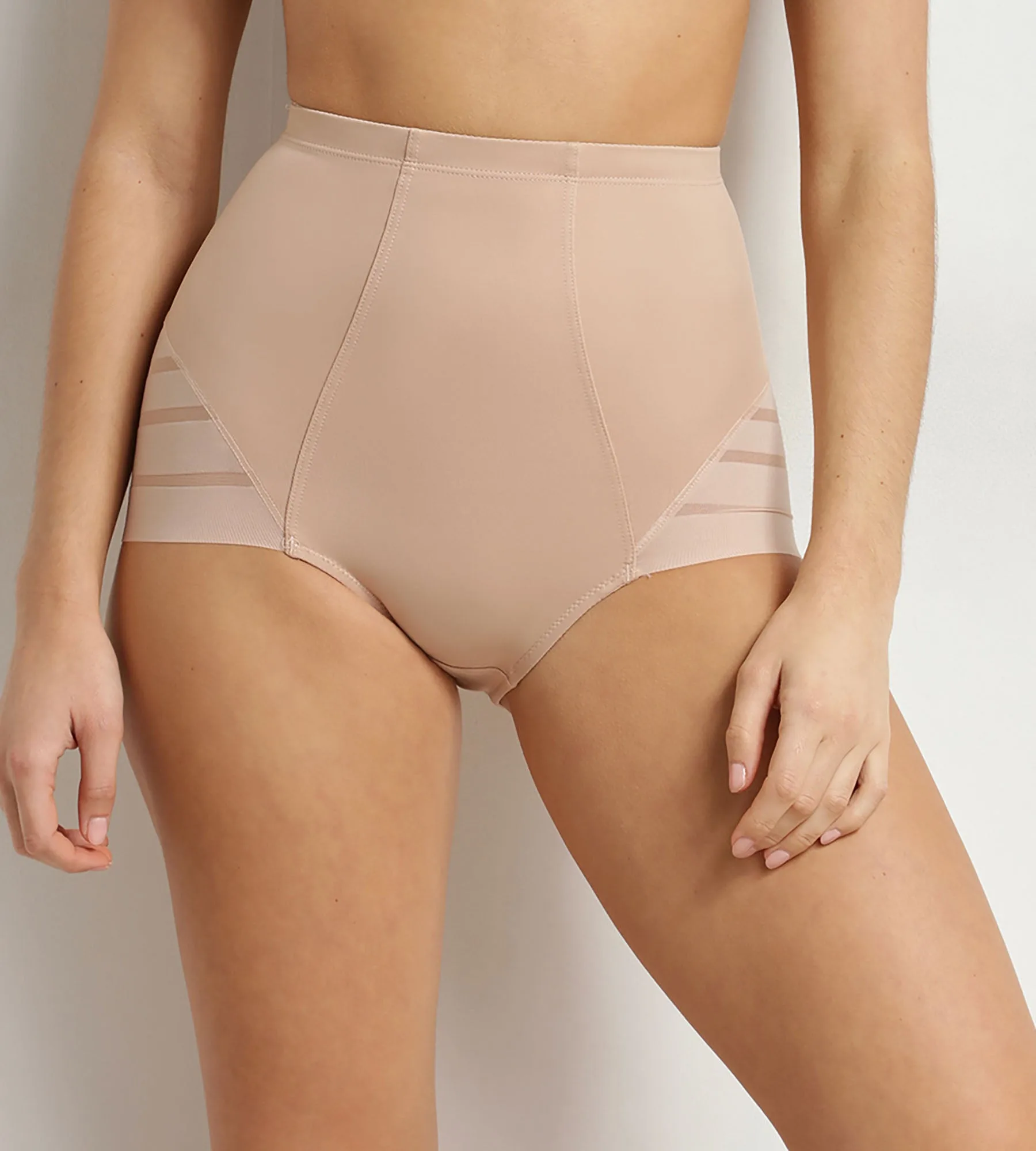
- Culotte haute ventre plat Nude Femme Dim Silhouette Élégance: High-waisted brief in firm microfibre with controlled elasticity, designed to smooth the stomach and stay invisible under clothing. If your hip measurement puts you between sizes, this style's firm stretch can offer a snug fit without digging. The nude color makes it a practical choice under light fabrics.
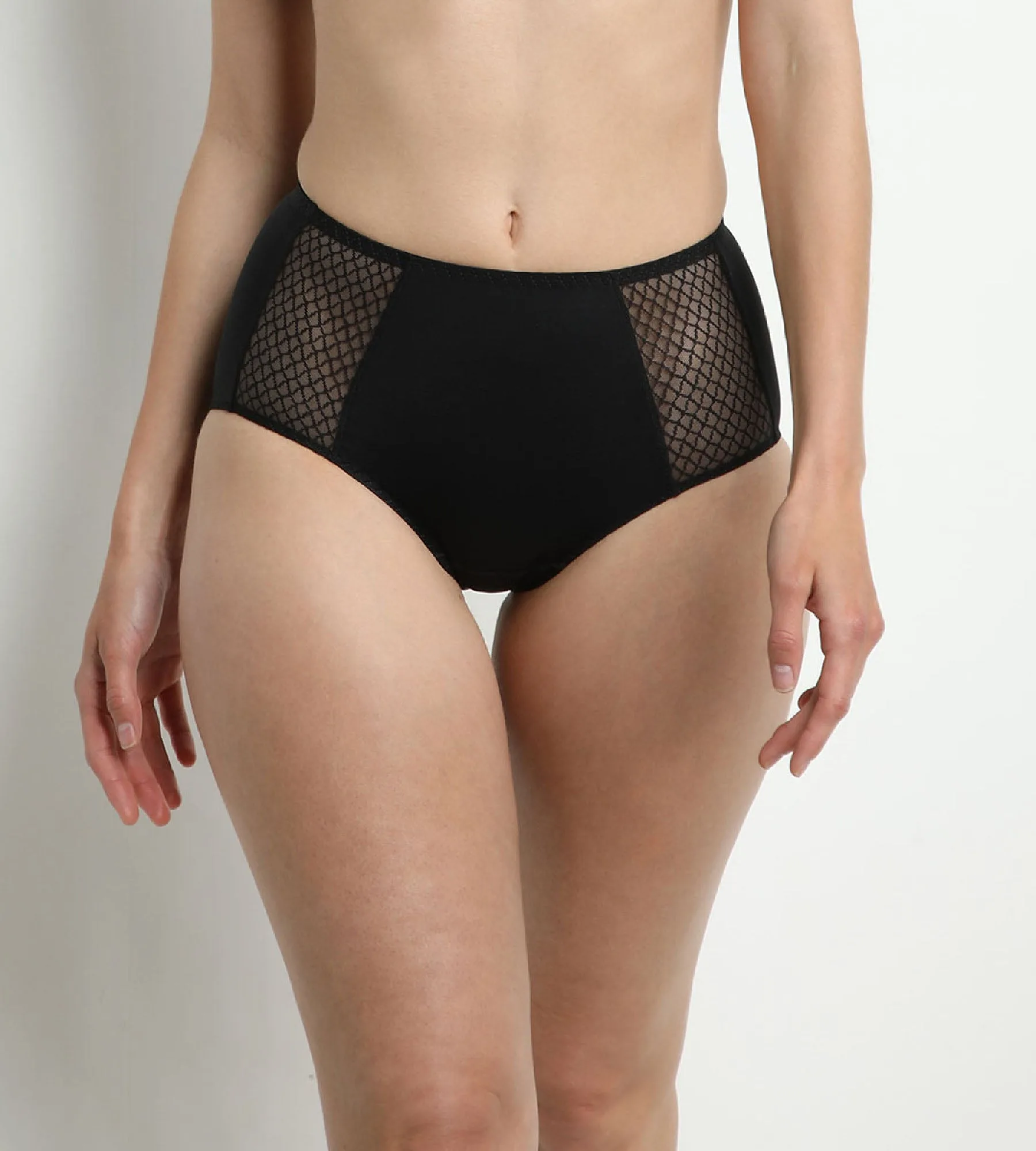
- Culotte ventre plat taille haute noir Dim Silhouette Essentiel: EcoDim tummy-control brief in soft, stretchy microfibre that gently shapes without compressing. This is a good option if you want light smoothing rather than firm control. The microfibre adapts to your curves, so it's comfortable for all-day wear.
Measuring yourself at home takes just a few minutes and saves you from guessing. With your bust, waist, and hip numbers, you can confidently shop DIM lingerie online and find pieces that fit beautifully. Remember to check each product's size chart and fit notes, and don't hesitate to exchange if something isn't perfect.