Quick answer
Pack a duffel bag by building layers: heavy items first along the bottom, then a middle layer of folded or rolled clothes, then small items in the end pockets and top. Fill gaps so nothing slides, and put anything you need mid-trip on top.
A duffel bag has one weak point: it is a soft-sided open space, so loose items slide to the low end as soon as you pick it up. That is why a bag packed in a hurry feels like a jumble by the time you arrive. The fix is not more gear. It is a packing order that uses the bag's own shape to hold things still.
This guide walks through a repeatable duffel packing method for travel, the gym or a weekend trip. Each step includes the mistake that undoes it, so you can check your work as you go.
Start with an empty, fully opened bag
Unzip every compartment and lay the duffel flat on a bed or floor. A duffel that is half-zipped or propped against a wall gives you a false sense of space, and you will overpack the first layer. Open the main compartment wide, open both end pockets, and check the interior for anything left from the last trip.
Common mistake: packing around a bag that is still holding a water bottle, charger or dirty gym clothes. Those items take up the exact space your first layer needs, and they force everything else to shift.
- Lay the bag flat so the base panel is fully supported.
- Empty every pocket before you put anything back in.
Put heavy items in first, centered and low
Shoes, a toiletry kit, a hair dryer or a laptop sleeve belong at the bottom of the main compartment, centered rather than pushed to one end. A duffel carries best when the weight sits over the middle of the base. If you put a pair of shoes at one end, the bag will sag and rotate on your shoulder all day.
Common mistake: placing heavy items on top for easy access. You will feel the bag tip every time you set it down, and the lighter layers below will compress unevenly.
- Bag your shoes in a plastic or cloth sleeve so soles do not touch clothing.
- Keep heavy items within a few inches of the center line.
Build a middle layer of rolled or folded clothes
Rolling clothes is usually the better choice for a duffel because rolls fill curved gaps and resist unfolding. Fold structured items, such as a blazer or collared shirt, flat and place them on top of the rolls. Pack this layer snug enough that you cannot press a hand down more than an inch or two.
Common mistake: leaving a hollow channel down the middle. A duffel with a soft center collapses when you carry it, and the contents fold toward the middle. Fill that channel with socks, a rolled T-shirt or a small pouch.
- Roll casual clothes; fold anything that creases.
- Fill the center channel before moving to the next layer.
Use the end pockets for small, flat or dirty items
Duffel end pockets are shallow, so they suit chargers, cables, a glasses case, keys or a folded plastic bag for laundry. Keep the heaviest small items low in the pocket, not at the top where they can bounce out when the bag is open. If your duffel has no end pockets, use a small pouch in the main compartment instead.
Common mistake: treating end pockets as a place for anything that does not fit elsewhere. Odd-shaped items stretch the pocket and leave a lump that presses into your side.
- Group cables and chargers in one pouch so they do not tangle.
- Keep a separate bag for dirty laundry from day one.
Fill the top layer and close the bag under light pressure
The top layer is for items you may need during the trip: a light jacket, a book, a snack or a travel document. Place them flat so the zipper runs smoothly. When you close the bag, the fabric should meet with light resistance, not a hard pull. If you have to force the zipper, remove one item rather than compressing the whole bag.
Common mistake: overstuffing and then zipping hard. That pressure stresses the zipper and seams, and it also makes the packed layers shift the moment the bag is lifted.
- Zip with the bag flat, not standing on one end.
- If the zipper fights back, take something out.
Do a lift test before you leave
Pick the duffel up by its handles and hold it at your side for a few seconds. A well-packed duffel keeps its shape, does not bulge at one end and does not rattle when you shake it gently. If it sags or you hear loose items sliding, open it and repack the bottom layer.
Common mistake: skipping the lift test because the bag looks fine on the floor. Soft bags only show their balance problems once they are carried.
- Shake gently: silence means the layers are locked in.
- Repack the base if the bag tips to one side.
Duffel packing steps at a glance
- Open and empty: Lay the duffel flat, open every compartment and remove anything left inside. Checkpoint: the main compartment should be completely clear before you start.
- Heavy layer first: Place shoes, toiletry kits and other heavy items centered along the bottom of the main compartment. Checkpoint: the bag should not tip when you press down on one end.
- Middle layer of clothes: Roll casual clothes and fold structured pieces, then fill the center channel with socks or a small pouch. Checkpoint: press the layer with your hand; it should give less than an inch.
- End pockets and small items: Group chargers, cables and keys in the end pockets or a small pouch, keeping heavy small items low. Checkpoint: shake the pocket; nothing should rattle or bounce out.
- Top layer and zip: Add items you need during the trip flat on top, then close the zipper with light resistance. Checkpoint: if the zipper needs force, remove one item.
- Lift test: Carry the bag at your side and shake it gently to check balance and silence. Next step: if it sags or rattles, repack the bottom layer before you leave.
Bags that make this packing method easier
- NOVA Checkered Leather Bum & Crossbody Bag – RFID Protected: Spacious 3-compartment layout with room for essentials like a phone, wallet, and even a 24oz bottle. If you carry a duffel plus a small personal bag, a three-compartment design keeps your phone, wallet and bottle separate instead of loose in the main bag.
- Cruze Raffia Clutch & Crossbody Bag – Convertible DIY Belt: Offers three ways to wear — clutch, crossbody, or shoulder. Lightweight yet structured, it keeps essentials secure with multiple pockets and a smooth zipper. A structured small bag holds its shape inside a duffel, so it will not collapse or spill when you pull it out at your destination.
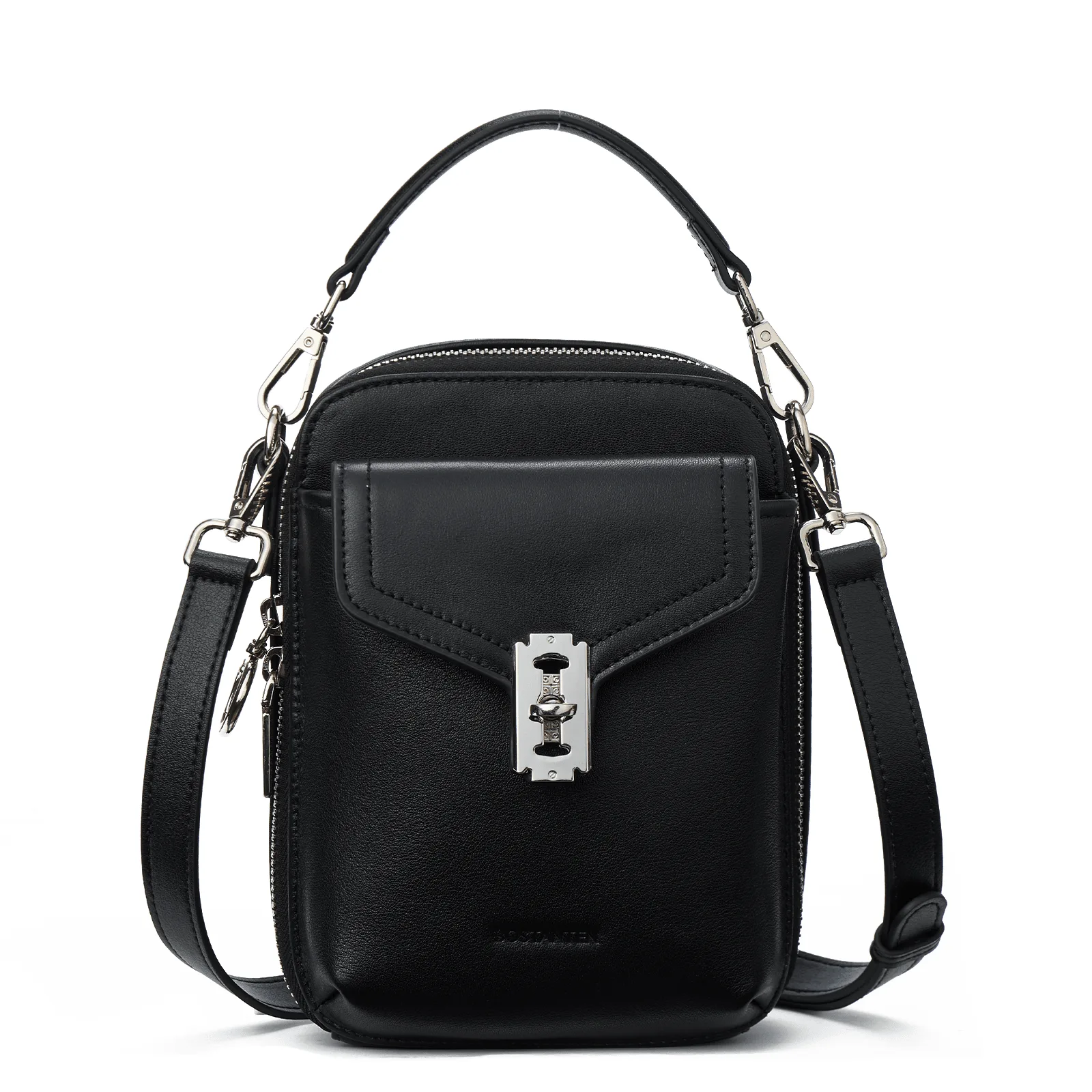
- Nevin Vegetable-Tanned Genuine Leather Crossbody Phone Bag: Compact crossbody built with double security: a top-zip main compartment plus a turn-lock front flap pocket. Inside, smart divided pockets keep your phone, cards and other items organized. For a gym or short trip, a compact bag with divided pockets keeps cards and a phone from sliding around, so you are not digging through the duffel at the door.
A duffel stays organized when you pack it in layers and fill the gaps that let items slide. Use the lift test as your final check, and repack the base layer whenever the bag feels off balance.