Quick answer
Pack your duffle bag with heavy items low and centered, use dry bags or compression sacks for weather protection, and keep essentials accessible on top.
Why packing order matters for bike travel
When you're traveling by bike, your duffle bag's weight distribution affects handling, especially if you carry it on a rear rack or in a trailer. A top-heavy or unbalanced load can make the bike feel unstable, especially on turns or uneven terrain.
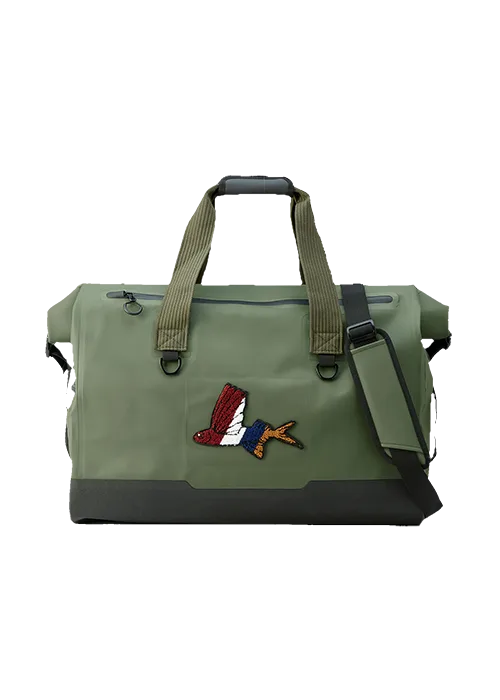
A structured base helps the bag keep its shape and makes loading easier. The Café du Cycliste Duffle Bag, for example, has a structured bottom so you can stand it upright and pack without the bag collapsing.
Trade-off: compression vs. quick access
Compression sacks save space but bury items you might need during a rest stop, like a rain jacket or snacks. Roll heavy clothing tightly instead of using compression cubes for the middle layer, and keep a small pouch or the top compartment for items you'll grab without unpacking.
If your duffle bag lacks internal pockets, use packing cubes or zip pouches to separate clean clothes from wet or dirty gear.
Steps to pack your duffle bag for bike travel
- Step 1: Place heavy items at the bottom and center: Put tools, shoes, toiletries, and other dense items in the lowest part of the bag, centered over the bag's base. This lowers the center of gravity and keeps the load stable when strapped to a rack or carried on your back. A bottom-heavy bag handles better on the bike.
- Step 2: Roll and layer clothing in the middle: Roll shirts, pants, and underwear tightly to minimize wrinkles and save space. Place them in a single layer above the heavy items. For wet weather, put rain gear or a damp towel in a dry bag or stuff sack before adding it to the middle layer. Rolling also helps you see everything at a glance.
- Step 3: Keep essentials on top and accessible: Store items you might need during the ride—snacks, a map, a phone charger, a light jacket—in the top portion of the bag or in an external pocket. If your duffle has a separate shoe compartment or a zippered end pocket, use that for quick-grab items. Avoid digging through the whole bag at a rest stop.
- Step 4: Secure loose items and close the bag properly: Zip the main compartment fully and check that the waterproof zipper is seated correctly. If your bag has compression straps, tighten them to reduce bulk and keep the load from shifting. For bike rack mounting, use bungee cords or straps that thread through the bag's handles or D-rings. A loosely packed bag can slide off a rack or cause handling issues.
Product facts
-
Duffle Bag: The Café du Cycliste Duffle Bag has a structured base for easy loading and a waterproof zippered main opening. The structured base helps the bag stand upright while packing, and the waterproof zipper protects your gear from rain and road spray during bike travel.
Duffle Bag