Quick answer
Clean both pieces first, then store them flat or gently rolled in acid-free tissue inside a breathable cotton bag or archival box. Keep them away from direct light, heat, moisture, and plastic. If you plan to wear the robe again, use a padded hanger in a cotton garment bag instead of long-term box storage.
Your wedding robe and veil did more than look beautiful on the day. They hold the quiet moments — the champagne, the nerves, the last look in the mirror. Storing them well is how you keep those pieces intact for anniversaries, daughters, or simply the pleasure of opening the box years later.
The good news: you do not need a conservation lab. You need a few careful steps, the right materials, and a little patience. This guide walks through packing and storing both a lace robe and a veil, with checkpoints so you can tell you have done it right.
Start with clean, completely dry pieces
Any body oils, perfume, or invisible sugars from champagne will slowly yellow silk and weaken lace over time. If your robe is washable, follow the care label; if it is a delicate couture piece, spot-clean only the areas that need it or take it to a specialist. The veil usually needs no washing at all — a gentle steam or airing is often enough.
The non-negotiable checkpoint: everything must be bone dry before it goes into storage. Even a hint of dampness trapped in a box can cause mildew. Let pieces air in a shaded, well-ventilated room for a full day after cleaning, then check the seams and hems by touch.
- Never store a veil or robe in a plastic dry-cleaning bag — it traps moisture and fumes.
- If you are unsure whether a trim is silk or synthetic, test a hidden corner with a damp white cloth first.
Choose the right storage method for each piece
Robes and veils have different needs. A robe that will be worn again — say, for an anniversary dinner or a getting-ready morning for a friend — does better on a padded hanger inside a breathable cotton garment bag. A veil, especially one with delicate tulle or lace applique, should be stored flat or rolled to avoid permanent creases and stretching.
If both pieces are going into long-term keepsake storage, use an acid-free box lined with acid-free tissue. Avoid ordinary cardboard and colored tissue; both can leach acids that discolor fabric over years. The checkpoint here is simple: if you can smell the box (glue, dye, perfume), do not put your wedding pieces in it.
- For a veil with a comb, wrap the comb in tissue before rolling so it does not snag the tulle.
- For a robe with heavy lace, fold along existing seams rather than creating new creases.
Pack with structure, not pressure
When packing a bridal robe, lay it flat and fold it loosely, interleaving acid-free tissue between layers. Do not compress it to save space — pressure is what creates sharp creases that can become permanent in silk and lace. If the robe has a belt or removable tie, roll it separately and tuck it alongside, not around the folded body.
For a veil, the safest method is to roll it around a wide, acid-free tube (or a clean, lint-free towel roll) so it curves gently rather than folding. If the veil is too wide to roll, layer it flat with tissue between every fold and avoid stacking anything on top. Checkpoint: after packing, the box should close without force.
- Label the outside of the box with the date and contents so you do not have to open it to check.
- Store the box on a shelf, not on the floor or against an exterior wall.
Control the storage environment
Heat, light, and humidity are the three quiet enemies of lace and silk. Aim for a cool, dark, dry spot with stable temperature — a closet shelf or under-bed archival box works well. Avoid attics, basements, and garages, where swings in moisture and temperature are hardest on delicate fabrics.
If you live in a humid climate, add a small silica gel packet to the storage box and replace it every six months. Do not use scented sachets, cedar blocks, or mothballs directly against the fabric; the oils and fumes can stain or weaken fibers. Checkpoint: if the storage spot smells musty or feels damp, move the box.
- Inspect stored pieces once a year — refold along different lines to prevent crease memory.
- Keep stored items away from direct sunlight, which fades ivory and weakens tulle.
Your 7-step packing and storage routine
- Clean and air-dry completely: Spot-clean or wash according to the care label, then let both pieces air in a shaded, ventilated room for at least 24 hours. Checkpoint: touch every seam and hem — if you feel any coolness or dampness, wait another day.
- Gather acid-free supplies: You need acid-free tissue, an acid-free box or breathable cotton bag, and optionally a wide tube for rolling a veil. Do not use ordinary cardboard, colored tissue, or plastic bags.
- Fold the robe loosely with tissue between layers: Lay the robe flat, fold along existing seams, and interleave tissue so lace does not rub against lace. If the robe will be worn again soon, hang it on a padded hanger in a cotton garment bag instead.
- Roll the veil around a wide tube: Wrap the comb in tissue first, then roll the veil gently around an acid-free tube or clean towel roll. If the veil is too wide to roll, layer it flat with tissue between every fold.
- Place everything in the box without pressure: Set the rolled veil beside or on top of the folded robe, then close the lid. It should close easily, with no force. Checkpoint: if you have to push the lid down, remove a layer of tissue or refold more loosely.
- Store in a cool, dark, dry spot: Choose a closet shelf or under-bed space away from sunlight, heating vents, and exterior walls. In humid climates, add a silica gel packet and replace it every six months.
- Inspect and refold once a year: Open the box, check for pests or discoloration, and refold along new lines to prevent permanent creases. If you see yellowing or a musty smell, move the piece to a drier location and consult a textile conservator.
How specific fabrics change your storage plan
- Juliet French lace robe coat cover up in Ivory: Our Juliet long dressing gown is a romantic and versatile piece that is sure to become a cherished heirloom after the wedding as a reminder of such a special day. Because it is designed to be kept, store it flat with acid-free tissue and refold annually so the lace does not take a permanent set.
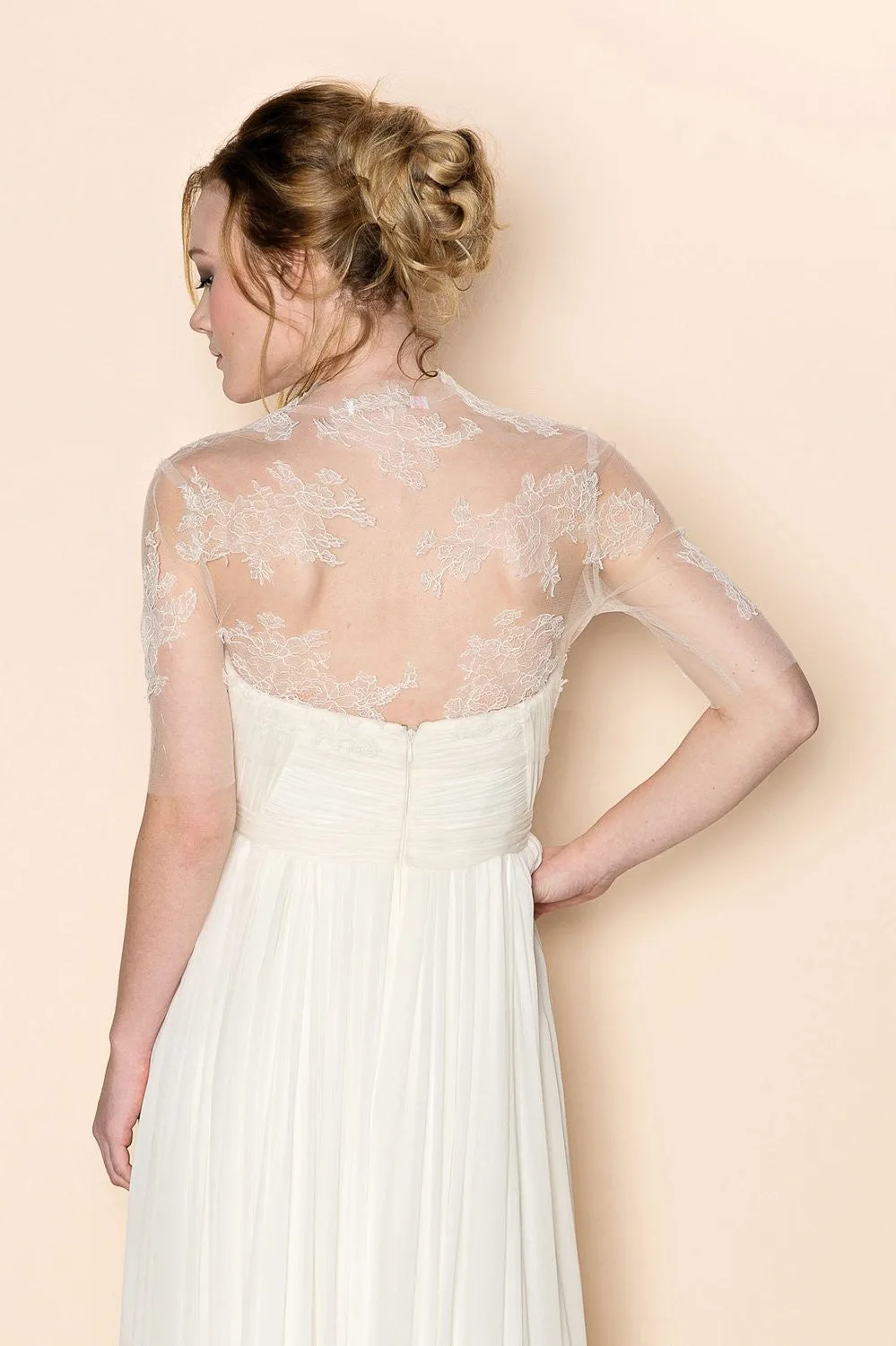
- Eliza bridal french lace and tulle bridal bolero shrug cover up: The Eliza lace & tulle shrug is a couture piece: delicate and light as air, with gorgeous hand cut French lace applique on English tulle and elbow length sleeves. Hand-cut applique on tulle snags easily, so roll this piece around a tube rather than folding it sharply, and wrap the sleeves in tissue.
- Dream Day Silk Romper Playsuit in Ivory: Made of pure silk in a flattering silhouette with delicate spaghetti straps that are adjustable, V neck, a lovely low V back, and finished with a removable waist tie. Silk creases easily, so if you plan to wear this again, hang it on a padded hanger in a cotton bag instead of pressing it into a box.
- Ines French Lace bikini panties briefs in Ivory: Expertly crafted from stunning stretch French Leavers lace with seamless scalloped edges for the best fit and feel. Stretch lace can lose its recovery if stored compressed, so keep this piece flat and loose, not folded tightly under heavier items.
Packing your wedding robe and veil with care takes an afternoon, but it protects the pieces for decades. Use acid-free materials, keep everything dry and flat, and check once a year. Your future self — and maybe someone else — will thank you.