Quick Answer
Pack your dog's backpack with the heaviest items low and close to their body, keep the total weight under 25% of their body weight, and adjust the harness so the load stays stable without chafing.
Why Weight Distribution Matters
A dog's spine and shoulders are designed for movement, not heavy loads. If you pack too much weight high on their back, it shifts their center of gravity and can cause strain. Low, snug packing keeps the load close to their body, which reduces fatigue and helps them maintain a natural gait.
Even with a well-designed pack like the Ruffwear Approach Dog Backpack, overloading is a common mistake. The pack's radial cut saddlebags create a passive compression system that works best when the load is balanced and not excessive.
What to Pack and What to Leave Home
Your dog should carry their own essentials: water (in collapsible bottles or a hydration bladder), a lightweight bowl, a small first-aid kit, and maybe a compact snack. Leave heavy items like food cans, tools, or extra clothing for your own pack.
Keep the pack's total weight under 25% of your dog's body weight—less if your dog is young, senior, or not used to carrying loads. Start with just a few pounds and gradually increase over multiple outings.
Step-by-Step Packing Guide
- Weigh the load: Weigh your dog and calculate 25% of their body weight as the maximum load. Use a kitchen scale to weigh the loaded pack. Start with less if your dog is new to packing. Weigh the pack before every hike, not just the first time.
- Balance the saddlebags: Place the heaviest items (like water) low and close to your dog's body, centered in each saddlebag. Aim for equal weight on both sides. A difference of even a few ounces can pull the pack off-center. Use small stuff sacks to keep items from shifting.
- Secure loose items: Make sure nothing dangles or bulges. Compression straps should be snug but not tight enough to dig in. On a pack like the Approach, adjust the straps so the saddlebags sit evenly and don't bounce. Check strap tension after a few minutes of walking.
- Fit the harness: Put the pack on your dog and adjust the chest and belly straps so the pack stays in place without restricting movement. You should be able to slide two fingers under the straps. The pack should not shift side to side when your dog walks. Re-check the fit after your dog warms up.
- Test on a short walk: Before a full day hike, take a short walk around the block with the loaded pack. Watch for chafing, changes in gait, or signs of discomfort. If your dog seems off, remove weight and re-balance. A good test walk can prevent a ruined hike.
Gear That Helps
-
Approach™ Dog Backpack: The Approach Dog Backpack features radial cut saddlebags that create a passive compression system for efficient load carrying over the shoulders. This design keeps the load snug and stable, which helps prevent the pack from shifting and reduces strain on your dog's shoulders during a day hike.
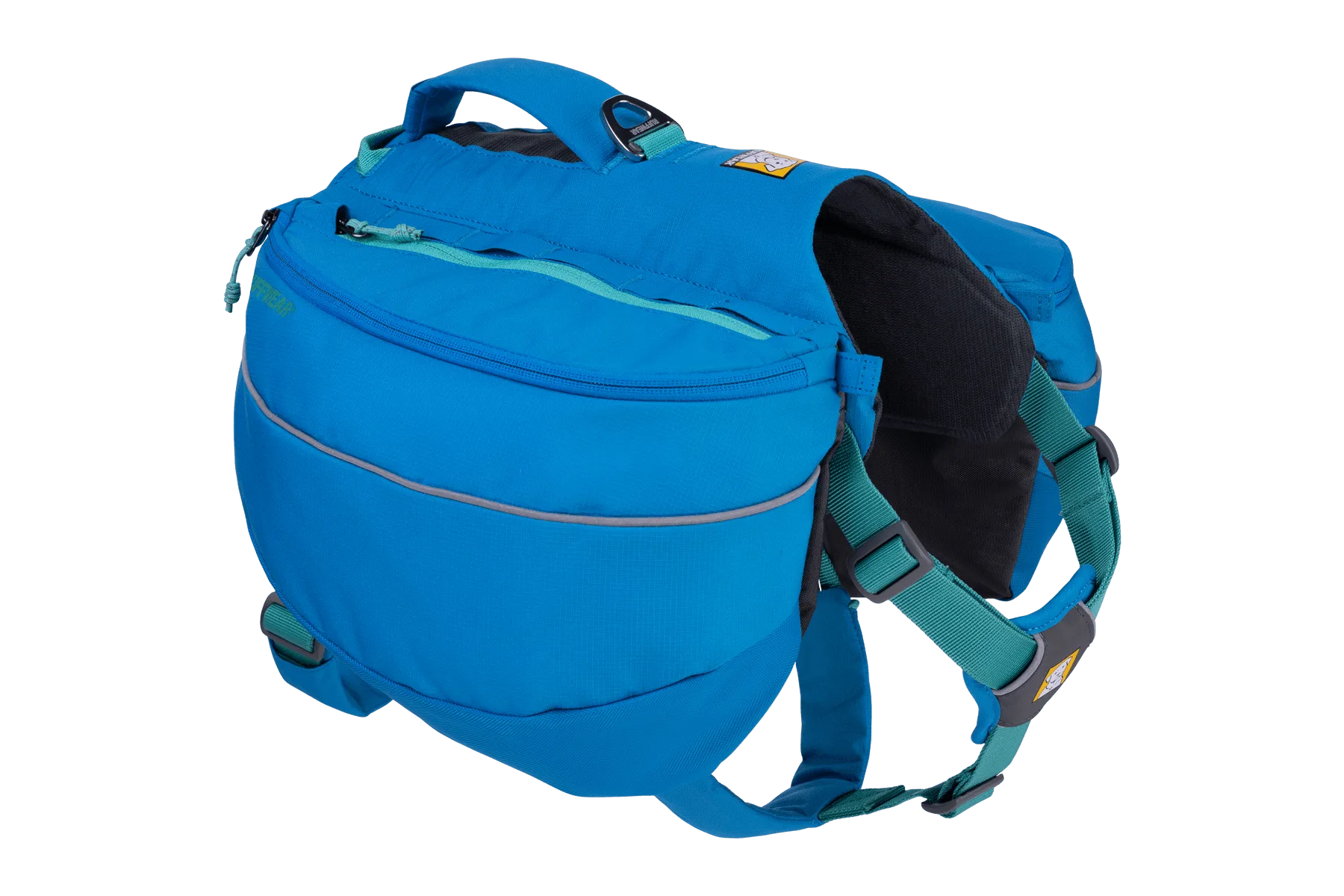
Approach™ Dog Backpack
Once your dog's pack is balanced and fitted, hit the trail and enjoy the hike—just remember to take regular breaks and offer water. With practice, your dog will carry their own gear comfortably and happily.