Quick answer
Start by checking your airline's carry-on limits, then pack your NFL travel duffel bag in layers: bulky game-day layers on the bottom, a cube or pouch for small gear in the middle, and anything you need at security or in the stadium on top. Keep the bag to one personal item plus your duffel, and leave roughly a quarter of the space empty for souvenirs or a dirty laundry bag on the way home.
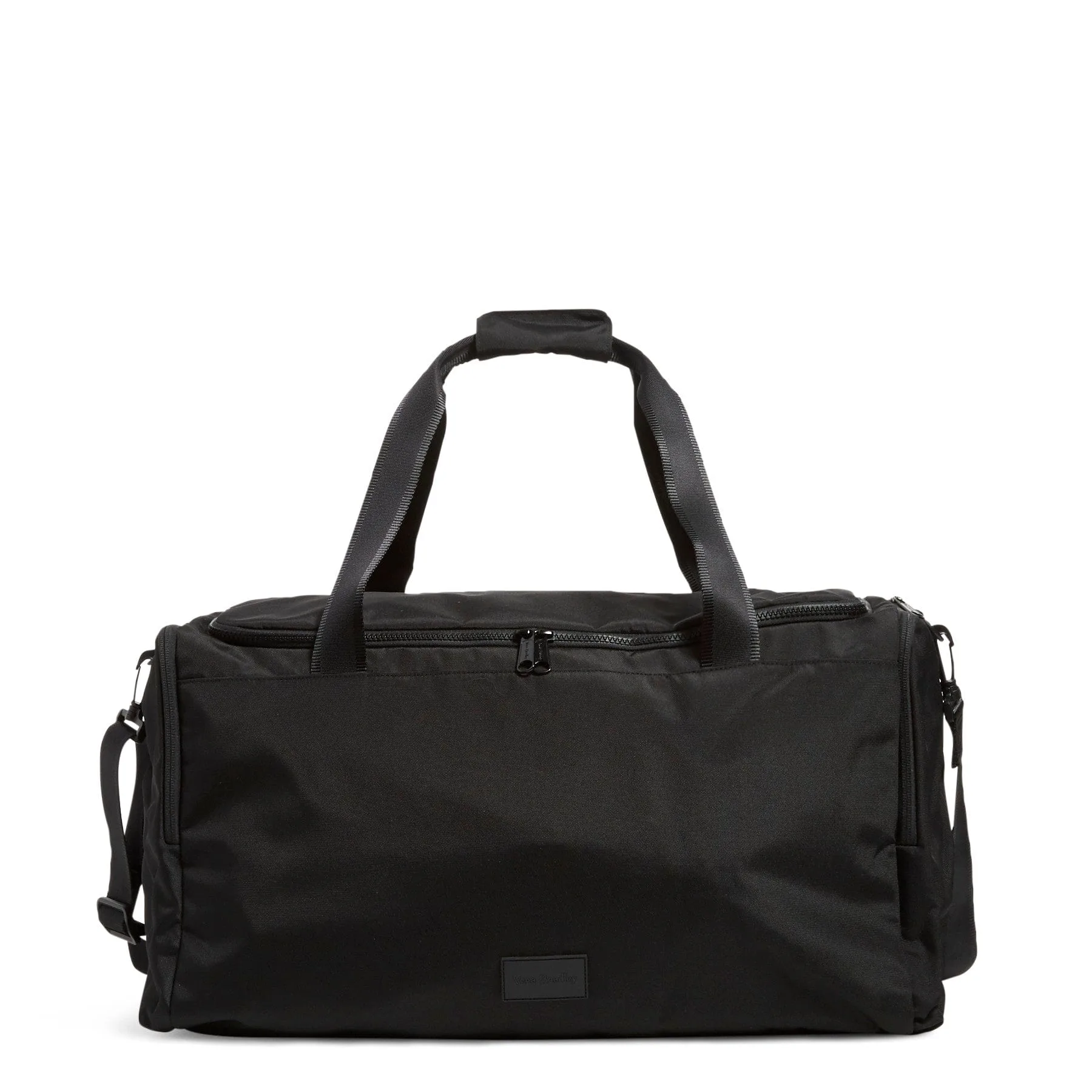
travel duffel bag
A game day weekend asks a lot of one bag: it has to survive a flight or a long drive, hold team colors and weather layers, and still be easy to carry through a stadium gate. The trick is not packing more, it is packing in a deliberate order so the things you need first are never buried at the bottom.
This guide walks through a repeatable packing process for an NFL travel duffel bag, using real carry-on-friendly options from the Vera Bradley Outlet Store catalog. Follow the steps in order and you can pack in about 20 minutes, then repack just as fast on Sunday night.
Step 1: Confirm your size limit before you pack anything
Before you fold a single jersey, confirm what your airline or your car trunk will actually accept. Most major US carriers cap a carry-on around 22 x 14 x 9 inches, but regional jets and budget fares are stricter, so check your specific booking rather than assuming. If you are driving, measure your trunk space instead and decide whether one large bag or two smaller ones will be easier to lift.
This is where an NFL duffel bag size decision matters most. A bag that is carry-on compliant saves you a checked-bag fee and a baggage-claim wait, but it also means you cannot overpack. If your bag is larger than the carry-on limit, plan to check it and pack accordingly, with nothing valuable or fragile inside.
- Write your bag's exterior dimensions on a sticky note and keep it with your packing list so you stop guessing.
- If you are flying basic economy, assume a personal item only and size your duffel to that stricter limit.
Step 2: Build a game day weekend bag list in three tiers
Split your list into three tiers: what you wear to the game, what you wear away from the game, and what you only need in transit. The game tier gets team colors, a weather layer, and comfortable shoes. The away tier is one casual outfit for dinner or the hotel. The transit tier is a small pouch with charger, snacks, and ID.
Keeping the tiers separate stops the classic mistake of packing four outfits for a two-night trip. For a standard Friday-to-Sunday football road trip, one game outfit, one casual outfit, sleepwear, and one spare base layer is usually enough. If the forecast is uncertain, add a packable layer rather than a second heavy jacket.
- Check the stadium bag policy before you leave, since many venues restrict clear bags or limit bag size at the gate.
- Pack a plastic bag or small stuff sack for wet or dirty clothes so they do not touch clean items on the way home.
Step 3: Pack the base layer first and keep the top clear
Open the duffel flat and lay bulky, soft items along the bottom: shoes at the two ends, then rolled jeans or a hoodie across the middle. Rolling instead of folding reduces creases and lets you fill odd gaps around the shoe shapes. This base layer is also the heaviest part of the bag, which keeps the load stable when you carry it by the strap.
Leave the top third of the bag empty for now. That space is for items you will pull out at security, in the car, or in the stadium: your clear bag, a light layer, and your phone charger. If you fill the bag to the brim at this stage, you will end up digging through everything later.
- Stuff socks and small items inside shoes to reclaim dead space.
- Place a folded rain shell or light jacket flat against one side wall, not on top of everything else.
Step 4: Use pouches and cubes for small gear
Small items are what turn a tidy duffel into a mess by Saturday morning. Group them by type: one pouch for cables and chargers, one for toiletries, one for game day extras like face paint, a phone battery, or a small poncho. Pouch-based duffel organization means you can find the one thing you need without unpacking the whole bag.
If you carry jewelry, a watch, or small keepsakes for the trip, a hard case keeps them tangle-free and protected instead of loose in a side pocket. The same logic applies to medication or supplements: a dedicated case with labeled compartments is easier to check at a glance than a plastic bag of loose bottles.
- Use a different color pouch for each category so you can identify them by feel in a dark hotel room.
- Keep one small pouch permanently packed with a charger, earplugs, and a granola bar so it is ready before every trip.
Step 5: Pack the layers you will actually wear at the stadium
Stadium weather swings hard between a sunny afternoon and a night game, so pack for the temperature range, not the forecast high. A base layer, a team jersey or top, and a packable outer layer covers most conditions without adding bulk. If rain is likely, a compact poncho takes less space than an umbrella and is usually allowed through the gate.
Wear your bulkiest items on travel day instead of packing them. Boots, a heavy coat, and your thickest hoodie should be on your body, not in the duffel. That single habit is often the difference between a carry-on that closes easily and one you have to sit on.
- Choose one color palette for the weekend so every top works with the same bottoms and shoes.
- Add a spare pair of socks and a small towel if rain is in the forecast, since wet feet ruin the walk back.
Step 6: Close, weigh, and test-carry the bag
Zip the bag, then lift it by the handle and the shoulder strap for a full minute. If the strap digs in or the bag sags, redistribute weight before you leave the house. Weigh it on a bathroom scale if you are flying, and compare against your airline's limit, which is often 40 pounds for a carry-on on international routes but varies by carrier.
Do a final pocket check: ID and keys in a zipped interior pocket, not an open side pocket. Then walk the bag to the car or the door once. A 30-second test carry catches a bad strap adjustment or an unbalanced load while you still have time to fix it.
- Take a photo of your packed bag so you can repack it the same way on the return trip.
- Keep a collapsible tote in an outer pocket for overflow on the way home.
Game day weekend packing steps at a glance
- Check the size limit: Confirm your airline's carry-on dimensions or your trunk space before packing, and note whether the stadium restricts bag size at the gate. Checkpoint: if your duffel exceeds the limit, decide now to check it rather than at the airport counter.
- Write a three-tier list: Separate game outfit, away-from-game outfit, and transit-only items so you do not pack four outfits for two nights. Checkpoint: one game outfit, one casual outfit, sleepwear, and one spare base layer is enough for a standard weekend.
- Pack the heavy base layer: Lay shoes at the ends and rolled jeans or a hoodie across the bottom, filling gaps with socks and small items. Checkpoint: leave the top third of the bag empty for things you need first.
- Group small gear in pouches: Use separate pouches for cables, toiletries, and game day extras, and a hard case for jewelry or small valuables. Checkpoint: every small item should have a named home before the bag is zipped.
- Pack for the temperature range: Add a packable outer layer and a compact poncho instead of a second heavy jacket, and wear your bulkiest items on travel day. Checkpoint: if the bag will not close without force, remove one layer and wear it instead.
- Test-carry and weigh: Lift the bag by both handle and strap for a minute, check the weight against your airline limit, and keep ID and keys in a zipped interior pocket. Next step: photograph the packed bag so the return trip repacks the same way.
Carry-on-friendly bags and organizers from the Vera Bradley Outlet Store
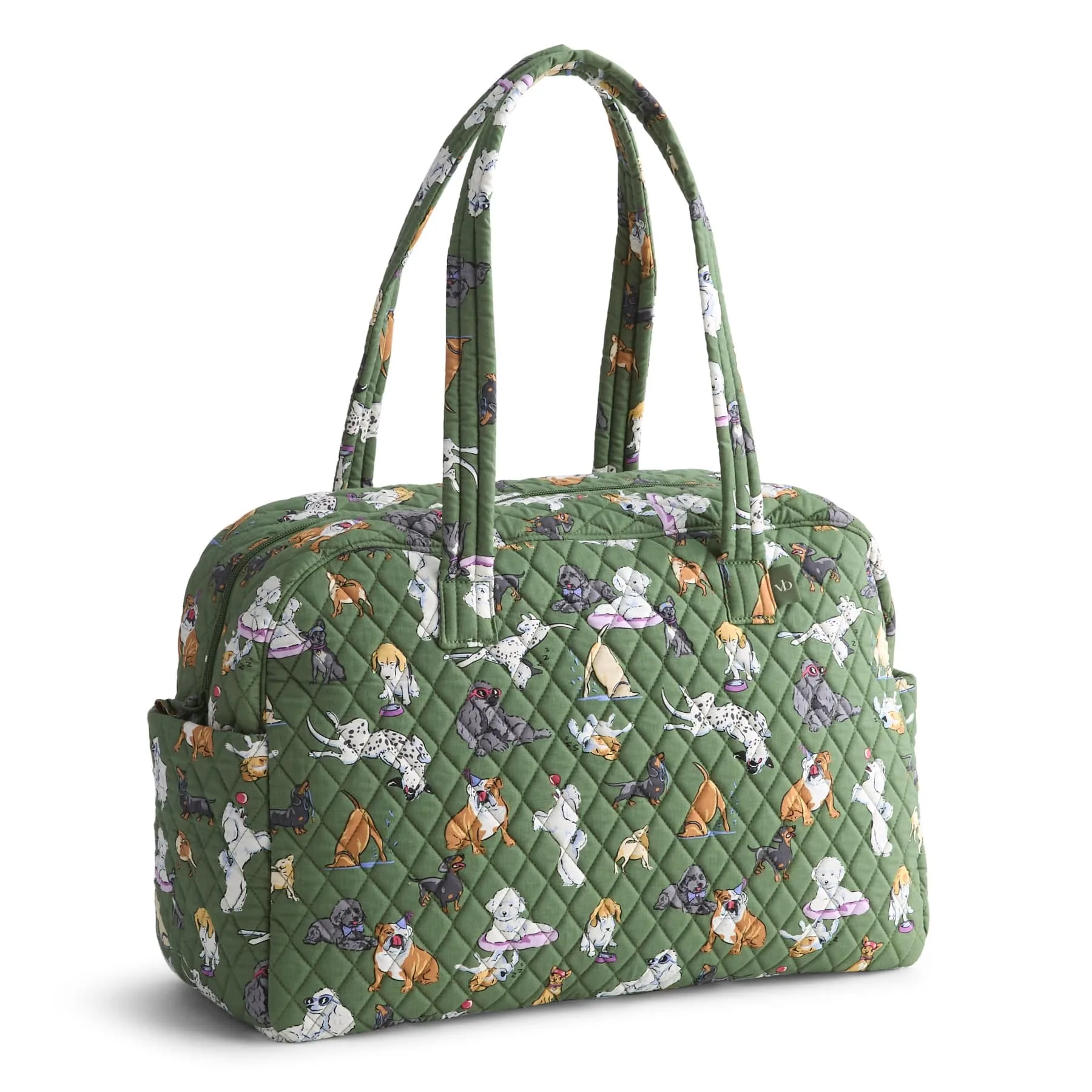
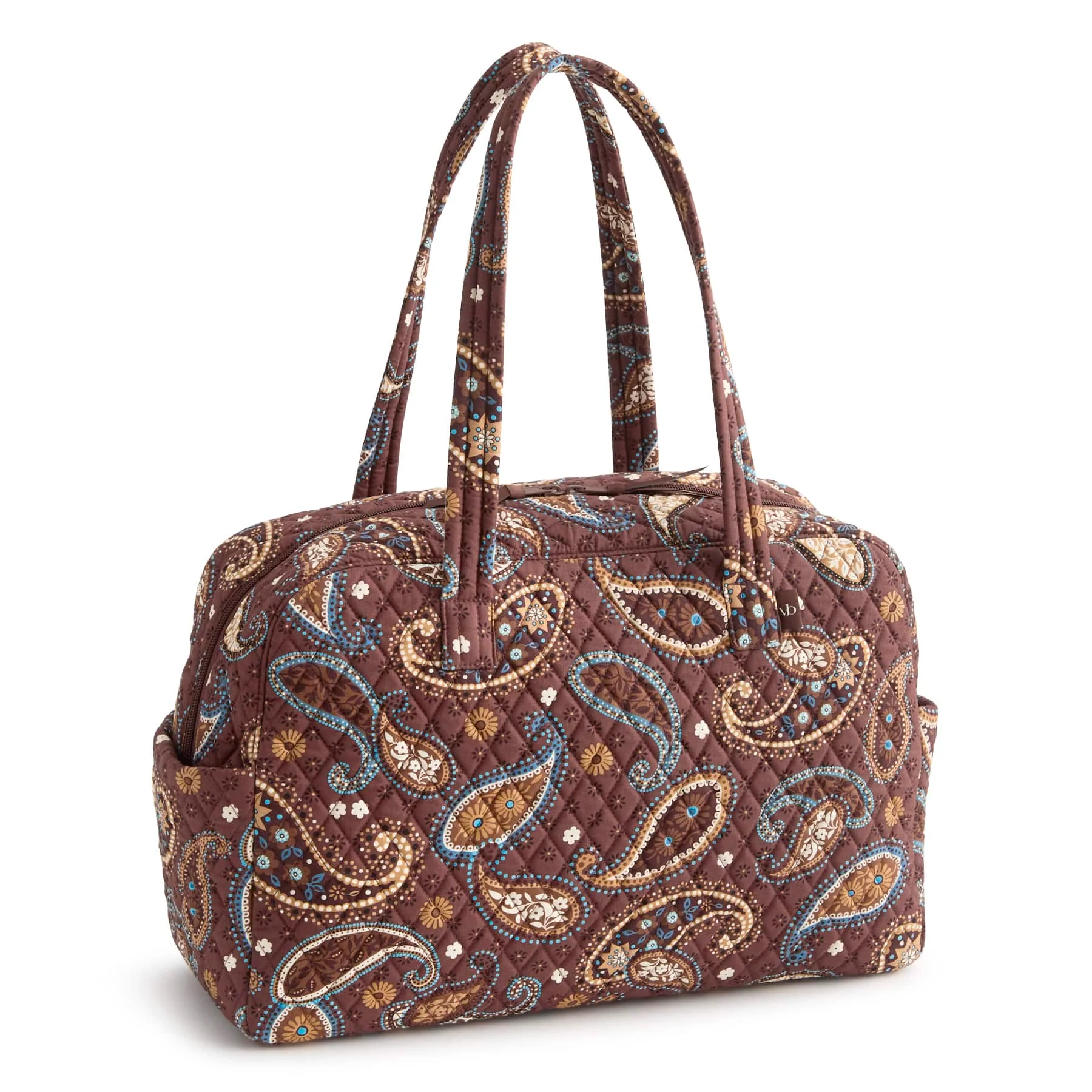
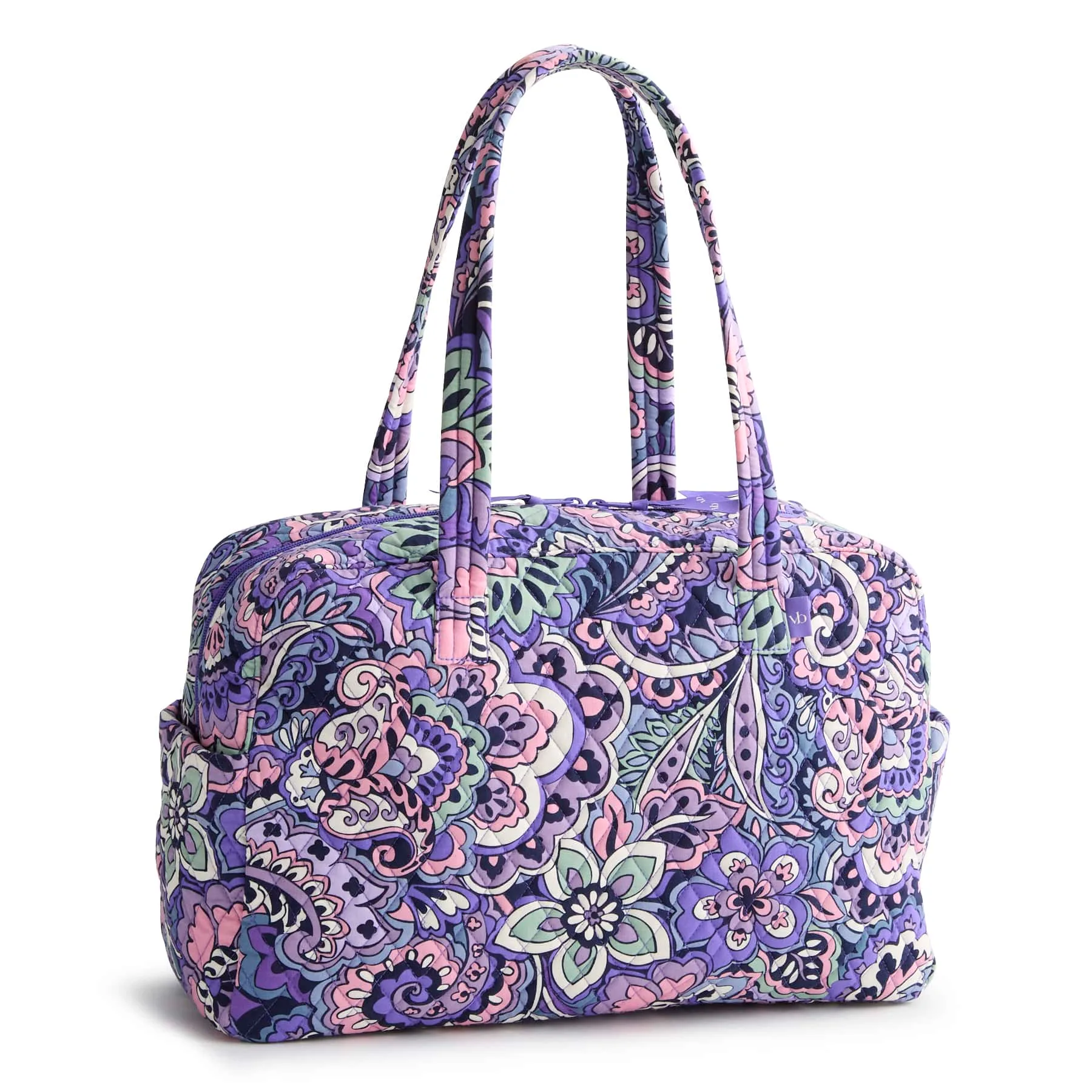
- https://verabradleyoutletex.com/products/outlet-weekender-travel-bag-5077624288-282284418cbefe284aacedc9-1642476https://verabradleyoutletex.com/products/outlet-weekender-travel-bag-5077623029-24df6edf79a2b6038dd4a440-1642532https://verabradleyoutletex.com/products/weekender-travel-bag-5077623432-aab0a02b6dba651f834e2c9f-1642535Outlet Weekender Travel Bag: Carry-on compliant, 28 L capacity, dimensions 18.0" w x 12.0" h x 7.0" d, with two side pockets and a pocket that unzips to make a trolley sleeve. The 28 L capacity and 18-inch width fit a two-night game day weekend without checking a bag, and the convertible trolley sleeve slides over a rolling suitcase handle if you are combining this trip with a longer one.
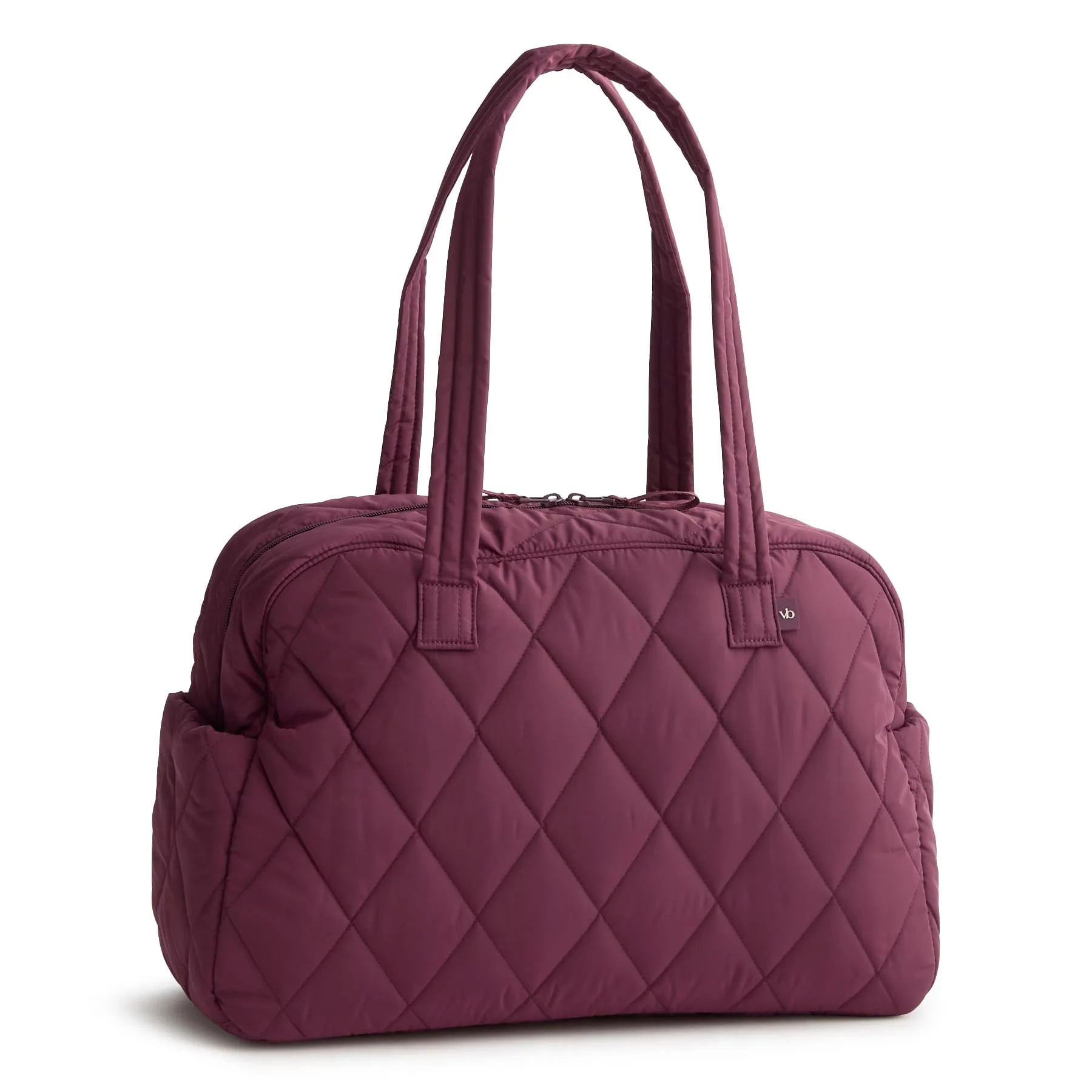
- Weekender Travel Bag: Carry-on compliant, made from quilted, sleek, water-repellent polyester, with a roomy central compartment and a front zip pocket. The water-repellent shell is useful for a rainy tailgate or a stadium walk, and the single central compartment is easy to pack in layers when you are following the steps above.
- Disney Outlet Essential Large Backpack: Large backpack with a laptop compartment, three compartments, two exterior side pockets, a trolley sleeve, and a front compartment with a pen slip pocket and four slip pockets. If you prefer a backpack as your personal item, the multiple compartments and trolley sleeve keep small game day gear organized and let the bag ride on your rolling luggage.
- Outlet Supplement Pill Case: Contains seven removable EVA pouches with days of the week stickers, zip closure, dimensions 4.5" w x 3.5" h x 3.25" d. A labeled, removable-pouch system keeps daily medication or supplements organized across a multi-day road trip instead of loose in a toiletry bag.
Pack in layers, keep small gear in labeled pouches, and leave room for the trip home. Do that, and your NFL travel duffel bag stops being a chore and starts being the easiest part of the weekend.