Quick answer
Pack the TAKE OFF 3-Piece Travel Bundle 4.0 by role, not by size: put dense, flat items in the 22" Carry-On, keep the 18" Personal Item as your in-flight bag with the heaviest small items low and centered, and treat the 16" MINI as a dedicated overflow or day bag rather than a third full suitcase. Build in this order — heaviest layer first, then shoes, then soft fillers, then the top layer — and weigh each piece before you zip it.
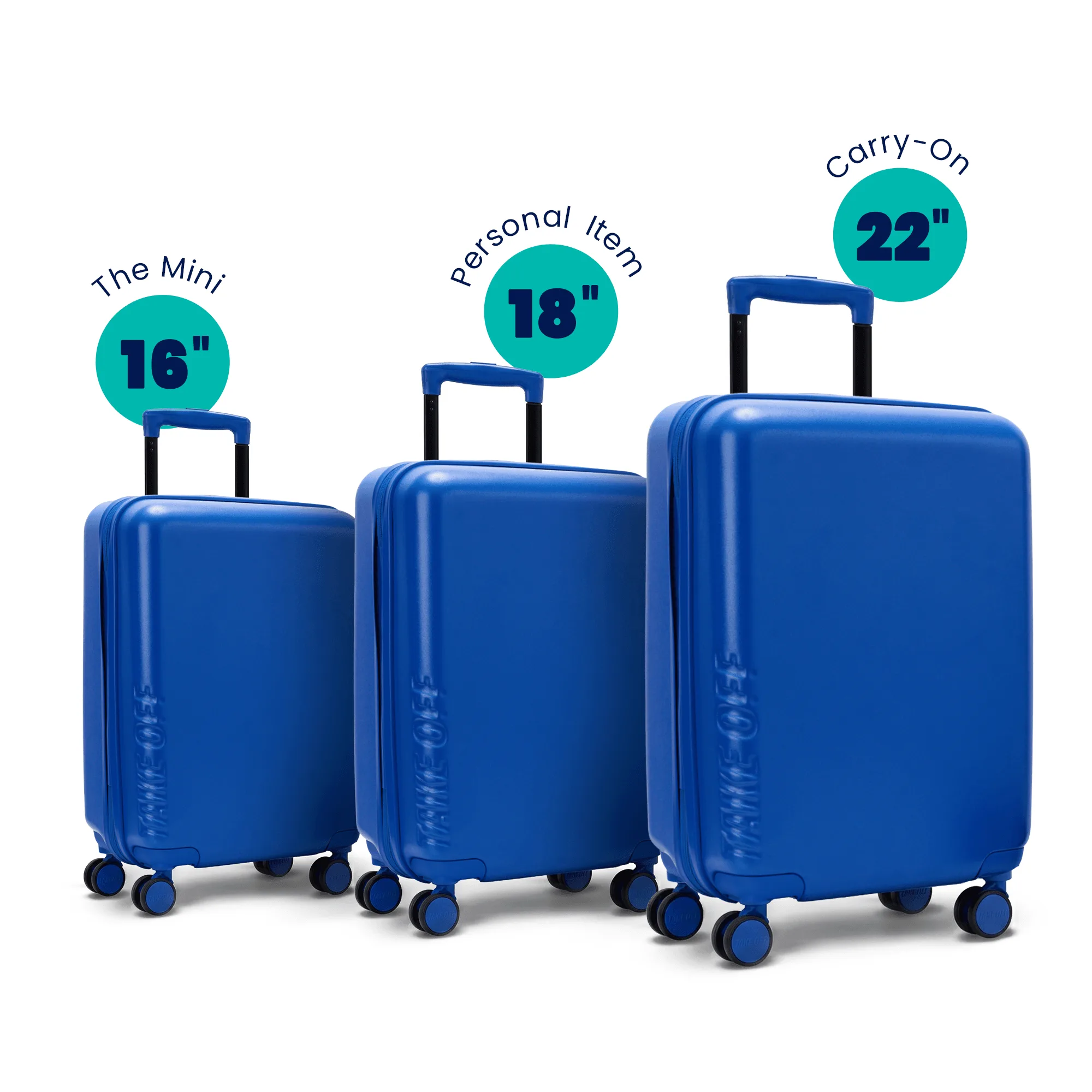
TAKE OFF 3-Piece Travel Bundle 4.0
A three-piece set only works if each bag has a job. The TAKE OFF 3-Piece Travel Bundle 4.0 gives you three different sizes — the 22" Carry-On, the 18" Personal Item that Oprah featured as a favorite, and the new 16" TAKE OFF MINI — and the mistake most people make is packing all three the same way. That leaves you heavy in the wrong bag and digging through the MINI at the gate.
This guide walks through a repeatable packing order you can run the night before any trip. You'll decide what goes where first, then load each bag in a sequence that keeps weight low, protects the structure of the 4.0 shells, and leaves the MINI genuinely useful when you land.
Step 1: Assign a role to each bag before you pack anything
Write three labels: Carry-On (checked-size capacity, overhead bin), Personal Item (under-seat, in-flight access), MINI (overflow or destination day bag). Everything you own for the trip gets sorted into one of those three roles before it goes near a suitcase. This single decision prevents the most common failure of a 3 piece set — three half-full bags with no logic behind them.
As a rule of thumb, the Carry-On takes the bulkiest and heaviest items, the Personal Item takes anything you need during the flight plus one full outfit as a backup, and the MINI takes items you won't touch until you arrive: dirty laundry bags, a second pair of shoes, or souvenirs on the return leg.
- Checkpoint: if you can't say in one sentence why an item is in a specific bag, it belongs in the Carry-On.
Step 2: Lay everything flat and cut the pile by a third
Lay every garment flat on the bed, then remove roughly a third of it. Three bags create the illusion of unlimited space, and that illusion is what pushes you into gate-check fees or a sore shoulder. For a one-week trip, four to five tops, two bottoms, one layer, and one set of sleepwear is usually enough when you commit to re-wearing.
This is also the moment to decide what stays home permanently. If an item only works for one specific evening, it's a candidate to leave behind. The point of packing a 3 piece luggage set is flexibility, not volume.
- Mistake to avoid: packing for the weather you hope for instead of the forecast you actually have.
Step 3: Load the 22" Carry-On heaviest-first
Start with shoes along the hinge side, soles facing the shell, and fill the hollows inside them with socks or small items. Then add the densest folded clothes — jeans, knitwear, anything with weight — flat against the bottom. Weight low and close to the wheels keeps the bag stable when you're rolling it one-handed through a terminal.
Work upward in layers: dense folds, then lighter folds, then a final smoothing layer of soft items across the top. Leave the expansion space empty on the outbound leg so you have somewhere to put purchases on the way home.
- Checkpoint: zip it, lift it by the handle, and roll it a few feet. If it tips forward easily, redistribute weight toward the wheel side.
Step 4: Build the 18" Personal Item around the flight, not the trip
The 18" Personal Item is the bag you'll actually touch mid-flight, so pack it for the next eight hours rather than the next eight days. Put the heaviest small items — laptop, charger pouch, toiletry kit — at the bottom against the back panel, then a mid layer of a spare outfit, then the things you'll reach for repeatedly at the top.
Keep a single flat pouch for documents and a small fanny pack for wallet, phone, and keys so you're not holding up the security line searching through the main compartment. Everything in this bag should be reachable without fully unzipping it.
- Mistake to avoid: using the Personal Item as a second checked bag. If it's too heavy to lift into an overhead bin one-handed, it's overpacked.
Step 5: Give the 16" TAKE OFF MINI one clear purpose
The MINI is the piece people misuse. Decide before you pack whether it's an overflow bag for the outbound leg, a destination day bag, or an empty shell reserved for the return trip. If it's a day bag, pack it flat and mostly empty; if it's overflow, treat it as a soft-sided extension of the Carry-On and keep only compressible items in it.
Never put hard, heavy, or fragile items in the MINI. Its value is that it stays light enough to carry on a shoulder while your hands are full of the other two bags.
- Checkpoint: the MINI should weigh noticeably less than the other two bags combined. If it doesn't, you've duplicated a role.
Step 6: Weigh, zip, and do a one-minute access test
Weigh each bag on a luggage scale before you leave the house, and compare against your airline's carry-on limit rather than a generic number. Then run the access test: without opening the Carry-On, can you reach your passport, phone, charger, and one layer? If not, repack the Personal Item until you can.
Finally, roll all three bags together for a lap around the room. Wheels, handles, and balance should all feel controlled. Any wobble now becomes a problem in a crowded boarding line.
- Mistake to avoid: skipping the weigh-in because the bags feel fine. Feel and weight are not the same measurement.
The packing sequence at a glance
- 1. Assign roles: Label the 22" Carry-On, 18" Personal Item, and 16" MINI as checked-capacity, in-flight, and overflow/day bag before anything is packed. Checkpoint: every item has one obvious home.
- 2. Cut the pile: Lay clothes flat, then remove about a third. Three bags invite overpacking more than one bag does. Mistake: packing for imagined weather.
- 3. Load the Carry-On heavy-low: Shoes along the hinge side, dense folds flat on the bottom, soft layers on top, expansion space left empty. Checkpoint: it rolls without tipping forward.
- 4. Pack the Personal Item for the flight: Heavy small items at the back panel, spare outfit in the middle, frequently used items on top, documents in one flat pouch. Mistake: turning it into a second checked bag.
- 5. Give the MINI one job: Overflow, day bag, or empty return shell — pick one. Keep only compressible items inside. Checkpoint: it stays the lightest of the three.
- 6. Weigh, zip, test access: Weigh each bag against your airline's limit, then confirm you can reach passport, phone, charger, and a layer without opening the Carry-On. Mistake: trusting feel over a scale.
Bundle details worth knowing before you pack
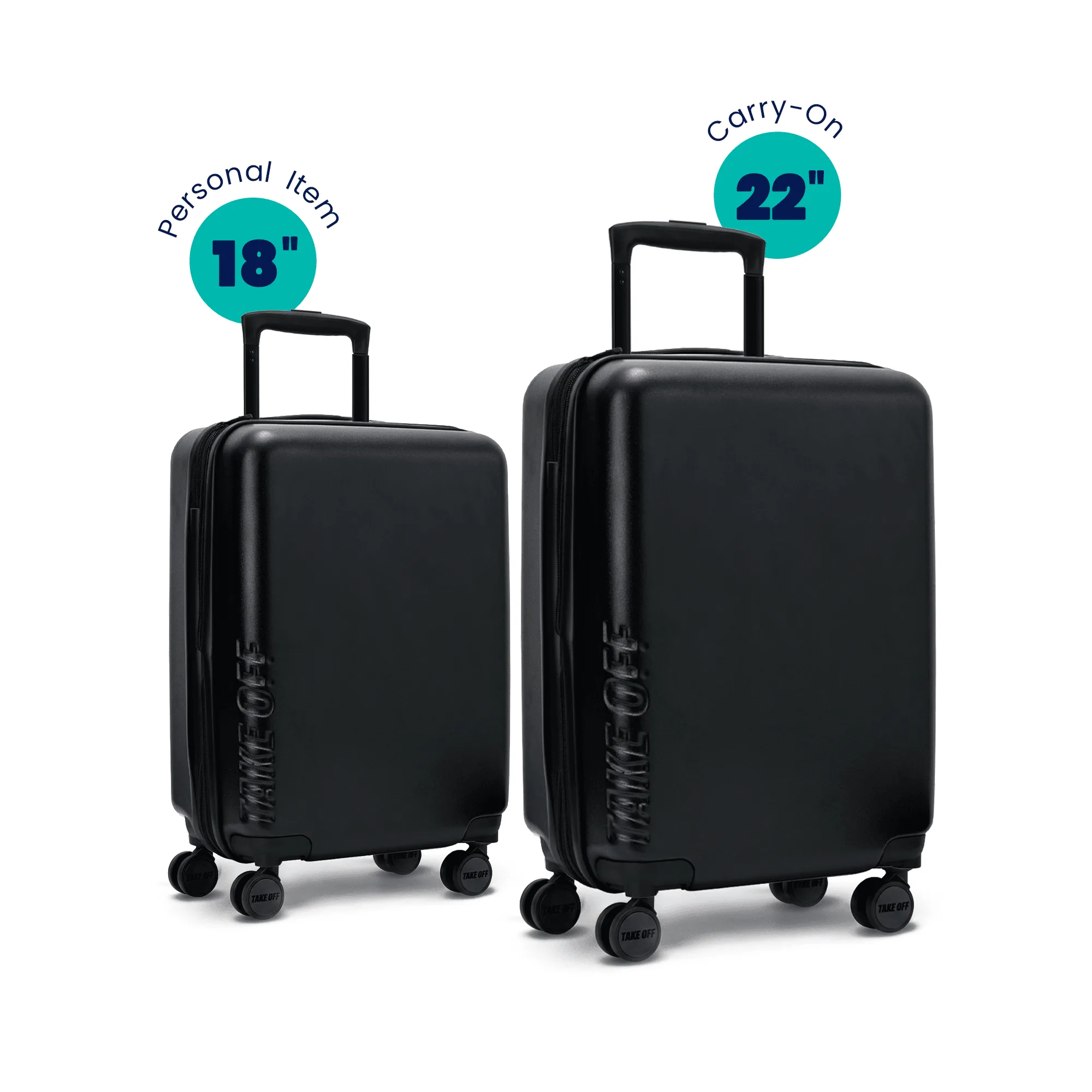
- TAKE OFF 3-Piece Travel Bundle 4.0: Includes the 22" Carry-On, the 18" Personal Item Suitcase that Oprah featured as a favorite, and the new 16" TAKE OFF MINI, in a three-piece travel system. Three distinct sizes let you assign each bag a role — the core of the packing method above — instead of splitting one wardrobe across three identical bags.
- Carry-On + Personal Item Suitcase 4.0: Pairs the 18" Personal Item with the all-new Carry-On 4.0 as a two-piece system built for strict airline rules. If you fly a carrier with tight personal-item limits, this two-piece pairing is the version to pack first and treat the MINI as optional.
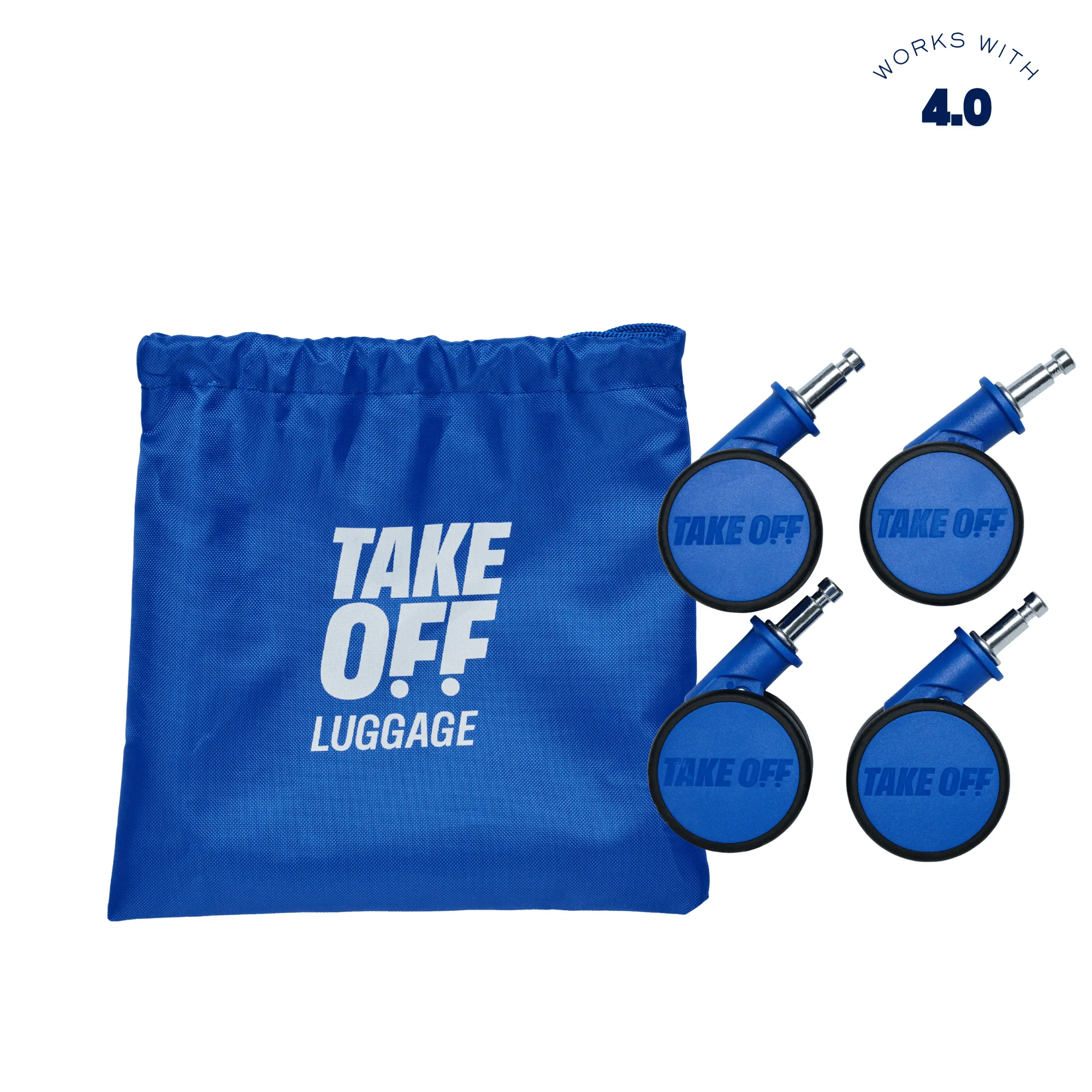
- 4.0 Double Wheels Set - 4 Pack (NEW): Replacement spinner wheels engineered for the 4.0 lineup only, with a reinforced structural core. Worth checking before a long trip: worn wheels are the most common reason a loaded 4.0 bag starts tracking badly in a terminal.
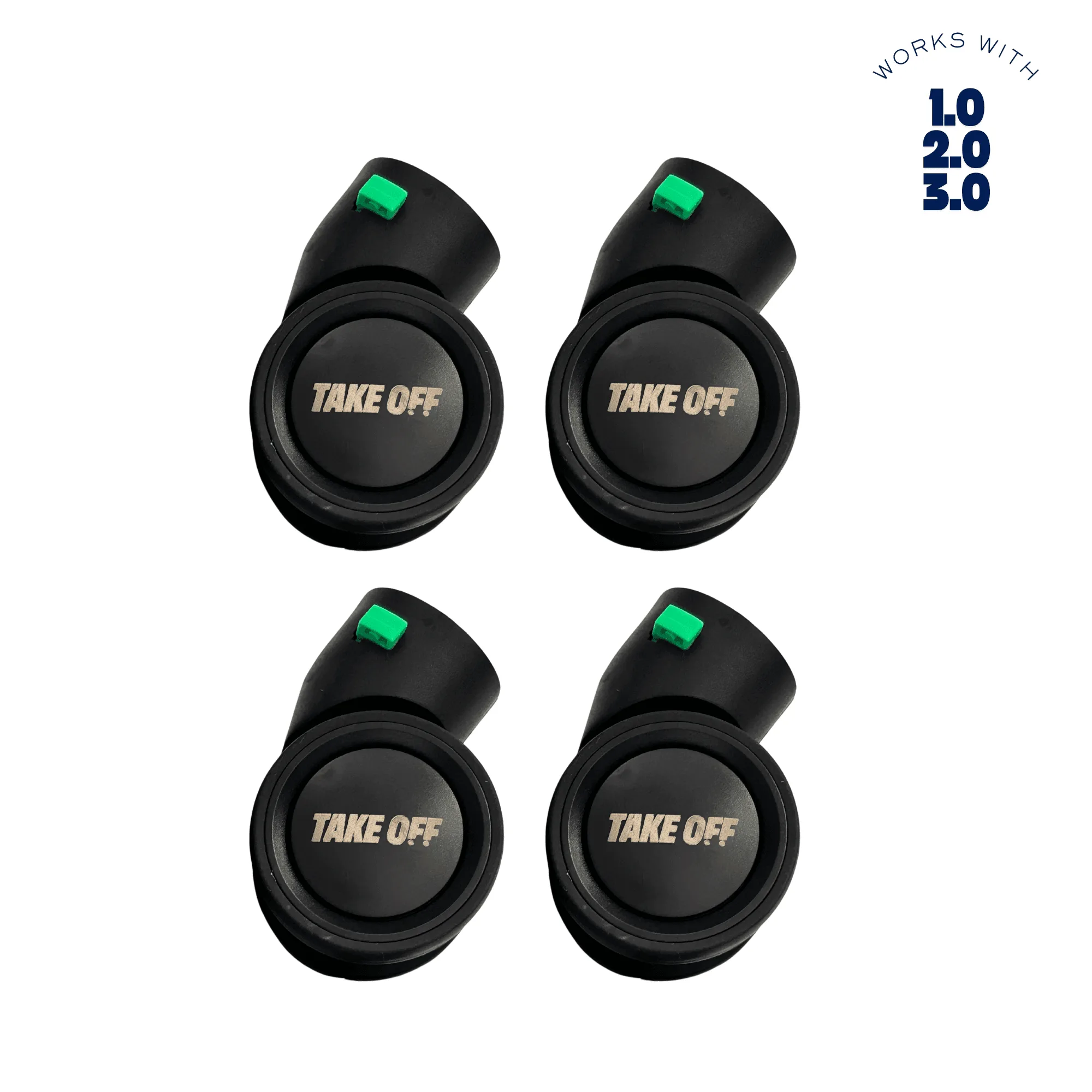
- Green Tab Double Wheels Set - 4 Pack: Fits 1.0, 2.0, 3.0 and 3.0 (PLUS) models and uses a push-button release to detach the wheels quickly. If your older TAKE OFF bag is in the mix alongside the 4.0 bundle, this is the compatible wheel set — the 4.0 wheels will not fit it.
Pack the TAKE OFF 3-Piece Travel Bundle 4.0 by role and the set stops fighting you: the Carry-On carries the weight, the Personal Item carries your flight, and the MINI stays light enough to be useful. Run the six steps once, and the second trip takes half the time.