Quick answer
For piecing, choose a fine, neutral thread that disappears into your seam — light grey for cool or bright fabrics, beige or taupe for warm ones, and black or charcoal only for very dark quilts. For quilting, audition two or three spools directly on the quilt top in daylight and pick the one that supports your goal: matching thread to hide the stitches, or a deliberate contrast to show off the quilting design. When in doubt, go one shade darker than the fabric, not lighter.
Thread color is one of the few quilt decisions you can change in minutes, so it pays to test rather than guess. The right spool can make seams vanish, let a quilting motif read clearly, or quietly hold a busy print together.
This guide walks through a repeatable process: separate piecing from quilting, sample on the real fabric, test tension and weight, then check the result under the lighting you actually sew in. A few minutes of auditioning saves a lot of unpicking.
Treat piecing thread and quilting thread as two different jobs
Piecing thread lives inside the seam allowance, so its main job is to stay strong and unobtrusive. A fine, smooth thread in a neutral tone lets seam allowances press flat and keeps the thread from shadowing through light fabrics. Quilting thread sits on top of the quilt, so its color is a design choice — it can blend, outline, or contrast.
That means you can happily use a light grey or taupe for all your piecing and a completely different spool for the quilting. Buying one neutral piecing thread in a quantity that covers several projects is usually smarter than matching a new spool to every fabric line.
- Common mistake: matching piecing thread to every single print. Neutral is faster and presses better.
- Checkpoint: if you can see a dark thread line through a cream fabric from the front, the piecing thread is too dark.
Audition spools on the actual fabric, not the bolt
Unspool 12 to 18 inches of each candidate thread and lay it across the fabric in loose S-curves. Step back a few feet. At that distance you see the value (light versus dark) rather than the exact hue, which is what the eye notices first in a finished quilt.
Always audition in daylight near a window, then again under your sewing lamp. Fluorescent and LED lighting can shift how a warm beige or cool grey reads, and a thread that disappears at noon may look green or pink at night.
- Common mistake: judging thread under a single light source.
- Checkpoint: if two threads look identical from three feet away, choose the one with the better contrast against the quilt back for easier tension checks.
Match value first, then hue
Value — how light or dark a color is — matters more than exact hue when you want thread to blend. A medium grey often disappears into a medium blue print better than a blue thread that is slightly off in tone. If you cannot find a precise match, go one shade darker rather than lighter; lighter thread tends to glow against darker fabric.
For contrast quilting, reverse the logic. Pick a thread that is at least two values away from the fabric so the stitching reads as a deliberate line rather than a smudge. A dark thread on light fabric, or a bright thread on a muted one, gives the clearest definition.
- Common mistake: chasing an exact hue match and ending up with thread that is too light.
- Checkpoint: squint at the audition. If the thread line blurs into the fabric, it will blend in the quilt.
Use a simple thread weight guide before you buy
Thread weight numbers work in reverse: a higher number means a finer thread. Fine threads suit piecing and dense quilting because they take up less space in the seam and build less bulk. Heavier threads stand out and are often used for decorative quilting or topstitching, but they need a larger needle and a looser tension.
If you are unsure what a pattern expects, check the supplies list or the designer's notes. When no weight is specified, a fine neutral thread is the safe default for piecing, and a mid-weight thread in your chosen color is a reasonable starting point for quilting.
- Common mistake: switching to a heavier decorative thread without adjusting needle size and tension.
- Checkpoint: sew a test seam on scrap fabric and pull it gently — if the thread snaps easily or the seam puckers, revisit weight and tension.
Test on a quilted sample, then check after washing
Layer a small sandwich of your actual quilt top, batting, and backing, then quilt a few inches with each candidate thread. This reveals how the thread behaves over seams, whether it blends or contrasts as expected, and whether it throws lint or causes skipped stitches.
Finally, wash or gently dampen the sample the way you plan to wash the finished quilt. Some threads lighten, darken, or bleed slightly. A five-minute check now prevents a surprise after the binding is on.
- Common mistake: judging thread only on flat fabric and never over a seam or batting.
- Checkpoint: if the thread color shifts noticeably after washing, choose a different spool before you commit to the whole quilt.
Your thread color decision, step by step
- Step 1: Decide the job: Separate piecing from quilting. For piecing, pick a fine neutral thread that disappears into the seam. For quilting, decide whether you want the stitches to blend or stand out. Checkpoint: write down your goal in one word — blend or contrast — before you open a thread drawer.
- Step 2: Pull three candidates: Choose one close match, one a shade darker, and one clear contrast. Three spools is enough to compare; more becomes confusing. Checkpoint: include a neutral grey or taupe as your control.
- Step 3: Audition in daylight: Lay loose thread across the fabric in S-curves, step back three feet, and squint. Repeat under your sewing lamp. Checkpoint: if the thread vanishes from three feet, it will blend; if it reads as a line, it will contrast.
- Step 4: Match value before hue: For blending, choose the thread whose light-or-dark value matches the fabric, even if the hue is slightly off. Go one shade darker rather than lighter. Checkpoint: a too-light thread glows against dark fabric — reject it.
- Step 5: Sew a layered sample: Quilt a few inches through top, batting, and backing with each candidate. Watch for skipped stitches, puckering, and how the thread crosses seams. Checkpoint: adjust needle size and tension before judging color.
- Step 6: Wash the sample: Dampen or wash the sample the way you plan to wash the quilt, then let it dry. Compare the thread against the unwashed reference. Checkpoint: if the color shifts or bleeds, choose a different spool now, not after binding.
- Step 7: Buy enough for the whole project: Once you commit, buy all the thread you need in one purchase. Dye lots can vary, and running short mid-quilt is a common frustration. Next step: label the winning spool with the project name so you can match it later.
Fabric facts that affect your thread choice
- Canvas Antique White 9030 110: Canvas Antique White by Northcott is 100% cotton, sold in 1 yard increments, and the fabric is cut in 1 yard increments, not continuous. A light, solid cotton like this shows thread shadow easily, so use a fine neutral piecing thread and audition quilting thread directly on the yardage before you cut.
- Toscana Peacock 9020-620 CC: Toscana Peacock from Northcott Fabrics is 100% cotton, sold in 1 yard increments, and the fabric is cut in 1 yard increments, not continuous. A saturated teal-green like this can swallow a matching thread; audition a slightly darker or slightly lighter spool to decide whether you want blending or visible quilting lines.
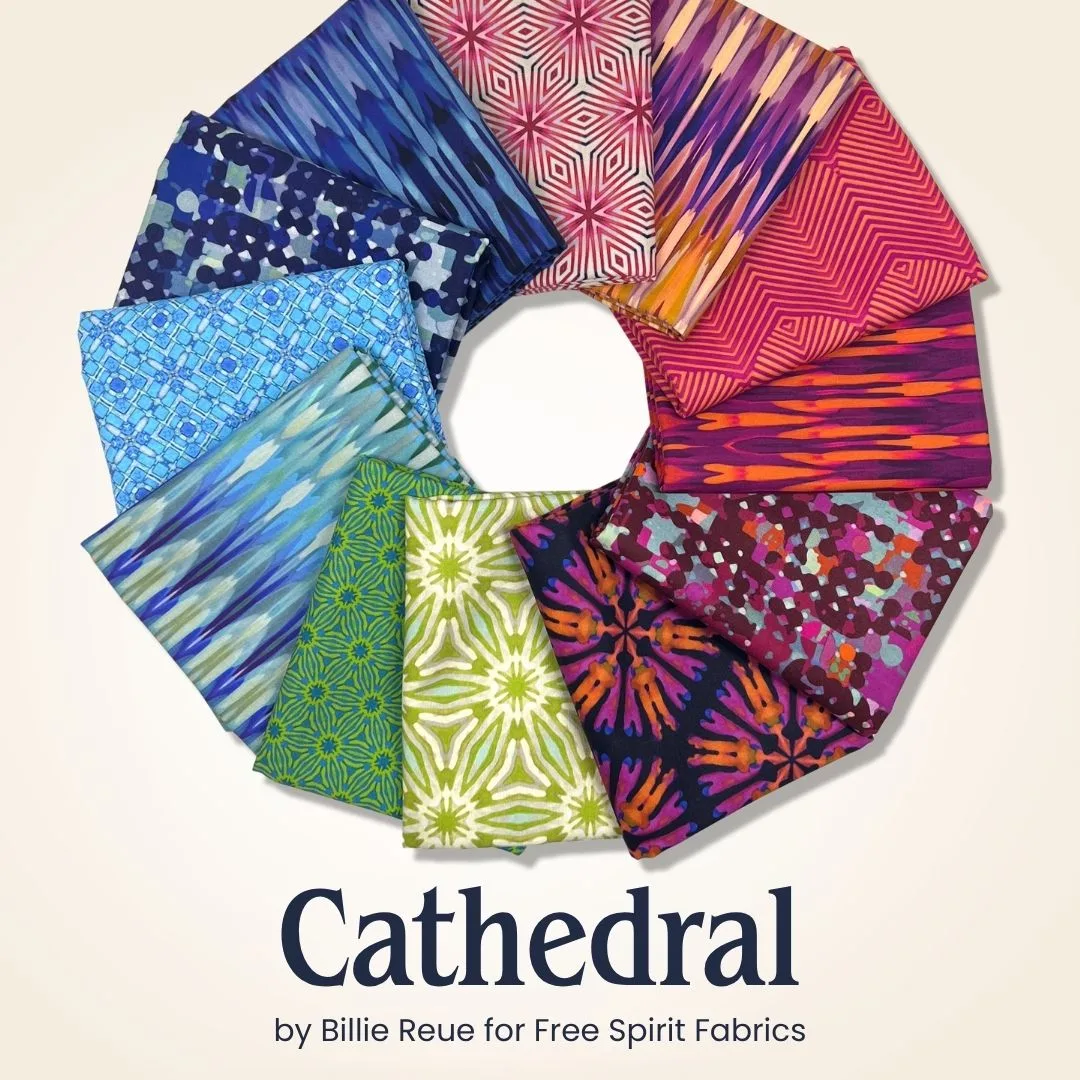
- Cathedral Half Yard Bundle: The Cathedral Half Yard Bundle from Billy Reue is inspired by Old World cathedrals and includes jewel-toned kaleidoscope medallions, mosaic window prints, and ikat-style chevron stripes in burgundy, wine red, gold, green, teal, navy, orange, and pink. With this many saturated colors in one quilt, a single neutral piecing thread is far more practical than trying to match every print, and a mid-value quilting thread will read consistently across the top.
Thread color rewards a few minutes of testing far more than it rewards a perfect guess. Separate piecing from quilting, audition three spools on the real fabric in daylight, match value before hue, and check a washed sample before you commit. Do that and your seams will disappear while your quilting says exactly what you intended.