What to Expect from Your AQUADIP Echinodorus paniculatus
The Echinodorus paniculatus, also known as the Broadleaf Amazon Sword, arrives in a 5 cm pot filled with rock wool. It is mostly delivered in its terrestrial form, with longer leaf stalks and shorter leaf blades. After planting underwater, it will develop longer, short-stalked submerged leaves. This is a large plant: leaves can reach up to 60 cm long and 3-6 cm wide, making it suitable for larger tanks. It is a popular choice for discus and angelfish tanks.
How to Plant Your Echinodorus paniculatus
Follow these steps to give your Amazon sword the best start.
- Remove the plant from the pot: Gently take the plant out of its 5 cm pot. The roots are held in rock wool, which must be removed to prevent root rot.
- Remove the rock wool: Carefully pull or cut away the rock wool from the roots. Try to keep as many roots intact as possible.
- Prepare the substrate: Ensure your substrate is at least 10 cm deep. This depth allows good root development for the Amazon sword.
- Plant the sword: Dig a small hole in the substrate and place the roots inside, covering them completely. The crown (where leaves emerge) should be just above the substrate surface.
- Provide appropriate space: This plant grows large. In medium-sized tanks it can become too big quickly. For smaller tanks, consider the similar but smaller Echinodorus grisebachii 'Parviflorus'.
Key Facts About This Plant
-
Echinodorus paniculatus AQUADIP: Leaves are wider (3-6 cm) than those of E. grisebachii 'Amazonicus' and up to 60 cm long. This size confirms the plant needs a large tank to thrive and not be overcrowded.
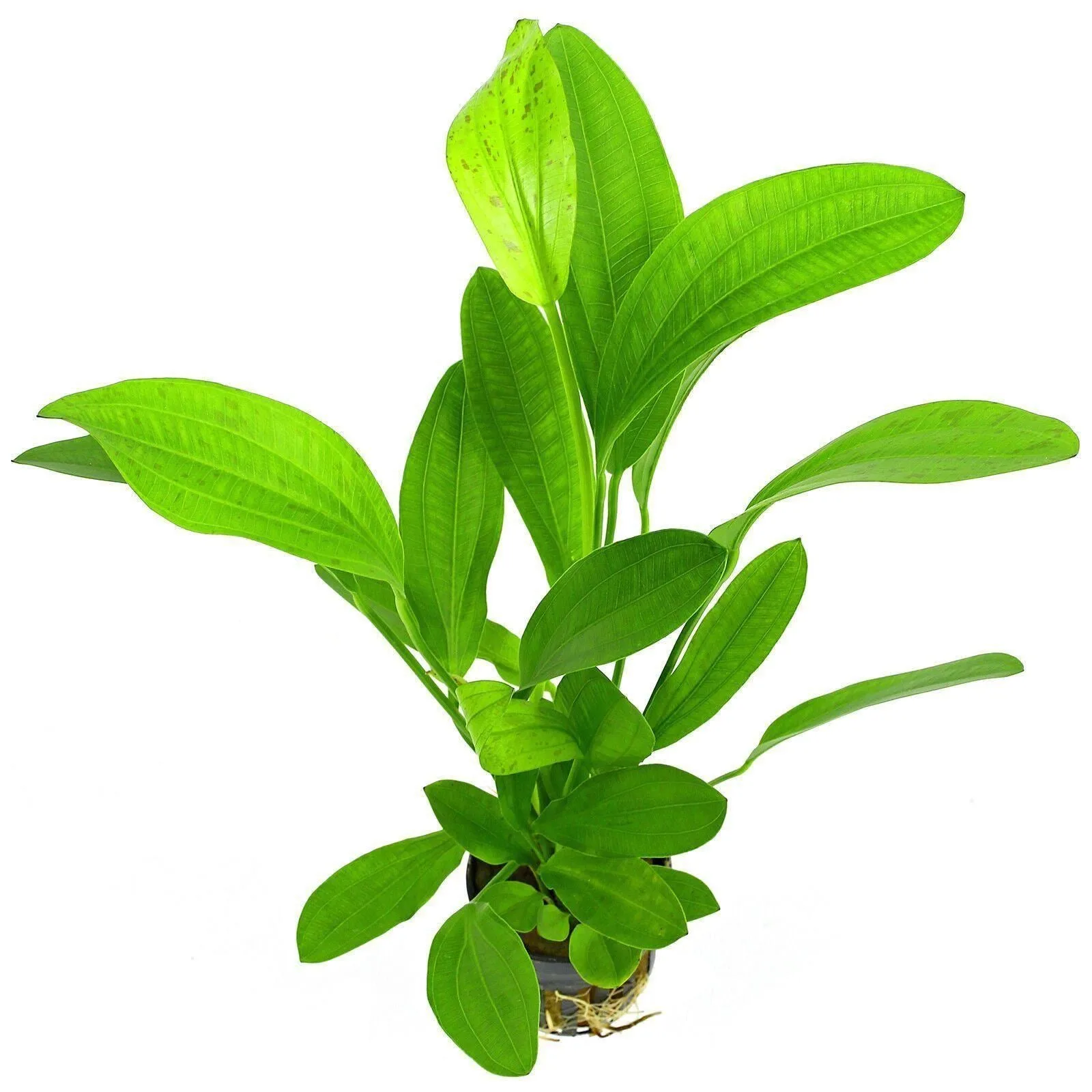
Echinodorus paniculatus AQUADIP
-
Echinodorus paniculatus AQUADIP: The substrate height should not be less than 10 cm for good root development. Shallow substrate will restrict root growth and may cause the plant to struggle.
-
Echinodorus paniculatus AQUADIP: It is mostly delivered in its terrestrial form, with longer leaf stalks and shorter leaf blades. The initial leaves may look different from the submerged form you expect; this is normal.
Tank Size and Compatibility
Given its potential size, Echinodorus paniculatus is best suited for larger aquariums. It is a popular choice for discus and angelfish tanks, where its broad leaves provide visual contrast and shelter. In medium-sized tanks it can quickly outgrow the space. If you have a smaller tank, consider Echinodorus grisebachii 'Parviflorus', which looks similar but stays smaller.