Quick answer
To play OUTFOX the FOX, set up the board and clue cards as your edition's rulebook directs, then take turns answering or asking trivia prompts while tracking what each player reveals. The winner is the player who reads the table best and closes out the final round without giving away their own position. Read the rulebook once before your first game, because small setup details decide how the deduction works.
OUTFOX the FOX is one of those party trivia games that looks simple on the table and gets tense by round three. The rules are short, but the way you track information is what separates a first-game stumble from a clean win.
This guide walks through setup, turn order, deduction habits, and the beginner mistakes that quietly hand the game to someone else. Keep your edition's rulebook nearby; it is the final authority on any card wording, and it is worth a five-minute read before you deal.
What you need before the first turn
Open the box and separate the components by type before anyone sits down. Count the cards against the rulebook's component list, because a missing card changes how the deduction round plays out and you want to catch that before the game starts, not halfway through.
Clear a table big enough for the board plus a discard area. Put drinks on a side table. Party trivia games reward quick hands and quick thinking, and a crowded play space slows both down.
- Read the rulebook's setup page once, out loud, so every player hears the same version.
- Check that all pieces and cards are present before dealing.
Setup: build the play area in the right order
Follow the rulebook's setup sequence exactly: board first, then any shared piles, then each player's starting hand or tokens. If your edition uses hidden roles or secret cards, deal those face down and remind players not to peek. The order matters because later steps assume earlier ones are already in place.
Once everything is out, do a quick table check. Every player should be able to reach the shared piles and see the board without leaning across anyone. If someone cannot, rearrange now rather than mid-round.
- Common mistake: shuffling only part of a deck. Shuffle the full deck the rulebook names.
- Checkpoint: every player confirms their starting components match the rulebook.
Turn order and what happens on your turn
The rulebook sets who goes first and which direction play moves. On your turn, resolve the action your edition describes, then pass to the next player. Do not skip the pass step; in deduction games, an unclear turn order is the fastest way to lose track of who knows what.
As each turn resolves, watch the reactions around the table. Who hesitated? Who answered too fast? That information is part of the game, and beginners who only track cards miss half of it.
- Announce your action out loud so the table stays in sync.
- Common mistake: resolving two actions in one turn. Do one, then pass.
Reading the table without overthinking
New players tend to hoard information and reveal nothing, which stalls the game. Instead, share a small true detail early. It builds credibility you can spend later when you need the table to believe a bigger claim.
Keep a simple mental or paper note of who has revealed what. You do not need a spreadsheet; three or four marks per player is usually enough to spot the pattern before the final round.
- Checkpoint: by the halfway point, you should have a working theory about at least one other player.
- If you are lost, ask a clarifying rules question rather than guessing.
How to win the final round
The endgame rewards patience. Once the pool of possibilities narrows, slow down and let other players commit first. The player who speaks last usually has the most information, and in most party trivia games that is the winning seat.
If your edition has a scoring or accusation step, make your move only when you can name your reasoning out loud. A guess you cannot justify is a gift to the rest of the table.
- Common mistake: rushing the last turn because the game feels decided.
- Checkpoint: state your reasoning before you commit to the final action.
Beginner mistakes worth avoiding
The biggest early error is ignoring the rulebook's edge cases. Most disputes in party trivia games come from a card interaction the rules already cover, so check the book before you house-rule it. House rules are fine later, but not in game one.
The second error is playing silently. OUTFOX the FOX rewards table talk, and a quiet player is easy to read as either clueless or dangerous. Either way, you become a target.
- Do not change rules mid-game; agree on changes before the next session.
- Keep the rulebook on the table for quick reference.
Your first game, step by step
- Read the rulebook setup page aloud: Have one player read the setup section while everyone else arranges components. This prevents two people setting up from memory and disagreeing later. Checkpoint: everyone agrees the table matches the rulebook before dealing.
- Deal and confirm starting components: Deal exactly what the rulebook specifies. If your edition uses hidden cards, deal face down and remind players not to peek. Common mistake: dealing extras 'to be safe.' Extra cards break the deduction math.
- Set turn order and announce it: Name the first player and the direction of play out loud. Repeat it once so nobody has to ask on turn two. Checkpoint: every player can state who goes after them.
- Play one full round slowly: For the first round, narrate each action before resolving it. Speed comes later; accuracy comes first. Common mistake: rushing round one and misreading a card.
- Track reveals from round two onward: Note who revealed what and when. Small inconsistencies are the best tells in party trivia games. Checkpoint: by round three you should have a working theory about one player.
- Close out the final round last: When the endgame arrives, let others commit before you do. Speak last if you can. State your reasoning before you make the final move.
Accessories that fit a trivia night
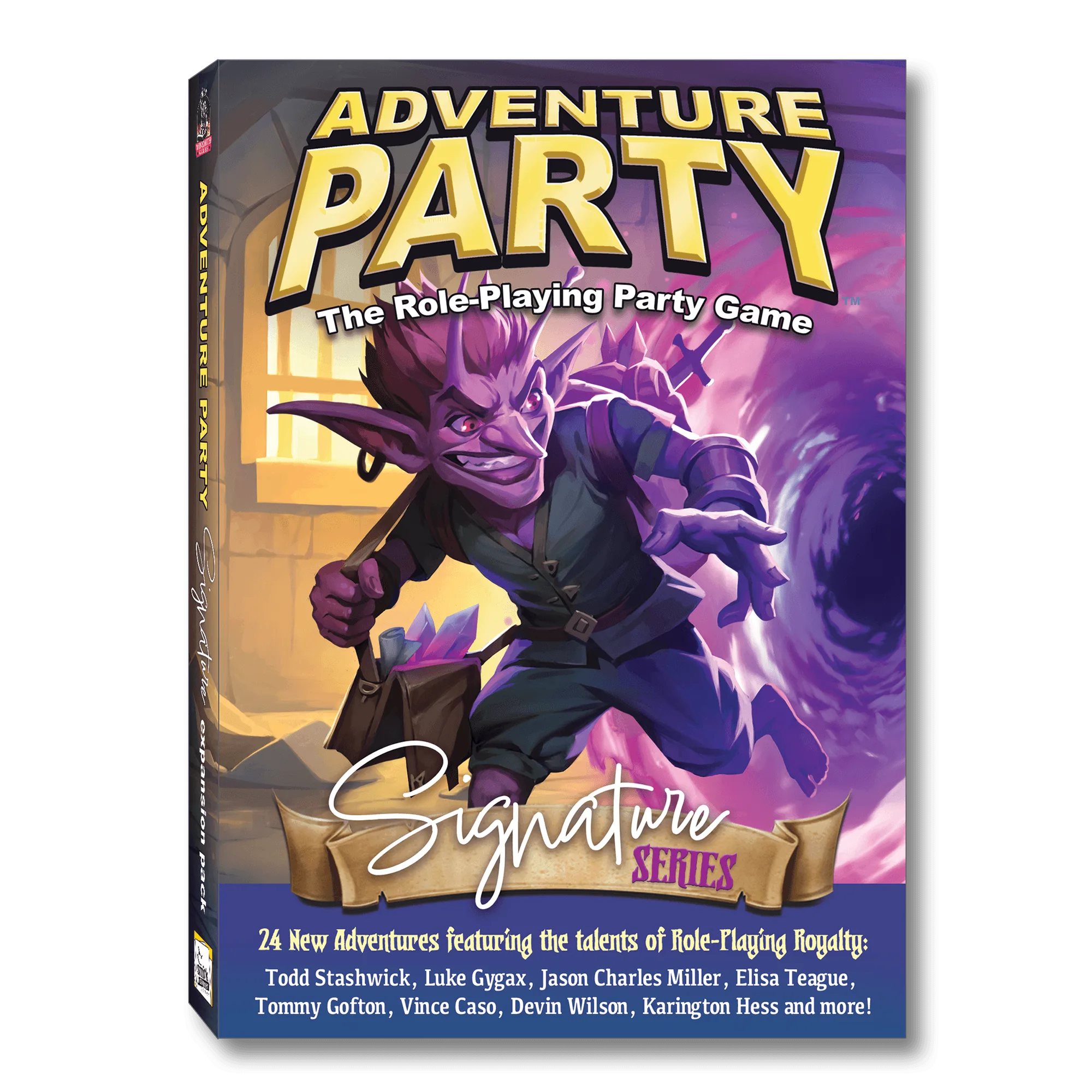
- Adventure Party Signature Series Expansion: The Signature Series expansion delivers 24 new adventure scenarios and requires the base Adventure Party game to play. If your group enjoys scenario-driven party play alongside trivia, this adds replayable prompts, but only if you already own the base game.
- Boop Kitten Kaboodles: Floof & Spoons: A full set of new wood kitten and cat pieces for Boop, compatible with any Boop game; pieces only, not a complete game. Useful if you want to upgrade components for a two-player filler between trivia rounds, but it will not replace a full game.
OUTFOX the FOX rewards players who set up carefully, track what the table reveals, and stay patient in the final round. Read the rulebook once, play your first game slowly, and the deduction will click by game two.