Quick answer
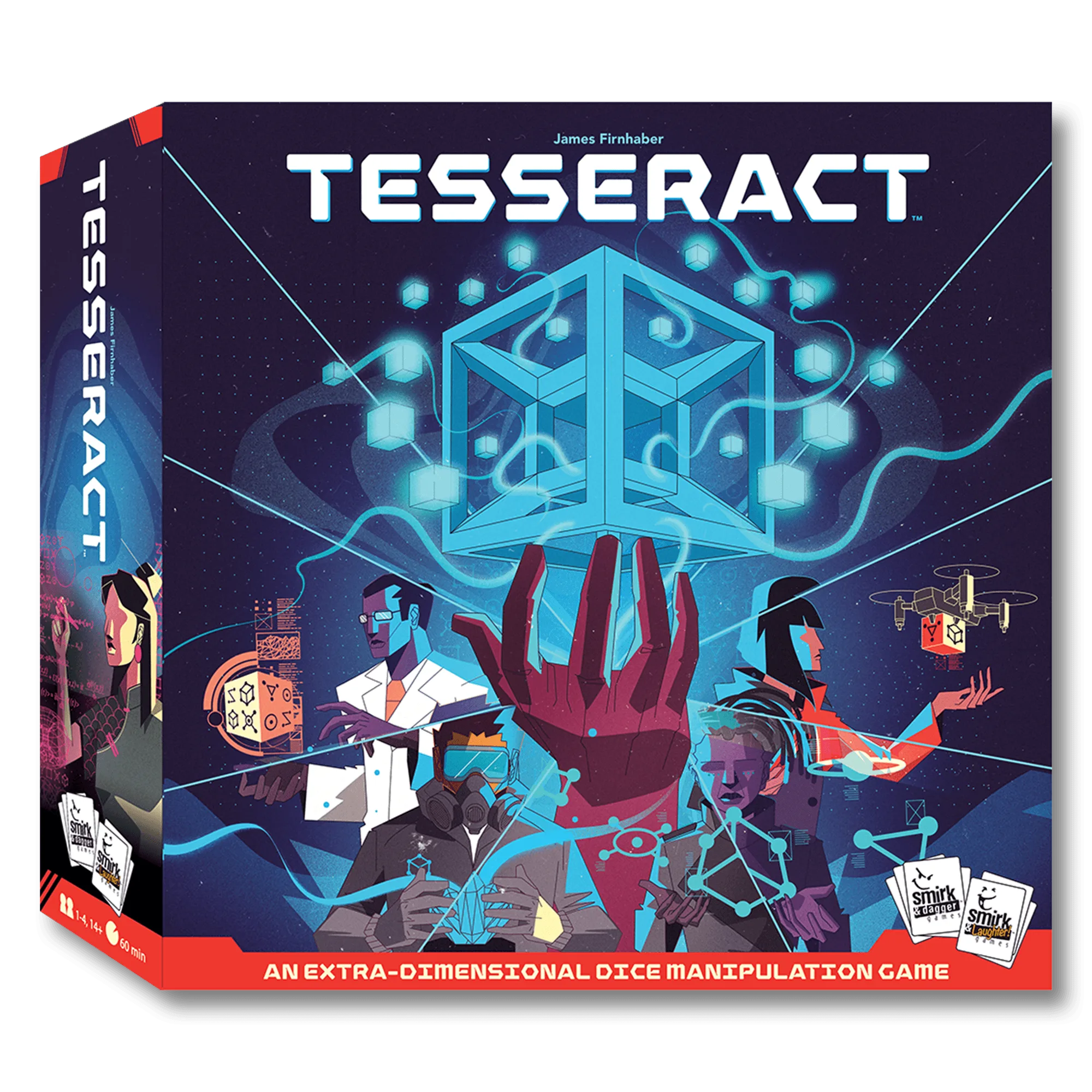
The TESSERACT appeared in our skies six days ago, and your team must contain and control the reactions of this extra-dimensional avatar before its exponentially increasing destructive power tears a hole in space-time. You will use three actions each turn, examining a cube of 64 dice on a rotating platform from all angles. Play cooperatively, talk through every move, and treat the rotating platform as your shared puzzle board.
TESSERACT is a cooperative puzzle strategy game for players who like to think together. The premise is urgent and simple: a strange object has appeared in the sky, and the world's best minds must contain it. That means you and your group are working against the game, not against each other, and the dice cube at the center is the puzzle you all share.
This guide walks through the rules in the order you will actually use them at the table. You will set up the rotating platform, learn the three actions available on a turn, and see how the cooperative win condition shapes every decision. I will also point out the mistakes that slow down first plays and the checkpoints that keep a session moving.
What comes in the box and how the rotating platform works
The centerpiece of TESSERACT is a cube of 64 dice sitting on a rotating platform. That platform is not decoration. It lets players examine the cube from every angle, which matters because the puzzle asks you to read patterns across multiple faces. Before you teach anything else, place the platform where everyone can reach it and turn it once so the group sees how the faces change.
The game is cooperative, so there is no hidden information between players. Everyone can see the same cube and the same board state. That means table talk is part of the design, not a distraction. If your group tends to play quietly, agree up front that you will narrate your thinking, because the puzzle is solved by combining observations, not by racing to a private solution.
- Set up on a table with enough room to rotate the platform without knocking dice loose.
- Agree on a house rule for who rotates the platform: usually the active player, then pass clockwise.
The three actions on your turn
On your turn you have three actions to spend. The catalog description confirms the game features a cube of 64 dice on a rotating platform and that players use three actions, but it does not list the individual action names or their exact effects. Rather than guess, treat the rulebook as the authority for what each action does, and use this guide to understand how to sequence them.
In practice, the three-action structure creates a rhythm: one action to gather information, one to manipulate the cube or the board, and one to set up the next player. New groups often spend all three actions on the same idea. That is legal, but it usually leaves the team with no contingency. A better habit is to ask after each action, what did that change, and what is still exposed?
- Count actions out loud so nobody accidentally takes a fourth.
- If you are unsure whether an action is legal, check the rulebook rather than debating it mid-turn.
How the cooperative win condition shapes your strategy
Because the TESSERACT's destructive power increases exponentially, the game is a race against a growing threat, not a point-scoring exercise. The catalog description frames the goal clearly: contain and control the reactions of the extra-dimensional avatar, or its power will tear a hole in space-time and remove our world from existence. That means every turn should reduce the threat or buy the team time.
The most common strategic mistake is treating the cube as a solo puzzle. One player rotates the platform, sees a promising pattern, and starts issuing instructions. That works until the pattern requires a different angle. Rotate the platform before you commit, ask another player what they see from their side, and only then spend actions. The team's shared view is the real resource.
- Name the threat level at the start of each round so everyone tracks the same pressure.
- If two players disagree, rotate the platform once and re-evaluate before spending an action.
Setup order for a clean first game
A tidy setup prevents most first-game stalls. Build the rotating platform first, then place the 64-dice cube, then distribute any player components. Keep the rulebook open to the action summary page. If your copy includes a quick-reference card, put it where all players can see it, because the three-action turn is the part new players forget most often.
Once the cube is on the platform, do a practice rotation before the first real turn. Let each player look from their seat and describe one thing they notice. This two-minute warm-up catches the players who are still thinking of the cube as a flat grid. It also surfaces seating problems: if someone cannot see the top face, move them before the game starts, not after.
- Do not shuffle or stack dice after setup; the cube's arrangement is part of the puzzle.
- Keep drinks and snacks off the same surface as the rotating platform.
Common mistakes and how to avoid them
The first mistake is rotating the platform too fast. The cube is the puzzle, and spinning it constantly makes it hard for anyone to track what changed. Rotate deliberately, announce the new angle, and give the table a moment to read it. The second mistake is hoarding actions. Because the game is cooperative, there is no advantage to saving a clever move for yourself.
The third mistake is ignoring the exponential threat. If your group spends a round reorganizing without reducing the danger, you have effectively lost ground. Treat every round as having a job: contain, control, or prepare. If you cannot say which of those three your turn accomplished, you probably spent your actions on the wrong thing.
- Pause after each full round and ask whether the threat went down, stayed flat, or grew.
- If a player is quiet for two turns, ask them directly what they see from their angle.
TESSERACT first-game walkthrough
- Build the rotating platform and place the 64-dice cube: Set the platform where every player can reach it, then place the cube of 64 dice on top. Do not rearrange the dice after this point. Checkpoint: every player can see at least three faces of the cube from their seat.
- Do one practice rotation and describe what you see: Turn the platform once and have each player name one pattern or feature. This warms up the group's shared reading of the cube. If someone cannot see the top face, move seats now rather than mid-game.
- Take your three actions in order: Spend one action at a time, announcing what you are doing and why. The rulebook defines the exact action options; use it rather than guessing. Common mistake: taking a fourth action by accident. Count out loud.
- Rotate the platform before committing to a plan: If your first idea depends on a single angle, rotate once and ask another player what they see. Only then spend an action. Checkpoint: at least two players agree on the read before you commit.
- End the round by naming the threat: After all players have taken a turn, state whether the TESSERACT's destructive power went down, stayed flat, or grew. If it grew, make containment the first action of the next round.
TESSERACT at a glance
- TESSERACT: a cooperative, puzzle strategy game: The game features a cube of 64 dice sitting on a rotating platform to examine all angles, and players use three actions. Knowing the physical setup and the three-action turn before you open the rulebook lets you teach the game faster and avoid mid-turn rule debates.
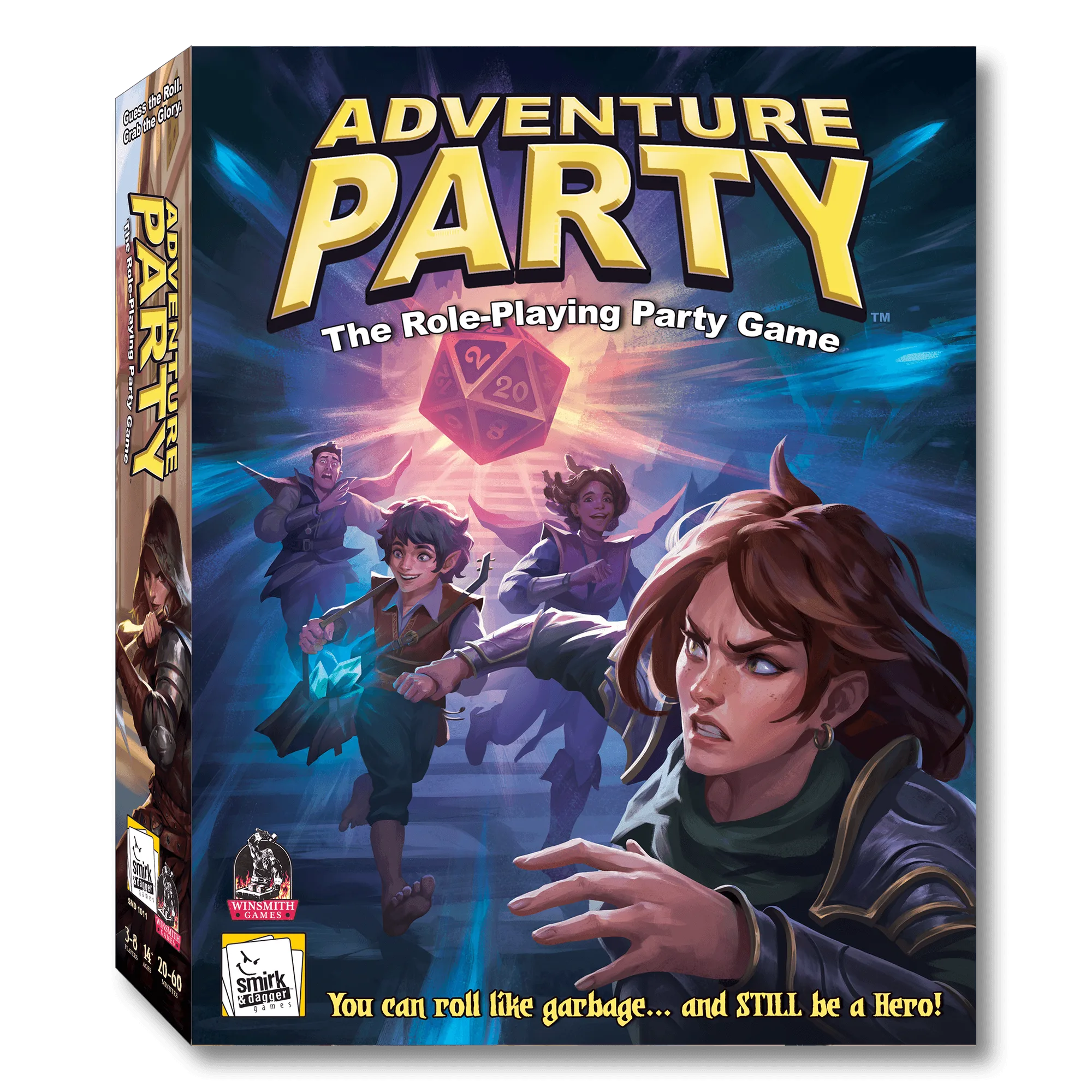
- Adventure Party: The Role-Playing Party Game: A cooperative, party-weight guessing game where players roll a 20-sided die behind a screen and describe their character's plan of attack. If your group enjoys cooperative play but wants something lighter and more social than a puzzle strategy game, this is a useful contrast to keep in mind.
TESSERACT rewards a group that talks, rotates, and plans together. Set up the platform carefully, spend your three actions with a purpose, and treat every round as a chance to contain the threat. Once your table finds its rhythm, the cube stops feeling like a pile of dice and starts feeling like a puzzle you are solving as a team.