Quick Answer
To play The King's Abbey, you place dice on action spaces to gather resources, build abbey structures, and earn victory points, all while managing the growing darkness. Focus on early resource generation and balanced development to stay ahead.
Understanding the Dice Placement Core
The King's Abbey uses a dice placement system where each player rolls a set of dice and assigns them to different action spaces on the board. The value of the die often determines the strength of the action, so higher rolls give you better resource yields or more powerful building options. This introduces a luck element that you can mitigate with clever placement and backup plans.
Managing the Darkness Track
The darkness track is a central threat that advances each round. If it reaches the end, the game ends early. You can slow it by constructing certain buildings or using specific dice actions. Ignoring the darkness can cut your game short, so balance building for points with actions that hold back the darkness.
Step-by-Step Strategy Guide
- 1. Set Up the Abbey Board and Player Materials: Place the main board in the center. Each player takes a player board, a set of colored dice, and starting resources (grain, wood, stone). Shuffle the building cards and place them on the board. Set the darkness marker at the start of the track. Common mistake: forgetting to place the darkness marker correctly can make the game feel unbalanced. Double-check that the darkness marker is at the start position to ensure the game length is correct.
- 2. Roll Dice and Assign Actions (Turn Structure): At the start of each round, all players roll their dice simultaneously. Then, in turn order, each player places one die on an available action space on the main board. Actions include gathering resources, building, trading, or slowing the darkness. Once a space is taken, it is blocked for the round. Common mistake: placing a low-value die on a space that requires a high minimum value, wasting the action. Plan your placements based on die values; use low dice for spaces with no minimum requirement or for actions that benefit from low values.
- 3. Build Structures and Score Victory Points: After placing all dice, resolve actions. Building requires spending resources from your player board. Each building you construct gives you victory points and often a special ability. You can build multiple structures per round if you have enough resources. Common mistake: neglecting to build early, which leaves you without abilities that generate resources or slow the darkness. Prioritize at least one building in the first two rounds to gain a resource engine or darkness mitigation.
- 4. Manage the Darkness and End Game: At the end of each round, advance the darkness marker by one step (or more if triggered by certain cards). If it reaches the end, the game ends immediately. Otherwise, the game ends after a set number of rounds. The player with the most victory points wins. Common mistake: focusing solely on points while ignoring the darkness, causing an early game end before you can score. Keep an eye on the darkness track; if it is moving fast, dedicate some dice to actions that slow it down.
Game Details
-
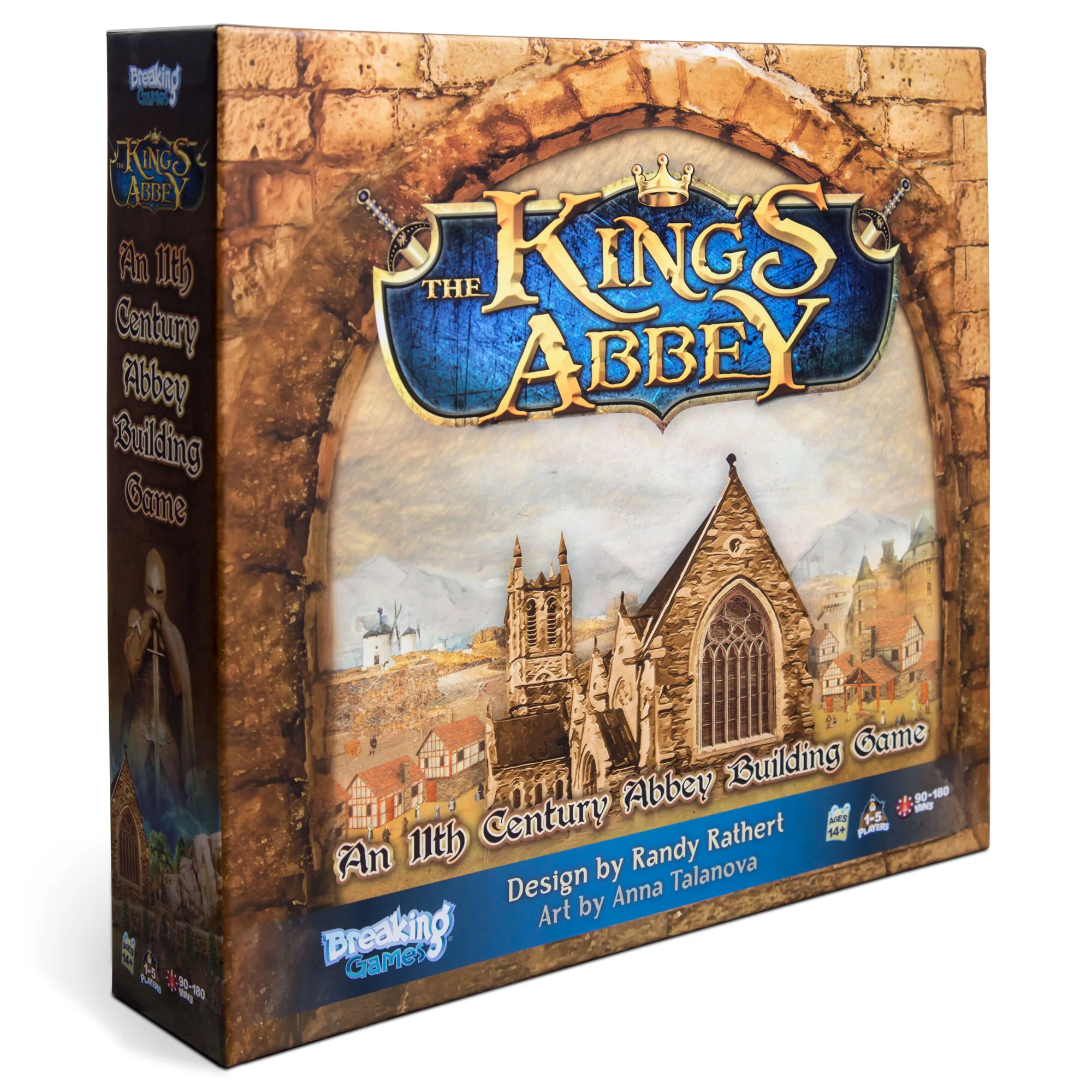
The King's Abbey: The King's Abbey is a strategic dice placement game for 1-5 players aged 14+, with a play time of 90-180 minutes. This means sessions are substantial, so plan for a dedicated game night. The player count flexibility makes it suitable for small or medium groups.
The King's Abbey