Quick Answer
Start with the numbers and movable hands of a wooden clock puzzle to build familiarity with the clock face, then move to matching hours and simple time-telling games.
Why Start with a Clock Puzzle?
A wooden clock puzzle is more than a toy—it's a hands-on tool that combines shape recognition, number order, and the concept of time in one activity. Unlike digital clocks, the movable hands and numbered pieces let toddlers physically manipulate the parts, which strengthens fine motor control and cognitive connections. The puzzle format also makes learning feel like a game, reducing pressure and increasing engagement.
When to Introduce the Clock Puzzle
Most toddlers are ready for a clock puzzle between 2 and 3 years old. At this age, they can recognize numbers 1 through 12 and have the dexterity to place puzzle pieces. If your child is still mouthing toys or struggles with simple shape sorters, wait a few months. The clock puzzle works best as a guided activity, not a solo toy, especially in the beginning.
Step-by-Step Play Ideas for the Clock Puzzle
- Explore the Pieces Freely: Let your child take out all the number pieces and the movable hands. Name each number as they pick it up and encourage them to place the pieces back into the correct slots. This builds number recognition and fine motor control. Don't rush to teach time yet. Let the child first become comfortable with the puzzle itself.
- Match Numbers to the Clock Face: Point to a number on the clock face and ask your child to find the matching puzzle piece. For example, 'Can you find the number 3?' Once they place it, say the number together. This reinforces number order and spatial awareness. If your child struggles, reduce the number of pieces to 3-4 at a time.
- Introduce the Hour Hand First: Move only the hour hand to a number (e.g., 7 o'clock) and say, 'The short hand points to 7, so it's 7 o'clock.' Ask your child to move the hour hand to a different number you name. This teaches the concept of hours without overwhelming them with minutes. Avoid introducing the minute hand until your child consistently identifies hours.
- Add the Minute Hand for Half-Hours: Once your child is comfortable with hours, show them the long minute hand. Set the clock to a half-hour (e.g., 3:30) and explain that when the long hand points to 6, it's 'half past.' Practice with a few half-hour times. Common mistake: children confuse the two hands. Use color cues or stickers to differentiate them.
- Play 'What Time Is It?' Games: Set the clock to a time and ask your child to read it. Then reverse: you call out a time and have your child move the hands to match. Use real daily events like 'lunchtime is 12 o'clock' to make it meaningful. Keep sessions short (5-10 minutes) to maintain focus and fun.
Product Highlights
-
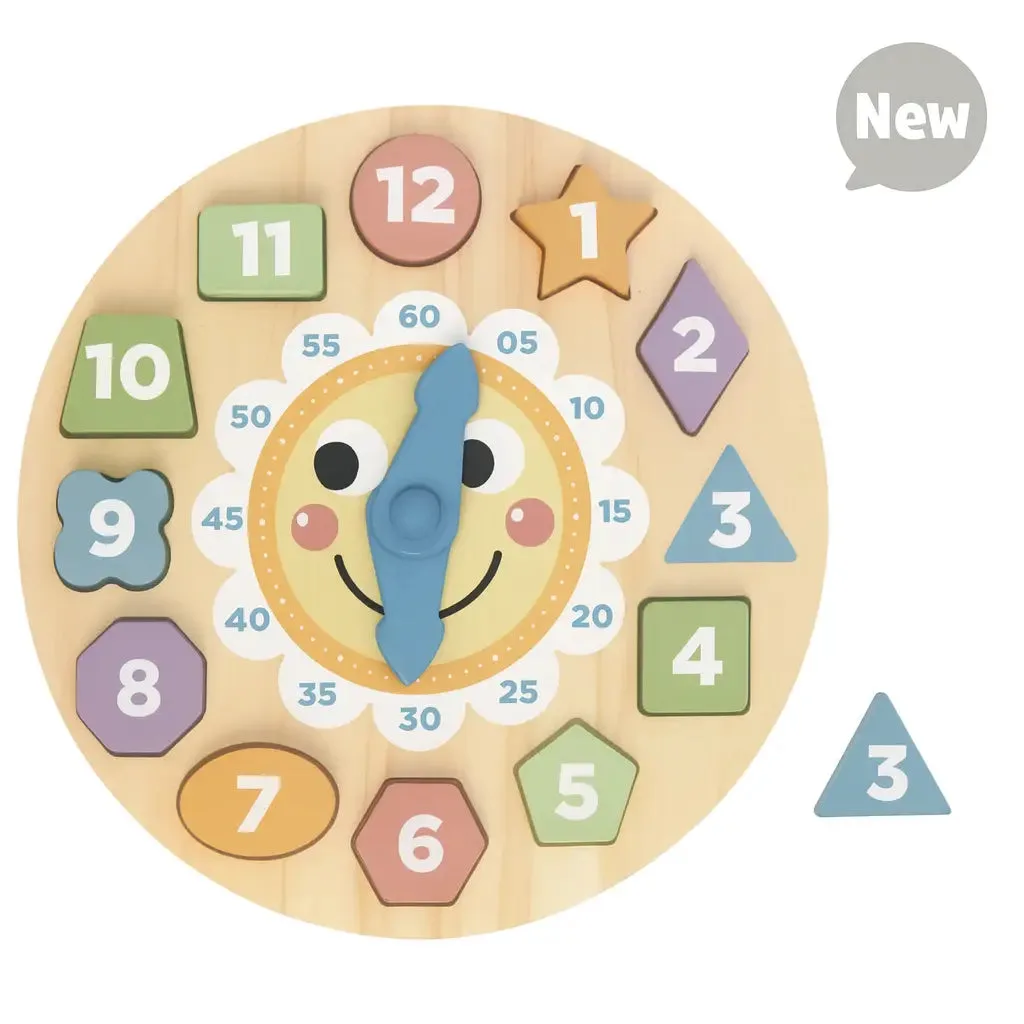
Clock Puzzle: The wooden Clock Puzzle has colorful numbers and movable hands, sized 22 × 2.3 cm (8.66 × 0.91 in). The compact size fits small hands, and the movable hands let children practice setting time without frustration.
Clock Puzzle