Quick answer
Use puppets as conversation partners, not just toys. Pick a puppet your child can operate, set up a simple routine, and let the puppet ask questions, repeat words, and pause for your child to answer. Five to ten minutes of daily puppet play, with you modeling language and waiting for responses, builds vocabulary and sentence skills faster than passive play.
Puppets give children a reason to talk. When a puppet asks a question, children often answer more freely than they would to an adult. That back-and-forth is exactly what builds language: turning sounds into words, words into sentences, and sentences into stories.
You do not need a script or a stage. A single puppet, a few minutes, and a simple routine can turn playtime into powerful language practice. This guide walks through five steps, with the common mistakes to avoid at each one.
Why puppet play works for language
Puppet play benefits language development because it lowers the pressure to speak. A puppet can be silly, forgetful, or shy, so your child can correct it, teach it, or answer for it. That role reversal gives children control over the conversation and encourages longer utterances.
Puppets also make repetition feel natural. The same puppet can ask for the names of objects, colors, or animals again and again, and children stay engaged because the character is asking, not the parent. This is why educational puppets are common in early childhood classrooms.
- A puppet can model a sentence and then invite your child to copy it.
- Puppets work for shy children because the puppet, not the child, is the center of attention.
Step 1: Pick a puppet your child can control
The best puppet for language development is one your child can actually operate. If the puppet is too heavy or stiff, your child will focus on moving it instead of talking. Look for a soft hand puppet or a small plush puppet that fits a child's hand or can sit on a finger.
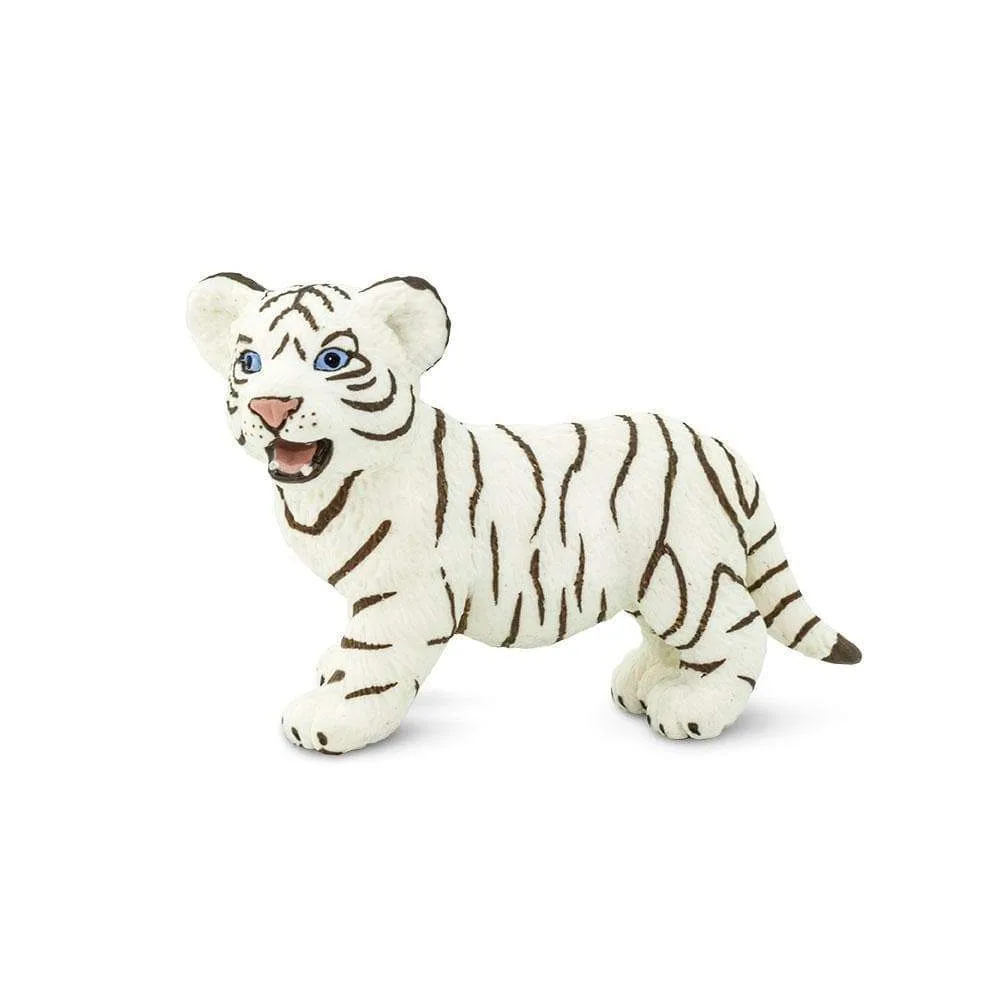
You can also use a figurine as a puppet. A small animal figure like the White Bengal Tiger Cub Toy can be held and moved while your child makes it speak. The key is that the character is easy to pick up, turn, and put down without frustration.
- Common mistake: choosing a puppet that is too large or complex for your child's hand.
- Checkpoint: your child can make the puppet nod or wave without help.
Step 2: Set up a simple routine
Language grows through repetition, so keep the setup predictable. Choose one time of day, such as after breakfast or before bath, and use the same opening line each time. For example, the puppet can wake up, stretch, and ask, "What should we do today?"
A predictable routine lets your child anticipate words and practice them. After a week, you can add one new question or one new word to the routine. This keeps the puppet play ideas fresh without overwhelming your child.
- Common mistake: changing the routine every day, which removes the repetition language learning needs.
- Checkpoint: your child can say the opening line with you.
Step 3: Model language and wait
During puppet play, your job is to model and then pause. Have the puppet say a full sentence, such as "I want the red apple," and then wait five seconds. That pause gives your child time to process and respond. If your child says one word, expand it: "Yes, the red apple."
Waiting is the hardest part for adults. We tend to fill silence with more questions. Instead, count silently and let your child take the turn. This turn-taking is the core of conversation and the main way puppet play benefits language.
- Common mistake: asking too many questions in a row instead of waiting for an answer.
- Checkpoint: your child answers at least once without you repeating the question.
Step 4: Add props and themes
Props give the puppet something to talk about. A toy animal, a block, or a small figure can become a character, a patient, or a customer. For example, the Life Cycle of a Honey Bee set includes four stages that a puppet can "discover" one by one, giving your child a reason to name each stage.

Life Cycle of a Honey Bee
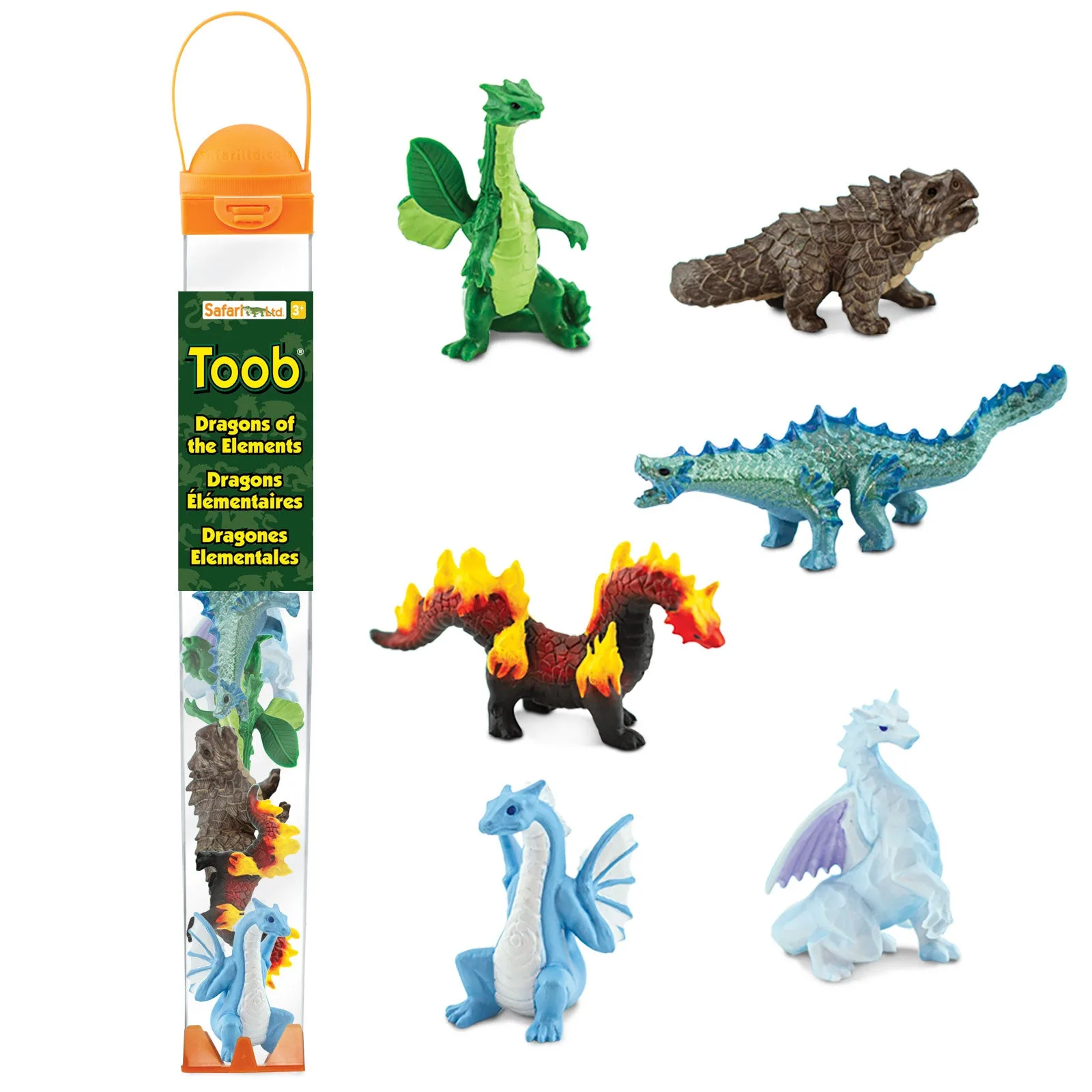
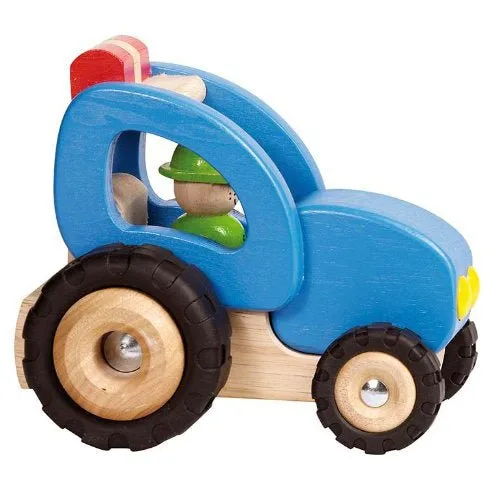
Themes also build vocabulary in clusters. A farm theme introduces barn, tractor, and hay. A dragon theme introduces fire, water, and earth. The Dragons of the Elements TOOB® includes six dragon figures, so a puppet can meet each one and ask your child to describe it.
- Common mistake: using too many props at once, which scatters attention.
- Checkpoint: your child uses at least one new word from the theme.
Step 5: Let your child lead
Once the routine is familiar, hand over the puppet. Let your child decide what it says and where the story goes. You can play a character too, but follow your child's lead. If the puppet says the sky is green, accept it and build on it: "A green sky! What color is the sun today?"
This is where language development toys become language development tools. Your child is no longer repeating; they are generating sentences, solving problems, and telling a story. That shift from imitation to creation is the goal.
- Common mistake: correcting every grammar error instead of keeping the conversation going.
- Checkpoint: your child adds a new detail that was not in your setup.
Five-step puppet play routine
- Choose one puppet: Pick a soft hand puppet or small figure your child can hold and move easily. Checkpoint: your child can operate it without help.
- Set a daily five-minute slot: Use the same time and the same opening line each day to build anticipation and repetition. Checkpoint: your child says the opening line with you.
- Model a sentence, then wait: Have the puppet speak in full sentences and pause for five seconds before prompting again. Checkpoint: your child answers at least once on their own.
- Add one prop or theme: Introduce a single toy or figure that the puppet can ask about, such as an animal or a life cycle set. Checkpoint: your child uses one new word from the theme.
- Hand over the puppet: Let your child run the character and create the story while you follow along. Checkpoint: your child adds a new story detail.
Puppet-friendly toys that spark conversation
- White Bengal Tiger Cub Toy: White Bengal tigers are a variant on the Bengal tiger, and their unique coloration is caused by a lack of the pigment pheomelanin. A distinctive-looking animal gives the puppet a natural reason to ask questions: "Why is this tiger white?" Your child can describe, compare, and explain.
- Life Cycle of a Honey Bee: Hardworking honeybees rapidly transition through their life cycle, with only 21 days from egg to adulthood. The four-stage set gives puppet play a built-in sequence. Your child can put the stages in order while the puppet narrates, practicing sequence words like first, next, and finally.
- Dragons of the Elements TOOB®: The Dragons of the Elements control the natural elements: fire, water, earth, and air, as well as ice and plants. Six dragons mean six characters for a puppet to meet. Each one invites description and pretend dialogue, which stretches vocabulary beyond everyday words.
Puppet play works because it turns language practice into a conversation your child wants to have. Start with one puppet, one routine, and one pause. The words will follow.