Quick answer
You cannot control how baggage handlers treat your bag, but you can reduce the risk of damage by choosing a bag with recessed or protected wheels, packing heavy items away from the shell, and using a snug luggage cover or compression cubes to keep contents from shifting. If a bag is already cracked or a wheel is broken, repair or replace it rather than adding more protection.
Airline damage is rarely caused by one dramatic event. Most scratches, dents, and broken wheels come from repeated small impacts: bags sliding on conveyor belts, being stacked in cargo holds, or getting wedged against other luggage. The good news is that a few deliberate choices before you fly can make your bag far more resilient.
This guide walks through the most common types of luggage damage, what likely causes them, and what you can do about it. You will also find the point where extra protection stops helping and it is time to repair, replace, or choose a different bag.
Symptom: Scratches and scuffs on the shell
Scratches are the most common complaint about airline damaged luggage. They usually appear on the flat sides and corners of hard-shell bags after the bag has rubbed against conveyor belts, luggage carts, or other suitcases. Soft-sided bags tend to show scuffs differently—fabric can abrade or pick up dirt—but they rarely crack.
Corrective action starts with expectations. A hard shell will show wear over time; that is normal. To prevent luggage scratches from getting worse, avoid overpacking, which forces the shell to flex and can make scratches deeper. A removable luggage cover adds a sacrificial layer, but it will not stop a direct hit from a heavy bag.
- Choose a bag with a textured or matte finish if you want scratches to be less visible.
- Avoid placing hard-shell bags on rough concrete when you can; set them on a cart or mat instead.
- If you use a luggage cover, make sure it fits snugly—loose covers can snag and tear.
Symptom: Dents, cracks, or a warped frame
Dents and cracks usually mean the bag took a concentrated impact, often at a corner or along the zipper line. On hard-shell luggage, a dent that does not spring back can indicate a weakened area; a crack is a structural failure. Soft-sided bags can bend or warp if they are crushed under heavier luggage.
The likely cause is stacking pressure in the cargo hold or a fall from a baggage cart. To prevent this, pack heavy items in the center of the bag rather than against the shell. If your bag has a frame or internal compression straps, use them to keep contents from shifting and adding stress to the walls.
- Do not sit on or overpack a hard-shell bag to force it closed—this stresses the hinges and zippers.
- For soft-sided bags, use packing cubes to create a firmer, more uniform shape.
- Check the warranty: some manufacturers cover cracks from normal handling, but not from overpacking.
Symptom: Broken wheels, handles, or zippers
Wheels and handles are the most vulnerable parts because they stick out. A wheel can crack if it is dragged over a curb or caught in a gap. Handles can bend or break if the bag is lifted by one side. Zippers fail when they are forced closed over a full bag or when the bag is overstuffed.
To protect luggage from damage in these areas, choose a bag with recessed or protected wheels when possible, and lift the bag by its main handle rather than dragging it over rough surfaces. If a wheel is already broken, a repair shop can often replace it for less than a new bag. If the frame or zipper tape is torn, replacement is usually the better option.
- Test wheels and handles before every trip; a wobbly wheel can fail mid-journey.
- Use a luggage strap or belt around the bag to take pressure off the zipper.
- Keep the bag light enough that you can lift it yourself—overweight bags are more likely to be dropped.
Symptom: Contents shift and cause internal damage
Sometimes the bag looks fine but your belongings arrive damaged. This happens when contents move around inside, causing items to press against each other or against the bag's hardware. Liquids can leak, electronics can crack, and clothing can wrinkle beyond saving.
The fix is to pack tight and use organizers. Compression packing cubes reduce empty space and keep items from sliding. Place heavier items at the bottom (near the wheels) and lighter items on top. If you are checking a bag, put anything fragile in the center, surrounded by soft items.
- Use packing cubes to create a stable core inside the bag.
- Put liquids in a sealed pouch or bag, then wrap them in clothing.
- Leave a little room for the bag to flex—overpacking increases internal pressure.
When to stop adding protection and choose another option
Extra protection has limits. If your bag has already cracked, a cover or strap will not restore its strength. If a wheel is broken and cannot be replaced, or if the zipper tape is torn, the bag is likely at the end of its useful life. At that point, repair costs may approach the price of a new bag.
Also consider whether the bag itself is suited to how you travel. A soft-sided mini carry-on that fits under the seat avoids the checked-baggage system entirely, which removes most damage risk. If you frequently check a bag, a model with a front pocket or recessed wheels may hold up better than a basic shell.
- If repair costs more than half the price of a new bag, replace it.
- If you mostly take short trips, a carry-on that stays with you is the best protection.
- If you check a bag often, look for reinforced corners and protected wheels.
Damage diagnosis: symptom, cause, action, and when to stop
- Scratches and scuffs: Surface marks on the shell from rubbing against belts, carts, or other bags. Use a snug luggage cover and avoid overpacking. Accept that some wear is normal. If scratches are only cosmetic, no repair is needed. If the shell feels soft or flexes, the bag may be weakening.
- Dents or cracks: Concentrated impact from stacking or drops. Pack heavy items in the center and use internal compression. A crack means the shell has failed. Stop using a cracked hard-shell bag for checked travel—it may split open. Repair is rarely cost-effective.
- Broken wheels or handles: Stress from dragging or lifting by one side. Lift by the main handle and avoid curbs. Replaceable wheels can be fixed; molded handles usually cannot. If the wheel is integrated into the shell and cracked, choose a new bag instead of repairing.
- Zipper failure: Forcing a zipper closed over an overstuffed bag. Use compression cubes to reduce bulk and a luggage strap to relieve pressure. If the zipper tape is torn, replacement is the better option. If only the slider is stuck, a repair shop can help.
CALPAK bags built with protection in mind
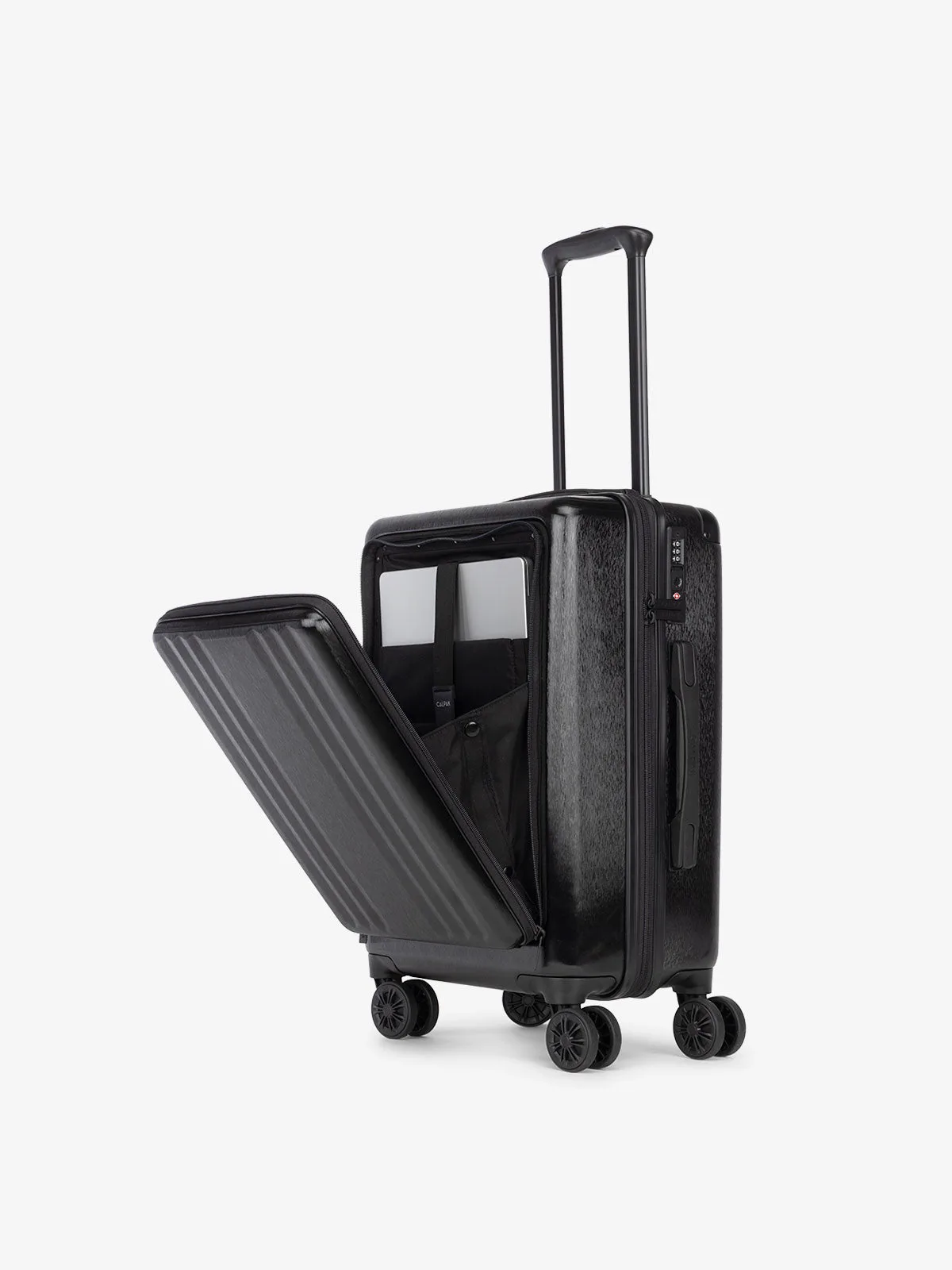
- Ambeur Front Pocket Carry-On Luggage: Designed for work trips and weekend escapes, it keeps your laptop protected while offering organized packing inside. A quick-access front compartment, TSA-approved lock and smooth spinner wheels help every journey feel more seamless. A front pocket keeps essentials out of the main compartment, reducing the need to open and close the bag at the airport, while spinner wheels are less likely to catch on rough surfaces than exposed wheels.
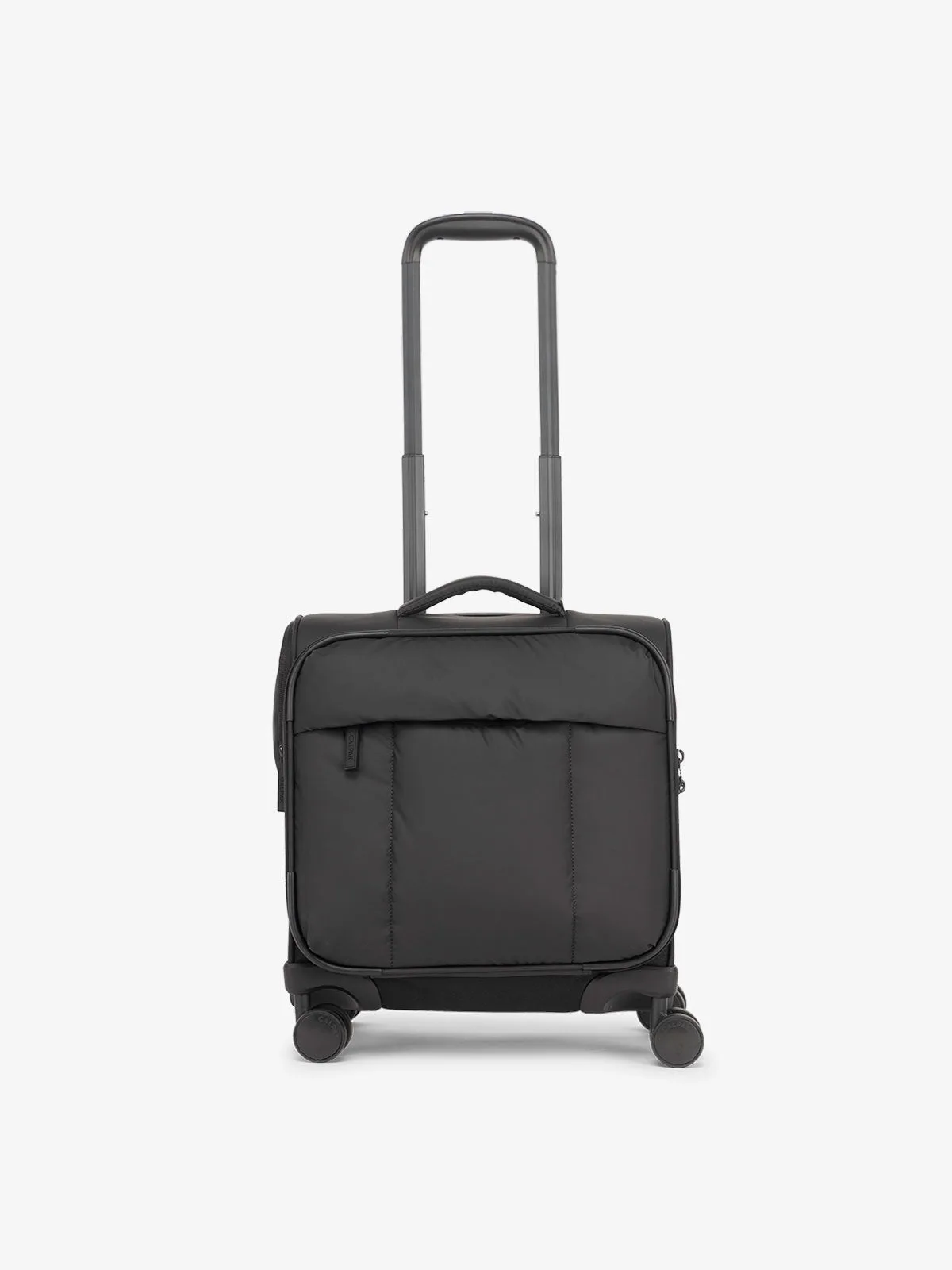
- Luka Soft-Sided Mini Carry-On Luggage: Compact yet thoughtfully organized, it fits easily under most seats while keeping your essentials protected and within reach. Smooth-glide wheels and a padded laptop compartment make moving through your day feel effortless. Because it fits under most seats, you can avoid checking a bag altogether—the single most effective way to prevent airline damage.
- Small Compression Packing Cubes: Expandable storage, space-saving compression zippers and durable polyester construction make it easy to stay organized from packing to unpacking. Compression cubes keep contents from shifting inside the bag, which reduces internal pressure on the shell and zippers during handling.
Protecting your luggage from airline damage comes down to choosing a bag that matches how you travel, packing it so contents do not shift, and knowing when a repair is no longer worth it. A carry-on that stays with you is the simplest protection; if you check a bag, use compression cubes and consider a model with protected wheels and a reinforced shell.