Quick answer
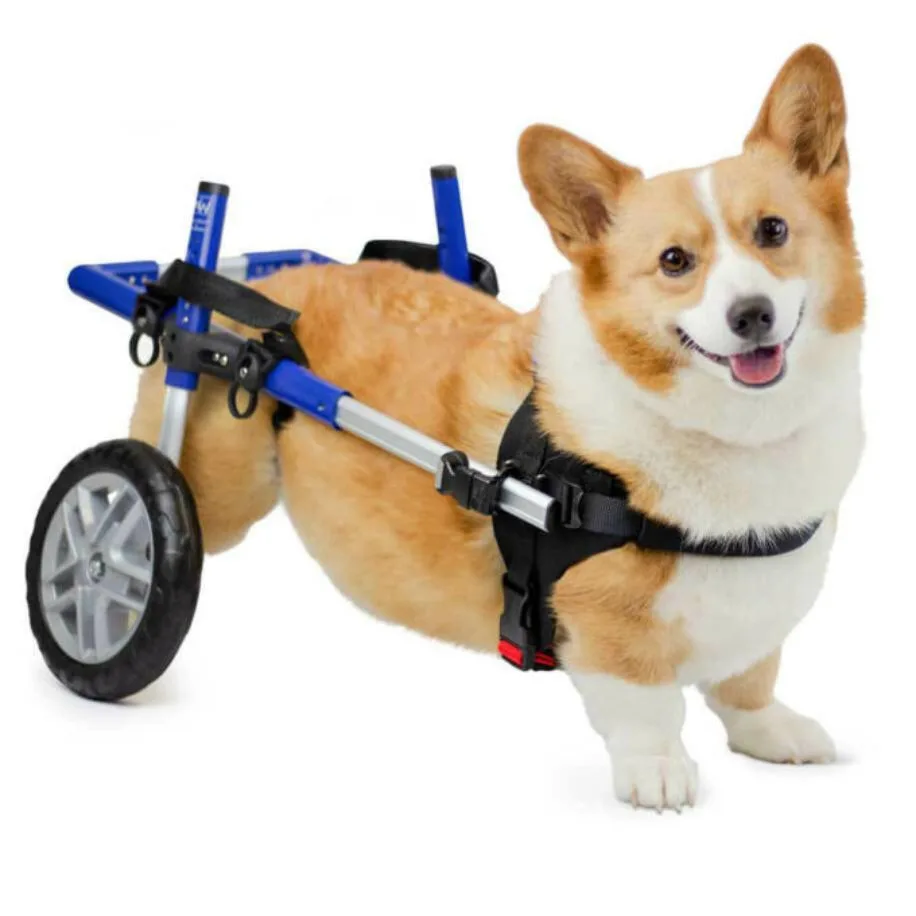
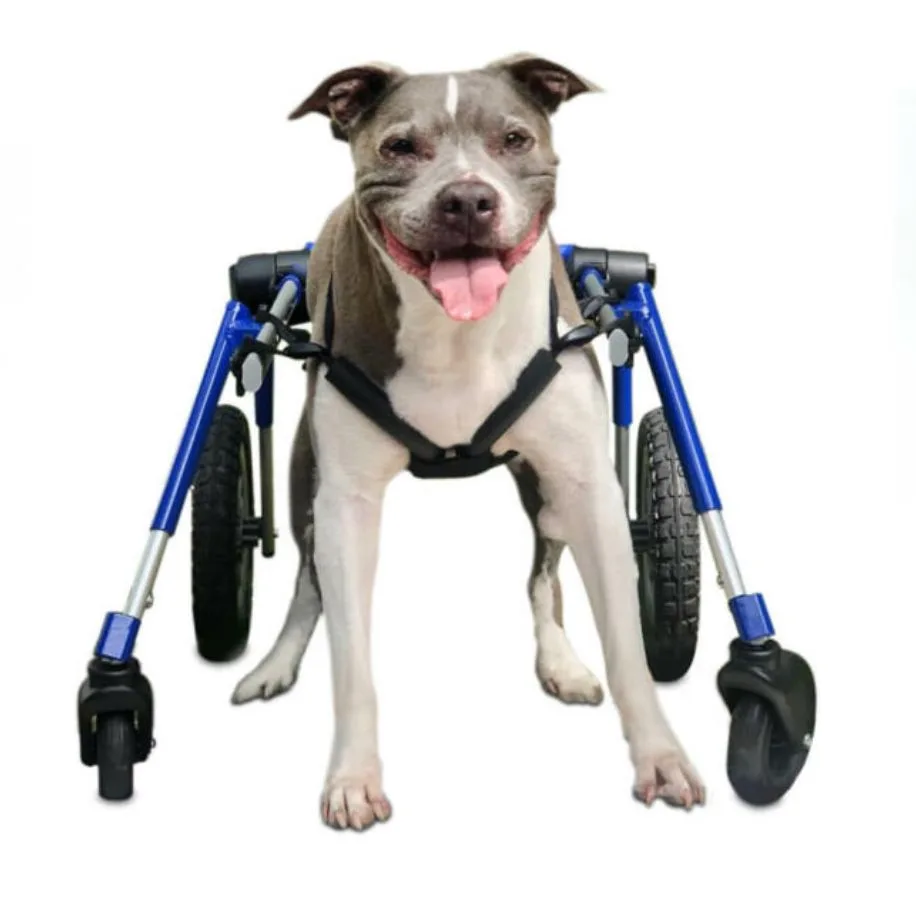
Put your dog in a Walkin' Wheels wheelchair by fitting the harness first, then lifting the rear legs into the leg rings while the frame is on a level surface. Adjust straps so the frame sits level with the floor and your dog's paws rest flat, then let your dog stand before attaching the belly support. Work slowly and check fit after the first few steps.
Before you lift your dog
Set the wheelchair on a non-slip floor and confirm the frame width matches your dog's body. If your dog is between sizes, the harness fit matters more than the frame width because the harness carries the rear weight. Have treats within reach and keep the first session short. A dog that is anxious or in pain will tense up, so wait until your dog is calm before starting.
Harness and strap adjustment basics
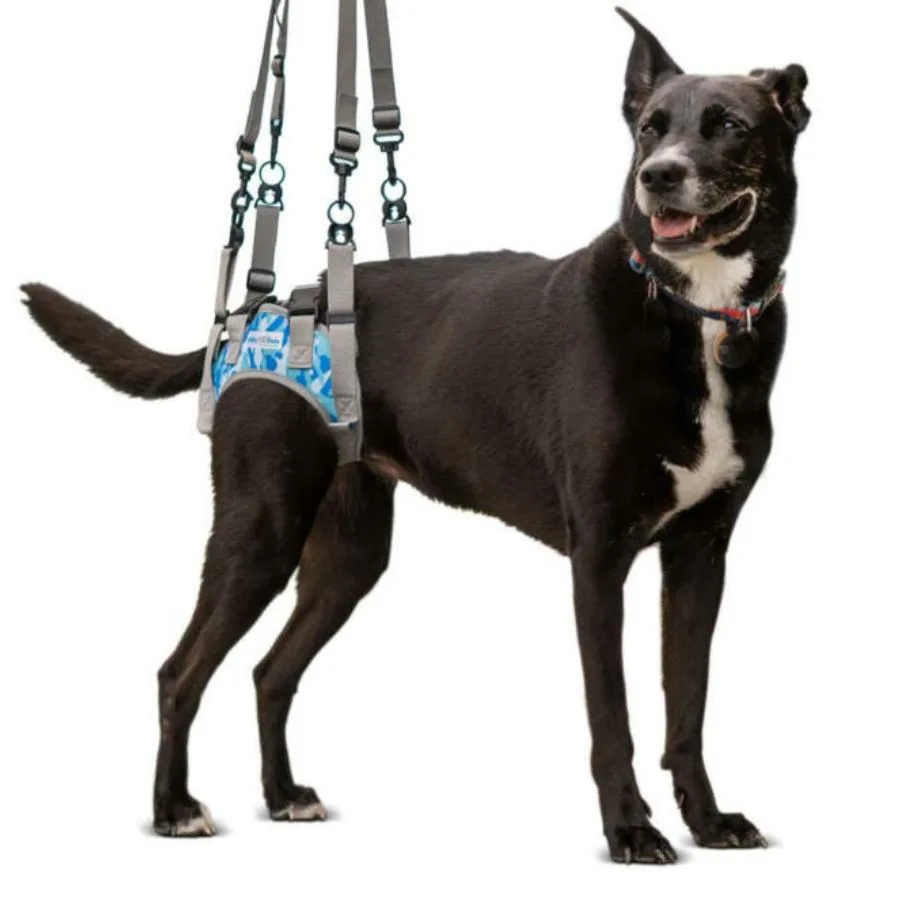
The rear harness should sit snug around the belly and hindquarters without pinching the skin or slipping over the hips. Adjust the side straps so the frame is level front to back; a frame that tips forward pushes weight onto the front legs. Check that the leg rings sit behind the knees, not on the hocks. If a strap loosens during walking, tighten it a quarter inch at a time and recheck after a few steps.
First-time use and short sessions
Start with two to five minutes on a familiar surface and stay beside your dog. Let your dog stand and shift weight before you encourage walking. Some dogs need a few sessions to accept the frame, and forcing a long walk too soon can create a negative association. Increase time gradually as your dog builds confidence and muscle tone.
Step-by-step: putting your dog in the wheelchair
- Prepare the wheelchair and harness: Place the wheelchair on a level, non-slip surface and loosen the harness straps so you can slide the harness on without forcing it. Attach the leg rings to the frame but leave the belly strap undone. Checkpoint: the frame should sit flat with both wheels touching the floor before your dog goes in.
- Fit the harness on your dog: Slide the harness over your dog's head or step-in style, depending on the model, and position the leg rings behind the knees. Fasten the belly strap snugly, then check that you can fit two fingers under each strap. Common mistake: leaving the harness too loose so it rides up and rubs the spine.
- Lift your dog into the frame: With one hand supporting the chest and the other supporting the hindquarters, lift your dog and guide the rear legs into the leg rings. Lower your dog so the paws rest flat on the ground inside the rings. Checkpoint: paws should sit flat, not curled or dragging behind the rings.
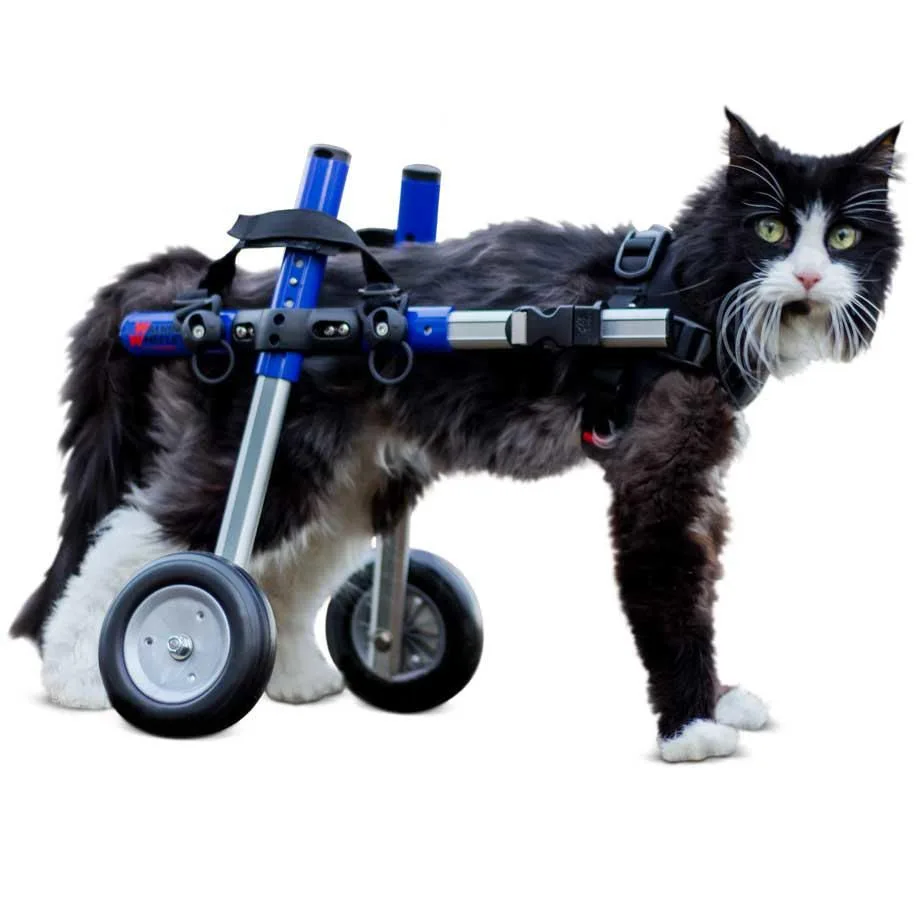
- Adjust straps for level support: Tighten or loosen the side straps until the frame is level with the floor and your dog's back is straight. Adjust the leg ring height so the hocks are supported without lifting the paws off the ground. Common mistake: a frame that tips forward or backward shifts weight onto the front legs or spine.
- Attach the belly support and test: Fasten the belly support strap under your dog's abdomen, then let your dog stand and take a few steps while you watch for slipping or rubbing. Recheck all straps after the first minute of movement. Next step: keep the first session to two to five minutes and increase time gradually over several days.
Wheelchair options for different dog sizes
- Walkin' Wheels MEDIUM Dog Wheelchair: The Walkin' Wheels Medium dog wheelchair provides rear support for paralyzed and injured pets weighing between 26 to 49 lbs. If your dog falls in this weight range, this model is the starting point for fitting and harness adjustment.
- Walkin' Wheels Med/Large Dog Wheelchair: The Walkin' Wheels Medium/Large Dog Wheelchair supports medium-sized dog breeds between 50 to 69 lbs. Dogs in this range need a wider frame and harness, which changes how you position the leg rings and adjust straps.
- Walkin' Wheels LARGE Dog Wheelchair: The Walkin' Wheels Large dog wheelchair is built to support large or giant breed dogs to help them lead an active lifestyle. Large dogs need more strap length and a wider stance, so expect to spend extra time leveling the frame before the first walk.