Quick answer
To read a sewing pattern, start by checking the envelope back for sizing, yardage, and fabric recommendations. Then unfold the pattern pieces and identify the grainline, cutting line, and notches before pinning and cutting your fabric.
What you need before you start
Gather your sewing pattern envelope, the instruction sheet inside, and the tissue pattern pieces. You will also need fabric, thread, scissors or a rotary cutter, pins, and a measuring tape. For your first project, choose a pattern labeled "easy" or "beginner" with few pieces.
Check the yardage chart on the envelope to know how much fabric to buy. If the pattern calls for 2 yards of 44-inch-wide fabric, buy that exact amount. A fabric like the Shooting Star Socialite Jade Fabric (100% cotton, 44-45 inches wide) works well for many beginner patterns because it presses easily and holds its shape.

Shooting Star Socialite Jade Fabric
Understanding pattern markings
Every pattern piece has standard markings. The cutting line is the outermost solid line—cut along this line. The seam line (often dashed) is 5/8 inch inside the cutting line for most patterns. Grainline arrows show how to align the piece with the fabric's lengthwise grain. Notches are diamond-shaped marks on the cutting line that help you match pieces together.
Fold lines, dots, and squares indicate darts, gathers, or placement marks. Transfer these marks to your fabric with chalk, a fabric pen, or small snips. Missing a notch can lead to mismatched seams, so take your time.
Choosing the right fabric and thread
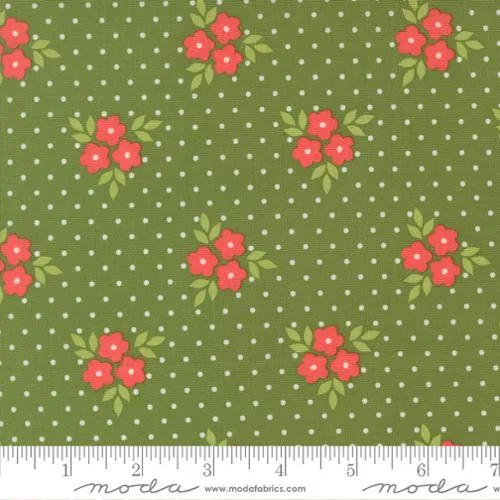
The pattern envelope lists recommended fabric types. Quilting cotton is a forgiving choice for beginners. For a festive project, the Poinsettia and Pear 37712 14 Evergreen Fabric from Moda Fabrics offers a classic holiday print that sews smoothly and holds creases well.
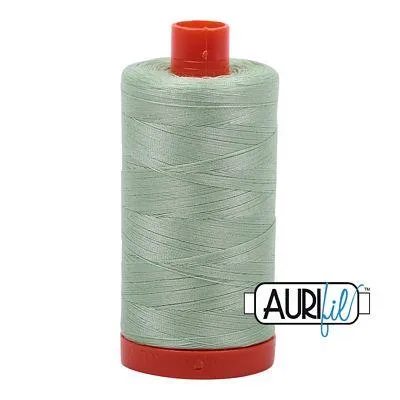
Thread choice matters too. A fine, strong thread like the Cotton Makó 50wt 1422yds 2880 Pale Green Thread (mercerized cotton with high sheen) works beautifully for piecing and quilting. Its 50-weight thickness reduces bulk in seams, and the mercerization gives it washing resistance. Match the thread color to your fabric or go one shade darker for a subtle blend.
Step-by-step: How to read a sewing pattern
- Step 1: Read the envelope back: Look at the back of the pattern envelope for the size chart, yardage requirements, and suggested fabrics. Circle your size and the view you plan to sew. Common mistake: Skipping the envelope details and buying the wrong fabric or yardage.
- Step 2: Unfold and organize the pattern pieces: Open the instruction sheet and find the cutting layout for your fabric width and size. Unfold the tissue pieces and identify each by its number or letter. Set aside pieces not needed for your view. Checkpoint: Lay all pieces flat and verify you have every piece listed on the instruction sheet.
- Step 3: Identify the grainline and cutting line: Find the long arrow (grainline) on each piece. Align it parallel to the selvage edge of your fabric. The solid outermost line is the cutting line—cut on this line, not inside it. Common mistake: Cutting on the seam line instead of the cutting line, which makes the garment too small.
- Step 4: Transfer notches and markings: Clip or mark each notch, dot, and dart line. Notches help you match pieces at seams. Use chalk or a fabric pen to mark dots and darts. Checkpoint: Double-check that all notches are transferred before removing the pattern.
- Step 5: Pin and cut carefully: Pin the pattern to the fabric within the seam allowance area, not on the cutting line. Use sharp scissors or a rotary cutter. Cut smooth, steady lines. Common mistake: Pinning through the cutting line, which distorts the fabric and leads to inaccurate cuts.
- Step 6: Read the instruction sheet step by step: Follow the numbered steps in the instruction sheet. Each step builds on the previous one. Do not skip ahead or combine steps. Checkpoint: If a step is unclear, read the illustration and text together before proceeding.
Products that help beginners succeed
- Cotton Makó 50wt 1422yds 2880 Pale Green Thread: Each spool of Aurifil Cotton Makó is mercerized - this enables fiber's contraction and increases the efficiency during the drying procedure. The result is a high sheen thread with a great washing resistance. The ideal thread for quilting, sewing and embroidery both by hand and machine. The finest of the cotton Makò threads. Quilters love it for piecing and quilting. A 50-weight mercerized cotton thread reduces seam bulk and glides through the machine smoothly, making it easier for beginners to achieve even stitches and durable seams.
- Poinsettia and Pear 37712 14 Evergreen Fabric: The Poinsettia and Pear collection by Moda Fabrics combines festive florals and elegant fruit motifs in rich holiday colors. With its classic designs and warm seasonal charm, it’s perfect for creating sophisticated Christmas quilts and décor. This 100% cotton fabric is easy to cut, press, and sew—ideal for a beginner's first pattern project. The clear print also helps you practice matching seams and patterns.