Quick answer
Read your contact lens prescription from left to right: first the eye (OD or OS), then power (PWR or SPH), base curve (BC), and diameter (DIA). If you have astigmatism, you will also see cylinder (CYL) and axis. Contact lens prescriptions are not the same as glasses prescriptions, and they always include base curve and diameter, which glasses prescriptions do not.
Why contact lens prescriptions have extra numbers
A glasses prescription only needs to correct your vision at a fixed distance from your eyes. A contact lens sits directly on your cornea, so the prescription must also describe how the lens physically fits. That is why you see base curve and diameter on a contact lens prescription but not on a glasses prescription. Contact lens power can also differ from your glasses power because the distance from the lens to your eye changes the effective focus. If you try to order contacts using only your glasses numbers, the fit and the vision can both be wrong.
The four core numbers on every contact lens prescription
Power (PWR or SPH) tells the lens how much to bend light. It is written in diopters, with a minus sign for nearsightedness and a plus sign for farsightedness. Base curve (BC) is the curvature of the back of the lens, measured in millimeters. It controls how the lens sits on your eye. Diameter (DIA) is the overall width of the lens, also in millimeters. A lens that is too small or too large can slide, rotate, or feel tight. Sphere (SPH) is another name for power on a spherical lens. If you see SPH, CYL, and AXIS together, you have astigmatism and need a toric lens. CYL shows the amount of astigmatism correction, and AXIS shows its angle in degrees from 0 to 180.
How to check your prescription before you order
Start by confirming that the prescription is for contact lenses, not glasses. It should include BC and DIA, and it should list OD (right eye) and OS (left eye) separately. Check the expiration date; most contact lens prescriptions expire in one to two years. If the numbers look identical to your glasses prescription, call your eye doctor before ordering. Also note the brand and lens name, because base curve and diameter are specific to that lens design. A BC of 8.6 in one brand may not fit the same in another.
Step-by-step: reading your contact lens prescription
- 1. Find the eye labels: OD and OS: OD stands for oculus dexter, your right eye. OS stands for oculus sinister, your left eye. Read each eye's numbers separately, because they are often different. Common mistake: reading the two lines as one prescription. If you mix them up, both eyes will be wrong.
- 2. Read the power (PWR or SPH): This is the main vision correction number, written in diopters. A minus sign means nearsighted, a plus sign means farsighted. On a toric lens, you will also see CYL and AXIS next to it. Checkpoint: if the power is blank or says Plano, that eye needs no correction, which is normal.
- 3. Find the base curve (BC): The base curve is the curvature of the lens back, in millimeters, such as 8.6. It must match the lens your eye doctor fitted. A different BC changes how the lens sits and feels. Common mistake: assuming all lenses with the same power have the same BC. They do not.
- 4. Find the diameter (DIA): Diameter is the full width of the lens in millimeters, such as 14.2. It affects centering and comfort. Your doctor chooses it together with the base curve. Checkpoint: if DIA is missing, the prescription is incomplete for ordering contacts.
- 5. Read CYL and AXIS if you have astigmatism: CYL shows the amount of astigmatism correction, and AXIS shows the angle in degrees from 0 to 180. Both numbers must be present for a toric lens to work. Common mistake: ordering a spherical lens when your prescription includes CYL and AXIS. That will blur your vision.
- 6. Confirm the brand and lens name: The brand and specific lens name are part of the prescription because BC and DIA are tied to that design. A different brand with the same numbers may not fit the same. Checkpoint: if the brand is missing, ask your eye doctor which lens was fitted.
- 7. Check the expiration date: Contact lens prescriptions expire, usually in one to two years. An expired prescription is not valid for ordering new lenses. Next step: if it is expired or close to expiring, book an exam before you run out of lenses.
Product facts
- 0BB 363: Brooks Brothers Optical 0BB 363 is an eyewear style available in a Gunmetal frame with Clear lenses, with configurable Frame Color and Lens Color options. If you wear glasses between contact lens days, this frame gives you a clear, neutral look that pairs easily with daily outfits.
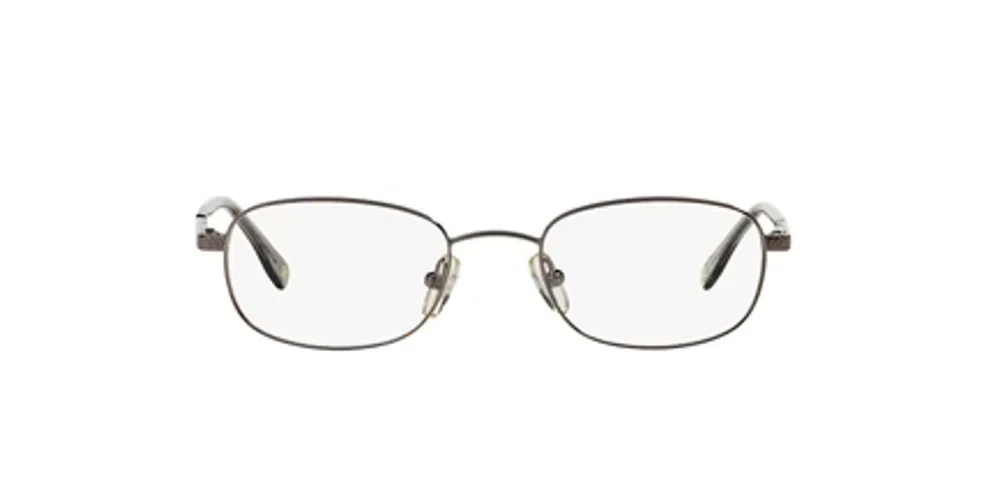
0BB 363
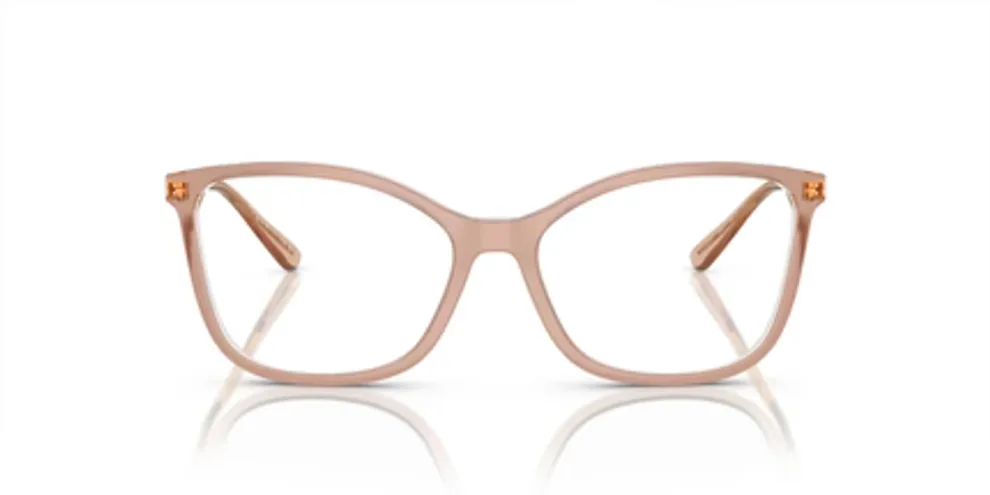
- 0VO5334: Vogue Optical 0VO5334 eyeglasses have a transparent pink frame and clear lenses, with a clean, contemporary look for everyday wear. A second pair of glasses is useful for evenings or screen breaks when you remove your contacts, and this style keeps the switch simple.
- SAPETH: SAPETH from Out East Eyewear combines a Tortoise frame with Blue lenses for a refined everyday look. A blue-lens frame can serve as a backup option on days when your eyes need a break from contact lenses.