Walking down the pet food aisle can feel overwhelming. Bags and cans are covered in claims like “natural,” “premium,” “holistic,” and “grain-free,” but what do these words really mean? The truth is, marketing language is not regulated the same way as nutritional information. To truly know what you are feeding your pet, you need to understand the pet food label itself—the ingredients list, the guaranteed analysis, and the AAFCO statement. These three sections give you the facts behind the flashy packaging.
Whether you are a new pet parent or a seasoned pro, learning how to read a pet food label is an essential skill. In this guide, we will break down each part of the label, explain what to look for, and help you make informed choices for your dog or cat. We will also highlight some of the thoughtfully crafted recipes from Open Farm that meet high standards for transparency and nutrition.
The Ingredients List: What Comes First Matters Most
Ingredients on a pet food label are listed in descending order by weight. This means the first few ingredients make up the bulk of the recipe. Look for a named protein source—like chicken, salmon, or lamb—as the very first ingredient. Avoid vague terms like “meat meal” or “poultry by-product,” which can come from unknown sources. A high-quality food will clearly state the protein and often include a second animal-based ingredient early in the list.
For example, a recipe like the Goodbowl™ Harvest Chicken & Salmon Pâté for Dogs lists chicken and salmon as primary ingredients, providing high-quality protein and beneficial omega fatty acids. Similarly, the Limited Edition Winter Blend Gently Cooked for Dogs features real meat as the first ingredient, ensuring your dog gets the nutrition they need from whole food sources. Always check that whole foods—like fruits, vegetables, and healthy grains—appear before any fillers or artificial additives.
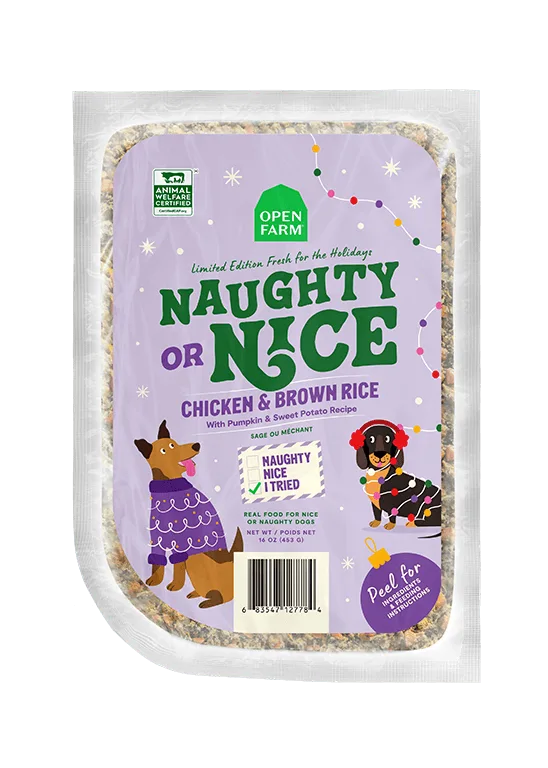
Limited Edition Winter Blend Gently Cooked for Dogs
- Look for named proteins (chicken, beef, salmon) as the first ingredient.
- Avoid generic terms like “meat meal” or “animal digest.”
- Whole food ingredients (sweet potatoes, blueberries, peas) are a good sign.
Decoding the Guaranteed Analysis: Protein, Fat, Fiber, and Moisture
The guaranteed analysis box tells you the minimum percentages of crude protein and crude fat, and the maximum percentages of crude fiber and moisture. These numbers help you compare foods and match them to your pet’s life stage. For active dogs, higher protein and fat levels may be beneficial, while senior pets or those with health issues might need lower fat or higher fiber. Keep in mind that the guaranteed analysis does not account for digestibility—a food with high protein that is poorly digested is less valuable than one with slightly lower but highly digestible protein.
When evaluating wet food versus dry food, moisture content plays a big role. Wet foods typically contain 75-85% moisture, while dry kibble has around 10%. To compare them fairly, you can convert the numbers to a dry matter basis. Open Farm provides clear guaranteed analysis on all their products, including the Chicken & Salmon Pâté for Dogs and the Kitten Chicken & Salmon Pâté for Cats, so you can easily see the nutritional profile and choose accordingly.
- Crude protein and fat are minimums; crude fiber and moisture are maximums.
- Convert wet food values to dry matter basis for fair comparison with kibble.
- Look for foods with named protein sources that match your pet’s needs.
AAFCO Statements: The Gold Standard for Nutritional Adequacy
The Association of American Feed Control Officials (AAFCO) sets the nutritional standards for complete and balanced pet foods. An AAFCO statement on the label indicates that the food meets the nutrient profiles for a specific life stage—such as “growth,” “maintenance,” “all life stages,” or “gestation/lactation.” This statement is not optional; it is required for any food marketed as “complete and balanced.” If a label lacks an AAFCO statement, the food may only be intended for intermittent or supplemental feeding.
There are two ways a food can meet AAFCO standards: by formulation (matching nutrient profiles) or by feeding trials. Feeding trials are more rigorous and provide stronger evidence that the food supports health in real animals. Open Farm’s recipes, such as the Goodbowl™ Wild-Caught Salmon & Brown Rice Cat Kibble and the Hearty Stew Variety Pack for Dogs, carry clear AAFCO statements, giving you confidence that they are formulated to meet your pet’s nutritional needs. Always look for this statement to ensure you are feeding a complete diet.
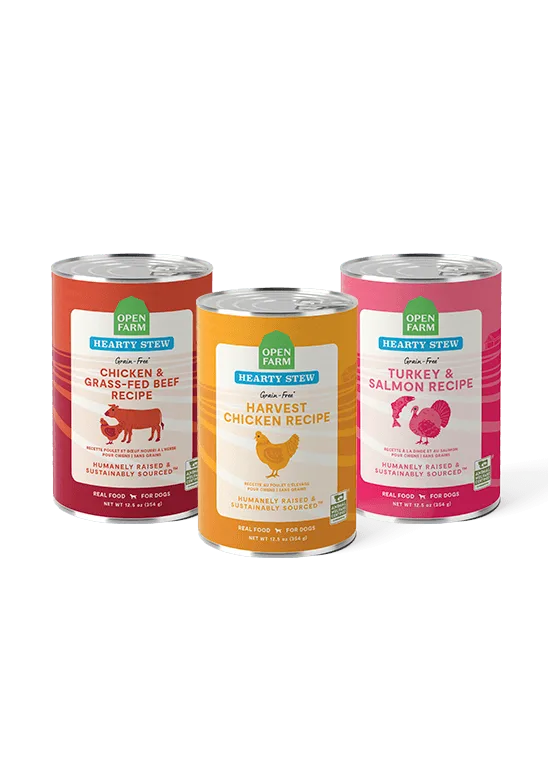
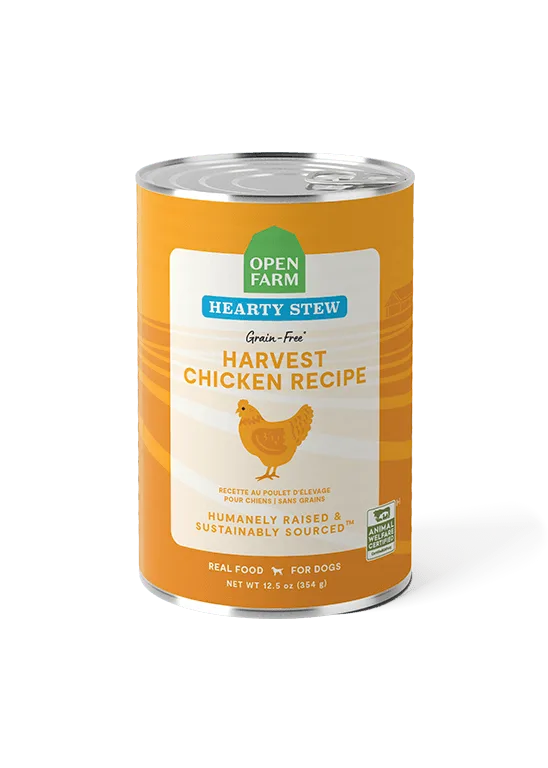
Hearty Stew Variety Pack for Dogs
- Look for “complete and balanced” with the appropriate life stage.
- Feeding trials are more reliable than formulation-only statements.
- Avoid foods without an AAFCO statement if you want a complete diet.
Common Label Claims: What They Really Mean
Terms like “natural,” “grain-free,” “organic,” and “human-grade” are not all regulated the same way. “Natural” generally means no artificial flavors, colors, or preservatives, but it does not guarantee quality. “Grain-free” has become popular, but for most pets, grains like brown rice and oats are nutritious and digestible. “Organic” is USDA-regulated and ensures ingredients are grown without synthetic pesticides or fertilizers. “Human-grade” is a higher standard, meaning the food is fit for human consumption, but it is rare and expensive.
A better approach is to focus on the ingredient quality and AAFCO statement rather than marketing buzzwords. Open Farm’s Kind Earth Plant Pâté with Ancient Grains for Dogs, for example, uses wholesome grains and plant-based proteins, proving that grains can be part of a healthy diet. The Picky Pets Bundle offers variety for dogs who need a little extra encouragement at mealtime, combining different textures and proteins to keep mealtime interesting without relying on artificial enhancers.
- “Natural” means no artificial additives, but it’s not a quality guarantee.
- “Grain-free” is not necessary for most pets; whole grains provide fiber and nutrients.
- Look beyond claims to the actual ingredients and nutritional adequacy.
Practical Tips for Reading Any Pet Food Label
Start by checking the AAFCO statement to confirm the food is complete for your pet’s life stage. Next, scan the ingredients list: the first three ingredients should be recognizable protein sources. Then, review the guaranteed analysis to ensure protein and fat levels align with your pet’s activity level and health needs. Finally, ignore flashy marketing claims on the front of the bag—the real information is in the fine print on the back or side panel.
If you are feeding a mix of wet and dry food, remember to account for the moisture difference. For example, if you feed a wet food like the Goodbowl™ Harvest Chicken & Salmon Pâté for Dogs alongside a dry kibble, adjust portion sizes to avoid overfeeding. Always consult your veterinarian when making significant dietary changes, especially for pets with medical conditions. With practice, reading a pet food label will become second nature, helping you choose the best nutrition for your furry family member.
- Always check the AAFCO statement first for nutritional completeness.
- Focus on the first three ingredients—they are the most important.
- Use the guaranteed analysis to compare foods on a dry matter basis.
Reading a pet food label does not have to be confusing. By focusing on the ingredients list, guaranteed analysis, and AAFCO statement, you can cut through the marketing noise and choose a food that truly supports your pet’s health. Open Farm is committed to transparency, using high-quality ingredients and providing clear labeling so you can feel confident in every meal. Explore the Hearty Stew Variety Pack for Dogs to see how easy it is to feed a diet you can trust.