Quick Answer
The numbers on your contact lens vial tell you the lens power, base curve, diameter, and expiration date. Check these before each use to ensure the lenses match your prescription and are safe to wear.
Why the Numbers Matter
Every contact lens vial is printed with a set of numbers that are essential for safe and comfortable wear. Misreading or ignoring them can lead to poor vision, discomfort, or even eye health issues. Understanding these parameters helps you confirm you’re using the correct lens for your eyes.
Where to Find the Numbers
The numbers are typically printed on the side or foil seal of the vial. They appear in a standard order: base curve (BC), diameter (DIA), power (PWR or SPH), and sometimes cylinder (CYL) and axis for astigmatism. The expiration date is usually nearby. Always check the vial before opening it.
Common Mistakes to Avoid
A frequent error is confusing the base curve and diameter numbers, which can cause a lens to fit improperly. Another is using a lens after its expiration date, even if the vial appears sealed. Always compare the numbers to your current prescription, not just the brand name.
How to Read Your Contact Lens Vial in 4 Steps
- Check the Base Curve (BC): The base curve is a number like 8.6 or 8.8, measured in millimeters. It indicates the curvature of the lens. A mismatch can cause the lens to be too tight or too loose on your eye. Common mistake: Assuming all lenses from the same brand have the same BC. Always verify.
- Check the Diameter (DIA): The diameter is a number like 14.0 or 14.2 mm. It measures the width of the lens. A diameter that is too small may not cover your cornea properly, while one too large can cause discomfort. Checkpoint: If the lens feels scratchy, the diameter might be off.
- Check the Power (PWR or SPH): The power is a number with a plus or minus sign, such as -3.00 or +2.50. This corrects your nearsightedness or farsightedness. Using the wrong power can cause blurry vision. Common mistake: Mixing up left and right lenses if the power differs between eyes.
- Check the Expiration Date: The expiration date is usually printed as month/year (e.g., 2027-06). Never use a lens after this date, even if the vial is sealed, because the saline solution may no longer be sterile. Checkpoint: If the date is missing or hard to read, do not use the lens.
Related Products at Lensabl
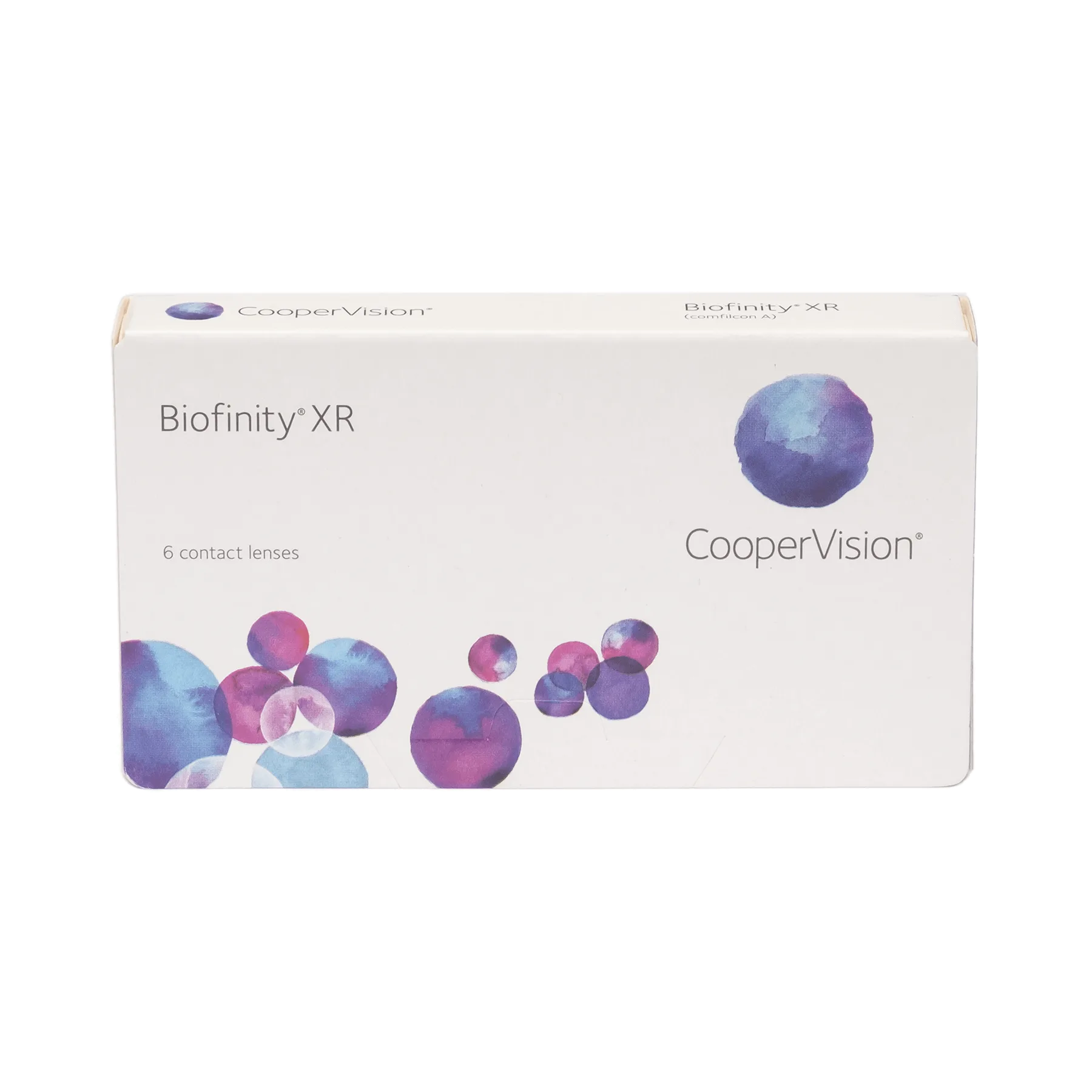
- Biofinity XR - 6 Pack: Biofinity XR monthly lenses come in a 6-pack and are made for severe nearsightedness or farsightedness. Each lens is immersed in buffered 0.83% saline. If your prescription requires a higher power, Biofinity XR offers extended range options. Always verify the vial numbers match your prescription before use.