Quick answer
Let the wax cool completely, then lift it off in one piece with a dull edge before you touch heat or moisture. Work from the outside of the spill inward, and stop the moment the fabric pile, carpet backing, or finish looks changed. Heat is the tool that removes wax, but it is also the tool that sets a stain, so use it only after the solid wax is gone.
Start with the surface, not the stain
The same wax spill behaves differently on a tight cotton pillowcase, a looped carpet, a chenille sofa cushion, and a wood side table. Before you reach for an iron, identify what you are treating: woven fabric, cut-pile or loop-pile carpet, upholstery with a visible weave, or a hard finished surface. That single decision tells you whether you can use heat directly, whether you need a blotting layer, and whether water is safe at all.
If you cannot identify the fiber or finish, test in an inconspicuous spot first. On carpet, that is a corner behind a door or inside a closet. On upholstery, check the underside of a cushion or the back edge of a skirt. On furniture, test the back or underside of a leg. A test that changes the color or texture is your signal to stop and choose another option.
Cool it, chip it, lift it
Warm wax spreads into fibers; cool wax sits on top of them. Let the spill return to room temperature, then harden it further with an ice cube in a plastic bag or a few minutes in the freezer if the item is removable. Once the wax is brittle, press a dull edge — a plastic card, a spoon handle, or a butter knife — under the edge of the pool and lift upward. Work from the outer edge toward the center so you do not drive wax deeper into the fabric.
For candle wax removal carpet, this step does most of the work. Large pieces come up cleanly, and what remains is a thin film rather than a deep stain. For get wax off furniture, the same lift-and-chip approach keeps you from scratching a finish with a scraper. If the wax crumbles instead of lifting, it is still too warm; chill it again rather than picking at it.
Heat only after the solid wax is gone
Once the bulk is removed, place a clean, absorbent cloth or plain paper towel over the remaining wax and press with a warm — not hot — iron or a hair dryer on low. The wax wicks into the absorbent layer. Lift the cloth, check the fabric, and repeat with a fresh section of cloth. Never slide the iron; press and lift. Sliding spreads the wax sideways and can flatten carpet pile or upholstery texture.
For clean up spilled candle wax on a hard surface, skip the iron. A plastic card and a warm damp cloth are usually enough. If a residue remains on wood, use a cloth barely dampened with a mild cleaner and dry immediately. Standing water is the bigger risk to most furniture finishes than the wax itself.
When the wax is colored, scented, or old
Colored and heavily scented waxes can leave a dye or fragrance residue after the solid wax is gone. Treat that as a separate stain, not as wax. A few drops of mild dish soap in cool water, blotted — not rubbed — is the gentlest first attempt on washable fabric. On carpet and upholstery, a small amount of foam worked in with a soft brush and blotted away is safer than soaking the area.
Old wax that has been through a dryer cycle or sat in sunlight for weeks is a different problem. The heat has already driven the wax and any dye into the fiber. You can still lift surface wax, but expect a faint shadow on light fabrics. At that point, the honest answer is that the stain may be permanent, and a professional cleaner is the better next call than another round of heat.
Wax melt spills are not candle spills
Wax melt spill cleanup usually involves a warmer, a tray, or a small dish rather than a wick, so the spill is often thinner and wider. The same cool-first rule applies, but the wax is frequently softer and more heavily fragranced. Scrape what you can with a plastic card, then use the absorbent-cloth-and-warm-iron method on fabric. On a warmer or tray, let the wax cool, flex the tray if it is flexible, and wipe the residue with a dry paper towel before washing.
If you use extra large wax melts, the larger pour means a spill can cover more surface area in one go. That is a reason to keep a plastic scraper and a stack of old cloths near the warmer, not a reason to change how you clean up. The method stays the same; only the size of the first lift changes.
Diagnose the spill before you treat it
- Symptom: wax is still soft and smearing: The wax has not fully cooled, so any tool you use will push it deeper into the fiber or finish. Stop. Chill the area with an ice cube in a bag or move the item to a cool spot, then start again once the wax is brittle.
- Symptom: a faint colored or greasy shadow remains after the wax is gone: This is a dye or fragrance residue, not wax. Heat will set it further, so switch to a mild soap-and-cool-water blot on washable fabric, or a small amount of foam on carpet and upholstery. If two gentle attempts do not lift it, stop and call a professional cleaner rather than escalating the chemistry.
- Symptom: the fabric pile, carpet backing, or furniture finish looks changed: Heat, water, or friction has altered the material itself. No further cleaning step will restore it, and continuing will make the damage larger. Stop immediately. This is the point to choose another option — a professional restoration service, a slipcover, or accepting the mark.
Products that fit this cleanup routine
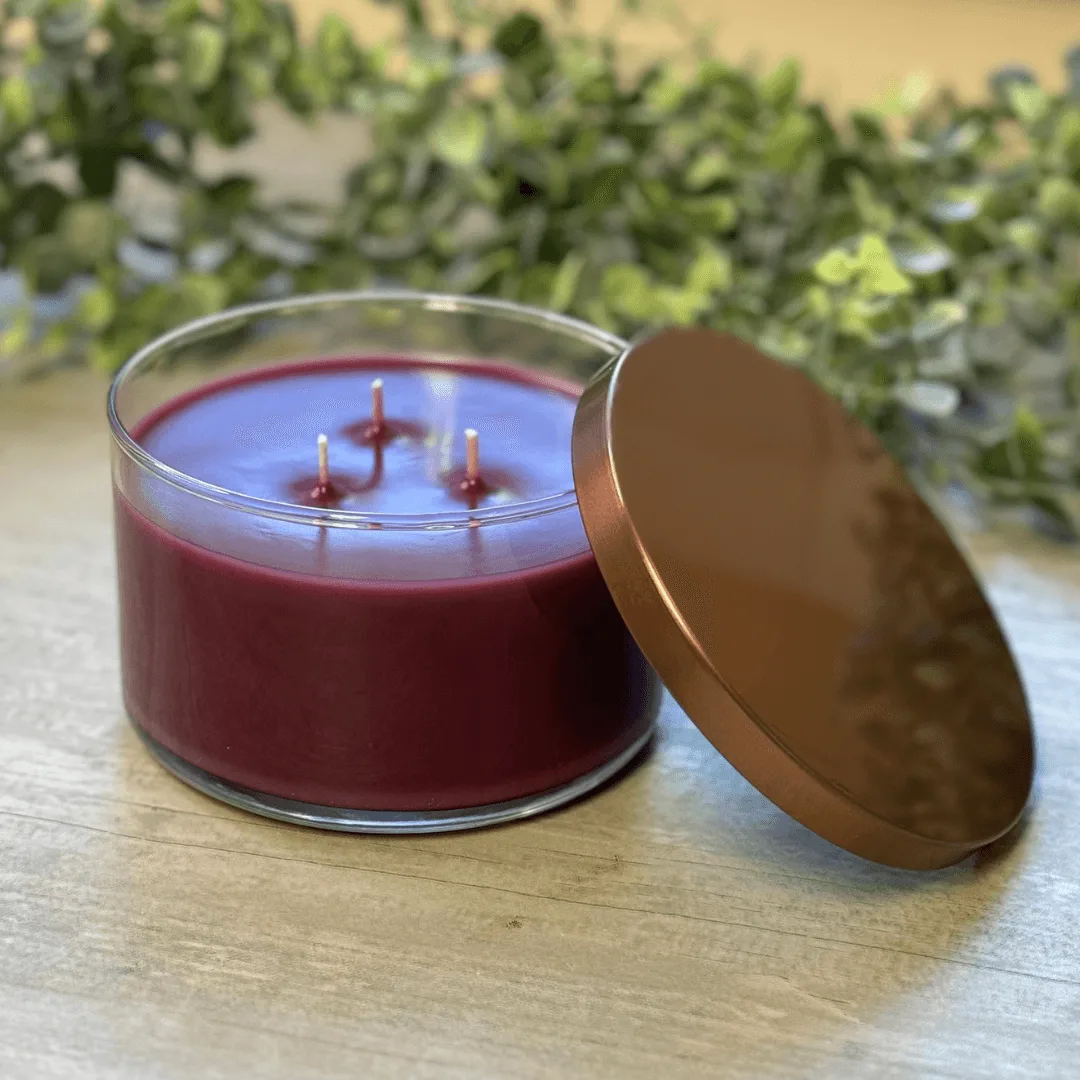
- Medium 3 Wick Candle (Will be back in late Fall, products will melt in transit during warm weather): Use and care guidance includes trimming the wick to 1/4 inch before lighting, keeping the candle on a level surface away from drafts, and allowing the wax to pool to the edge of the glass before extinguishing. A candle that pools evenly and burns within sight is less likely to tunnel, tip, or throw wax, which is the most common cause of the spills this article addresses.
- Extra Large Wax Melts (Will be back in late Fall, products will melt in transit during warm weather): Extra large wax melts come in a 5.6oz clamshell and are described as lasting up to 100 hours in burn time. A longer-lasting melt means fewer change-outs and fewer chances to knock a hot warmer, but the larger pour also means a wider spill if one happens, so keep a scraper and cloths nearby.
- All Purpose Scented Cleaner: The All Purpose Scented Cleaner is described as a plant and mineral based formula, and it is available in fan-favorite and seasonal scent bundles in 17oz bottles. A mild plant and mineral based cleaner is a reasonable first choice for the final residue step on hard surfaces and for spot-treating washable fabric, but test it on an inconspicuous area before using it on upholstery.