Quick answer
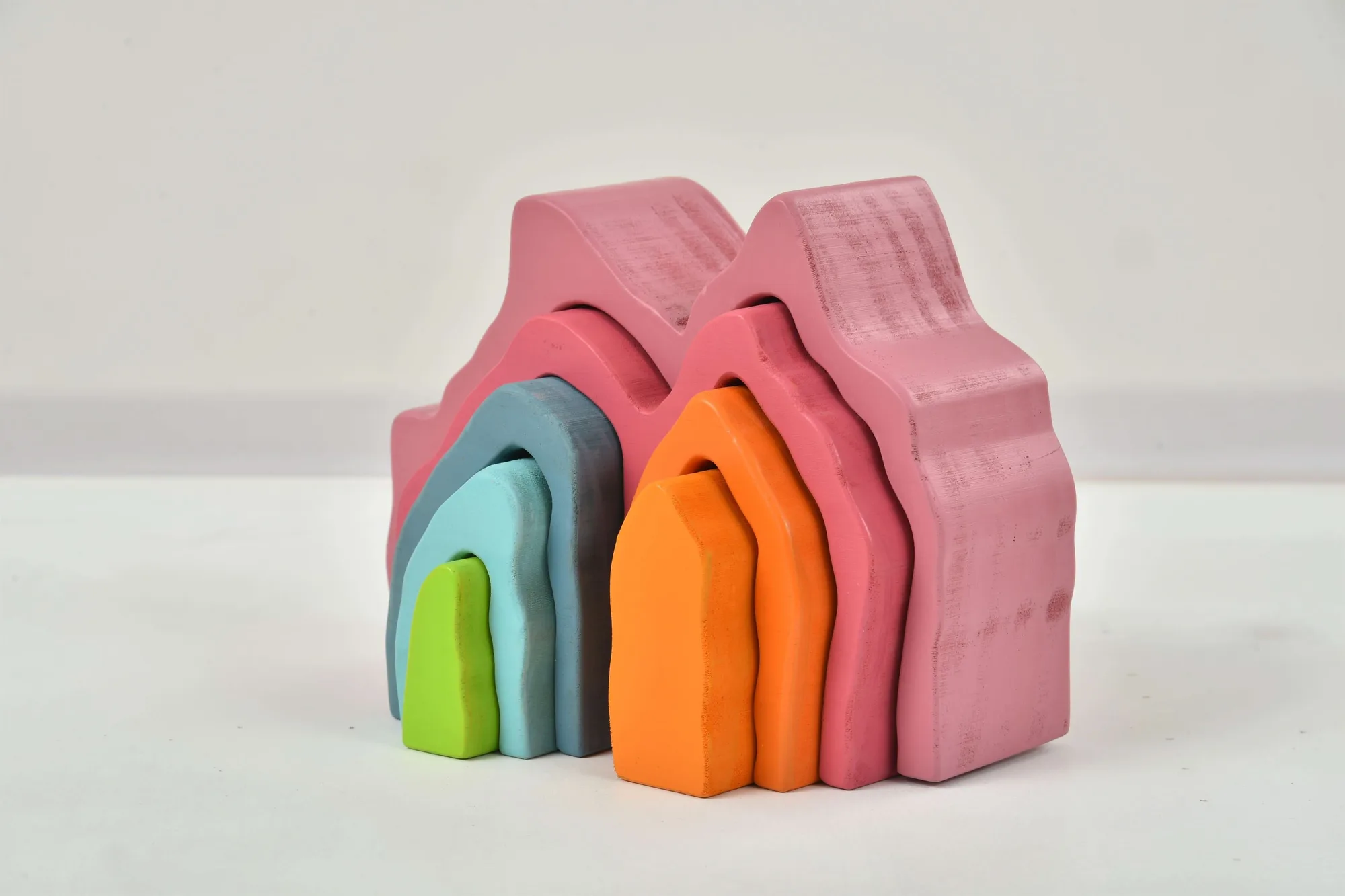
Use the wooden mountain rainbow stacker as a floor toy, not a shelf decoration. Start with free exploration around 12 months, add color and size sorting near 18 months, then introduce balancing and pretend play from age two onward. Keep only a few pieces out at first so the set stays manageable, and rotate the rest back in as your child's play grows.
Set up one clear play zone before you introduce the stacker
A stacker works best on a flat, low-traffic surface where pieces can fall without rolling under furniture. A play mat, rug, or the floor beside a low table all work. Keep the full set in a shallow basket so your child can see the pieces but you can still control how many are out at once. If you are building a dedicated play corner, a child-height surface such as the Cordia Wooden Kids Activity Table & Chair Set gives the stacker a permanent home and doubles as a place for finished builds to stay standing.
Match the play idea to your child's current stage
The same stacker supports very different play at different ages, so the goal is not to teach one correct way to build. Watch what your child already does with the pieces, then add one small challenge. If they only mouth or bang the blocks, keep the session short and physical. If they line pieces up, introduce color naming. If they already stack two or three, add a balancing goal. This keeps the toy useful for years instead of weeks.
- Around 12 months: free handling, dropping, and carrying pieces one at a time.
- Around 18 months: color matching and simple size ordering with two or three pieces.
- Around 2 years: stacking, balancing, and knocking down intentional towers.
- Around 3 to 4 years: pretend landscapes, tunnels, bridges, and story-based building.
Keep storage and rotation simple
Leave out five to seven pieces at a time and store the rest out of sight. Rotating pieces every week or two keeps the set feeling new and makes cleanup realistic for a toddler. Check pieces for cracks, splinters, or loose paint before each rotation, and wipe them with a damp cloth rather than soaking them. If a piece becomes rough, set it aside until you can sand or replace it.
Age-by-age stacker play steps
- Step 1: Start with free exploration (around 12 months): Place three or four pieces on the floor and let your child pick them up, drop them, and carry them. Name colors and shapes as they handle each piece, but do not direct the play. Checkpoint: if pieces are still going straight to the mouth, keep sessions short and stay within arm's reach.
- Step 2: Add color and size sorting (around 18 months): Lay out two colors and ask your child to put matching pieces together. Then offer two clearly different sizes and let them choose which is bigger. Common mistake: using too many pieces at once. Two colors and two sizes is enough at this stage.
- Step 3: Build simple stacks and towers (around 2 years): Stack two or three pieces and invite your child to add one more. Let them knock the tower down on purpose, then rebuild together. Checkpoint: a stable base piece makes early stacking less frustrating. Start wide and work upward.
- Step 4: Introduce balancing challenges (around 2.5 years): Ask your child to balance a piece on its side or make a bridge between two upright pieces. Show one example, then let them try their own version. Common mistake: correcting the build. A wobbly bridge that stands for a second is a success at this age.
- Step 5: Move into pretend play and storytelling (around 3 to 4 years): Use the mountain shapes as hills, caves, or animal homes. Ask your child to tell you what happens next and add pieces to match the story. Next step: combine the stacker with other wooden toys to extend the scene, or move the play to a table so builds can stay up.
Product facts that shape how you play
- Wooden Mountain Rainbow Stacker Toy Puzzle Blocks: The Avenlur mountain-shaped blocks are designed differently from arc-shaped stackers on the market, which allows more varied shapes and richer creative play. Mountain profiles create peaks, slopes, and tunnels that arcs cannot, so the same set supports both stacking practice and open-ended landscape building as your child grows.
- Cordia Wooden Kids Activity Table & Chair Set – Montessori-Inspired Desk for Play & Learning: The Cordia Activity Table and Chair Set is a child-sized, Montessori-inspired furniture set for toddlers and young children. A dedicated child-height surface keeps stacker play contained and gives finished builds a place to stay standing between sessions.