Quick answer
Blot, don't rub, then scrape off any solid polish with a dull edge before dabbing the stain with acetone-based nail polish remover on a cotton swab, working from the outside in. Test the remover on a hidden seam first, because acetone can melt acetate, triacetate, and some printed synthetics. If the fabric is dry-clean-only or the polish has already bonded for days, stop and take it to a professional rather than risk a hole.
A wet drop of polish on your jeans feels like a five-second emergency, but the clock is actually more forgiving than you think. Fresh polish lifts fairly easily because the solvents in it haven't fully evaporated. Once it cures, you're no longer removing polish, you're removing a plastic film that has gripped the fibers.
The right method depends on two things: what the fabric is made of and how long the polish has been there. This guide walks through the symptom you're seeing, the likely cause, the corrective action, and the point where you should stop before you make the damage worse.
What to do in the first five minutes
Blot the wet polish with a clean paper towel, pressing straight down rather than sweeping sideways. Sweeping smears the pigment deeper into the weave and widens the stain. If the polish has already started to skin over, let it finish drying rather than smearing it further, then peel or scrape it off with a credit card edge or a dull butter knife.
Once the bulk is gone, dampen a cotton swab with acetone-based nail polish remover and dab from the outer edge of the stain toward the center. This keeps the dissolved pigment from spreading into clean fabric. Swap the swab as soon as it picks up color. Repeat in small passes, and don't soak the whole area at once.
- Work over a paper towel so dissolved pigment has somewhere to go
- Use a fresh swab per pass instead of re-dabbing with a dirty one
- Never rub in circles, which pushes pigment into the fiber core
Match the method to the fabric
Cotton, denim, and most sturdy linens tolerate acetone well. Turn the garment inside out, place a clean white cloth underneath the stain, and dab from the back so the polish pushes out of the fabric rather than deeper into it. Follow with a normal wash cycle once the stain is gone. If any color remains after washing, do not put it in the dryer, because heat sets whatever is left.
Acetate, triacetate, and some rayon blends are the ones to worry about. Acetone can literally dissolve these fibers, leaving a thin or gummy patch that no amount of rinsing will fix. On these fabrics, test a hidden hem or inner seam first and wait a full minute before deciding. If the test area puckers, dulls, or feels tacky, switch to a gentler route or stop entirely.
- Silk, wool, and dry-clean-only garments: go straight to a professional
- Leather and faux leather: acetone strips the finish, so use a specialist
- Upholstery and carpet: dab, never pour, and keep the area ventilated
When the polish has already dried
Dried polish on fabric is a different problem. Try freezing the garment for an hour first, then flex the fabric to crack the film and pick the flakes off with your fingernail. This works surprisingly well on smooth weaves like denim and canvas. On knits and looser weaves, the polish has likely sunk between the fibers, so freezing only removes the surface layer.
After the freeze-and-pick step, treat any remaining shadow with the same dab method described above. Expect two or three rounds rather than one. If the stain has been set by a previous wash and dry cycle, the pigment may have bonded permanently, and the honest answer is that a patch, a dye job, or a tailor is the better use of your time.
- Freeze first, pick second, solvent third
- Skip the iron and the dryer until the stain is fully gone
- Re-check the spot in daylight before you decide it's finished
Color transfer and shimmer residue
Highly pigmented shades can leave a tint behind even after the polish itself is gone. This is common with deep purples, reds, and anything loaded with shimmer or reflective glitter. The film lifts, but the dye component has already stained the fiber. A few drops of dish soap worked in with cool water often lifts that last trace on cotton, though it won't do much on synthetics.
Shimmer and glitter are a separate cleanup. The particles are tiny and they cling, so rinse the area under running water rather than wiping, which just grinds them in. Check your work surface and the floor too, since a stray flake will find its way onto the next garment you handle.
- Cool water only for the dye trace, since hot water sets it
- Rinse glitter rather than wiping it, or you'll spread it
- Wash the garment alone the first time after treatment
Stain diagnosis: what you're seeing and what to do
- Wet, glossy drop on sturdy cotton or denim: Blot straight down, then dab with acetone-based remover from the outside in using a fresh swab each pass. Best case. Most of these come out completely in one sitting.
- Dry, raised film on a smooth weave: Freeze the garment for an hour, crack the film, pick off the flakes, then dab any shadow with remover. Stop once the surface is clear and only a faint tint remains.
- Color or texture change after testing remover: The fabric is likely acetate, triacetate, or a treated synthetic that acetone attacks. Do not continue. Switch to a professional cleaner or accept the garment as is.
- Stain survived a wash and dry cycle: Heat has set the pigment into the fiber, and solvent dabbing will no longer lift it. Consider a patch, dye, or tailor rather than more chemicals.
Why some polishes stain harder than others
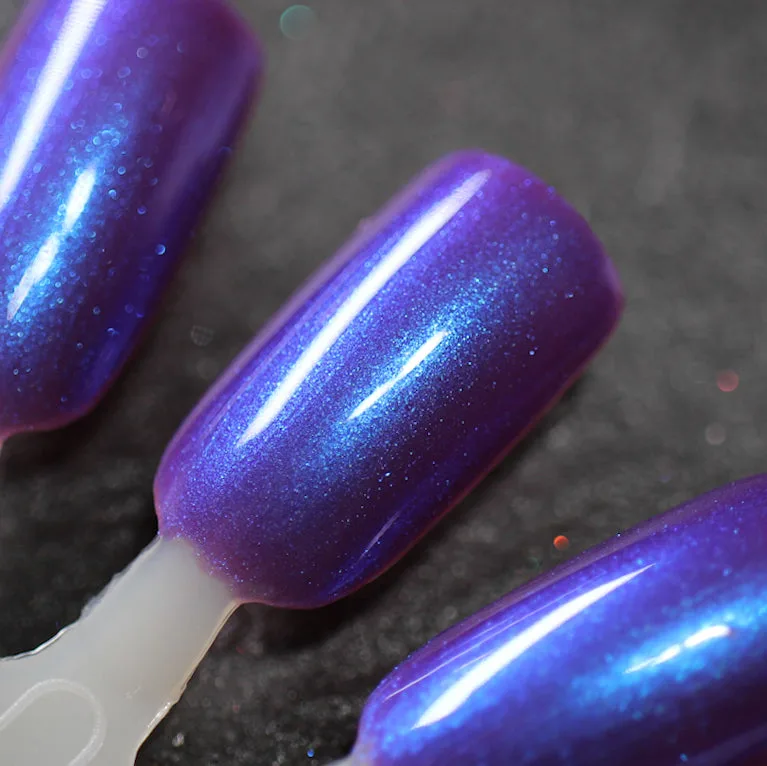
- A Grave Mistake - Purple Shimmer Indie Nail Polish - Halloween Quad 2024: A Grave Mistake has a purple base and blue shimmer, with a recommended 2-3 coats. Deep purple bases are among the shades most likely to leave a dye trace on light fabric even after the polish film lifts, so treat the tint as a second, separate stain.
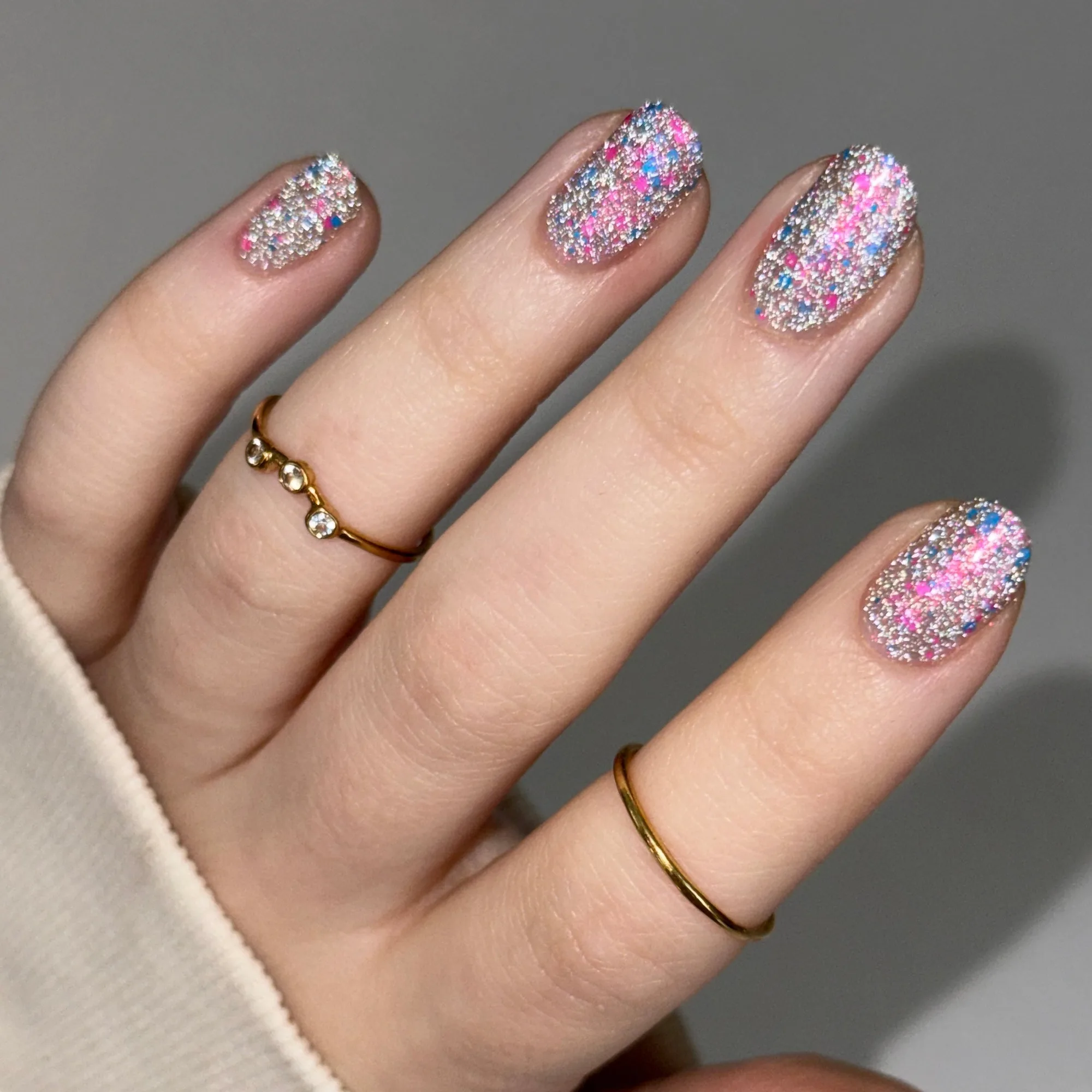
- Squid Pro Quo - Silver Reflective Glitter Nail Polish with Pink Shimmer and Neon Glitter - Squids Fly High Sibling: Squid Pro Quo is a silver reflective glitter base with pink, gold, and green shifting shimmer and assorted neon blue and pink glitters, with a recommended 2 coats. Loose glitter and shimmer particles cling to fabric and spread when wiped, so rinse these spills under running water instead of dabbing with a cloth.
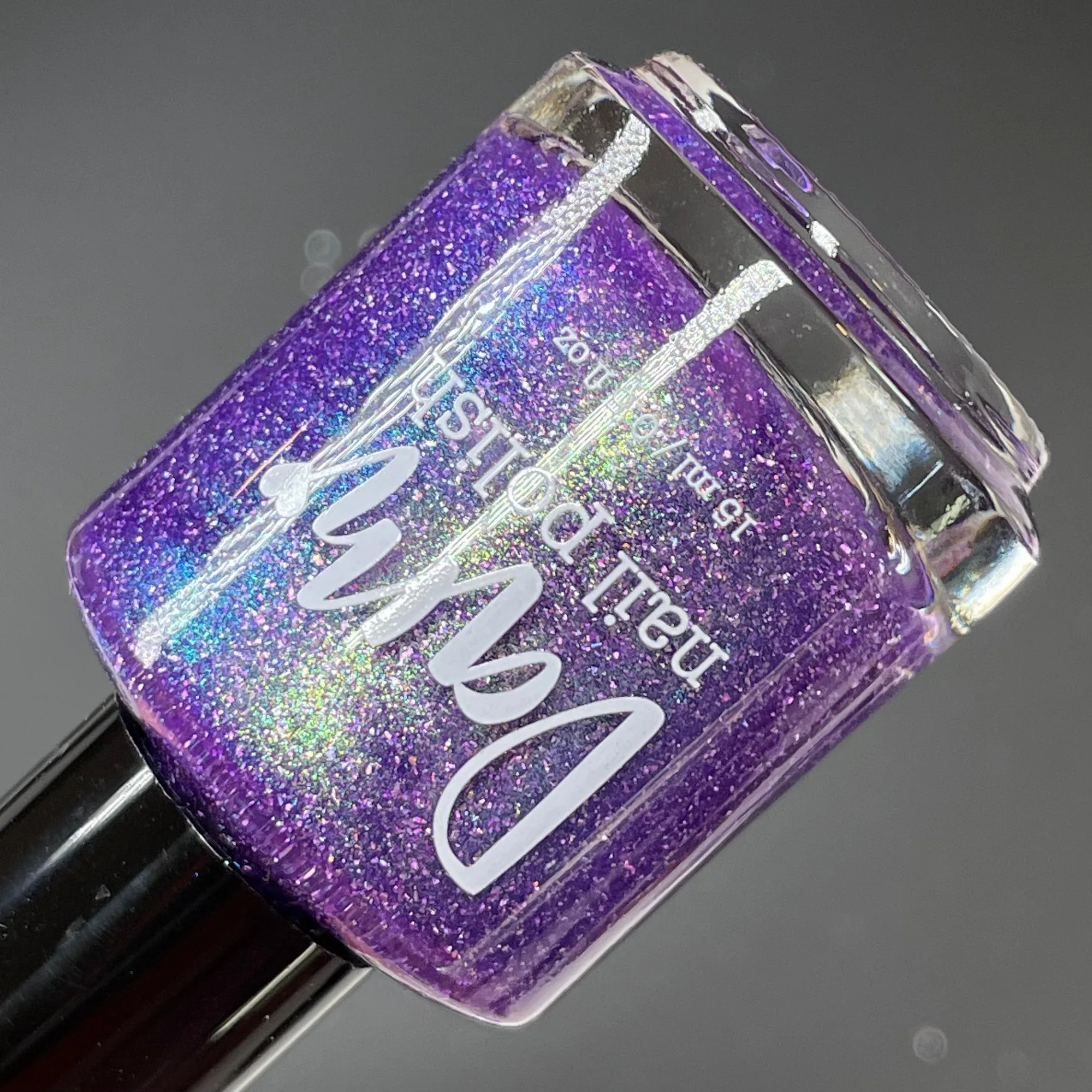
- Plum Wined - Purple Shimmer Nail Polish - Oops Batch: Plum Wined is a deep purple base with green and aqua shifting shimmer and holographic microflakes, with a recommended 2 coats. Holographic microflakes are small enough to work into a weave, which is why a spill of this type needs solvent dabbing rather than a simple rinse.
Fresh spills are a five-minute fix, dried ones are a project, and heat-set stains are usually permanent. Test on a hidden seam, work in small passes, and know when to hand the garment to a professional instead of risking a hole.