Quick answer
Unplug the rice cooker and let it cool, then press the inner lid release tabs at the sides of the outer lid and pull the inner lid straight down and out. Wash it by hand with mild dish soap, dry it completely, and push it back until both tabs click. If the lid is cracked, warped, or no longer stays seated, replace the inner lid rather than forcing it back in, and check the small inner lid bushing at the same time.
Most Zojirushi Micom rice cookers use a detachable inner lid that sits inside the outer lid and lifts out for cleaning. It is the part that collects the most starch and condensation, so it is also the part most likely to need attention first. The good news is that removal and reinstallation take a couple of minutes once you know where the release points are.
This guide walks through removal, hand cleaning, and reinstallation, then covers how to tell whether you need a new inner lid, a small bushing, or a different part entirely. It applies to the 5.5 cup Micom models that use a removable inner lid, including the NS-RNC10 and NS-RPC10, and to the NS-ZAC10 and NS-ZCC10, which use a different inner lid set. The exact release design varies by model, so treat the steps below as the general sequence and confirm the details in your own manual.
Before you start
Unplug the rice cooker and let it cool completely. Steam and hot condensation sit behind the inner lid, and the lid itself can be hot enough to burn your fingers if you open it right after cooking. Give it at least 15 to 20 minutes, or wait until the lid is cool to the touch.
Set up a clean, flat surface with a soft towel. The inner lid is thin and can bend or scratch if it lands on a hard counter. Have mild dish soap, a soft sponge, and a clean cloth ready. Avoid abrasive scrubbers and harsh cleaners, which can dull the surface or damage the gasket.
- Keep the outer lid open while you work so you can see the release points clearly.
- If you are replacing the part, have the new inner lid on hand before you remove the old one so you can compare them side by side.
Remove the inner lid
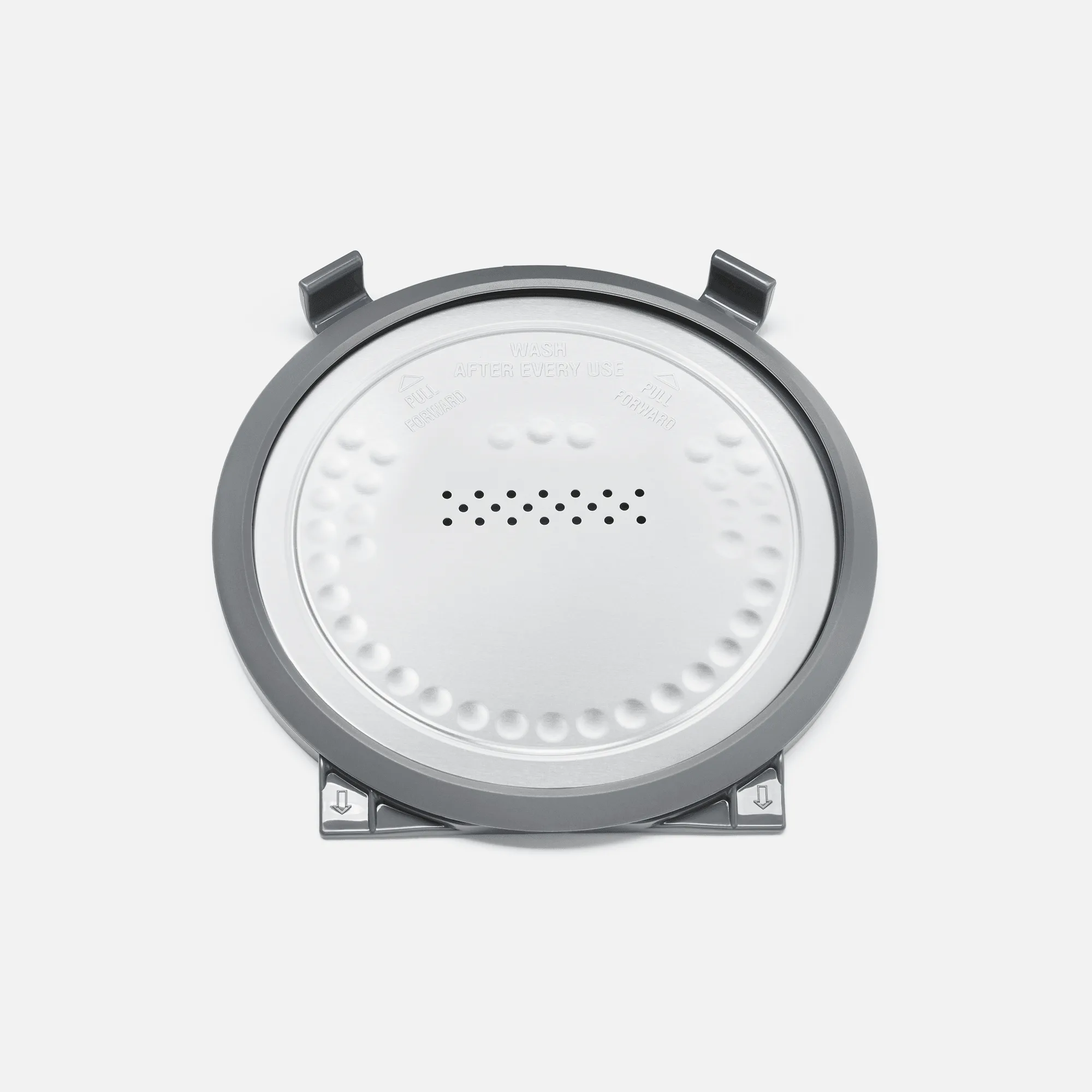
Open the outer lid fully. Look at the left and right edges of the inner lid, where it meets the outer lid. On many Micom models there is a small tab, button, or latch on each side. Press or squeeze both sides at the same time, then pull the inner lid gently downward and toward you. It should release without much force.
If it does not move, stop and check for a center clip or a single release button instead of side tabs, since some models use a different mechanism. Pulling harder will not help and can crack the plastic or bend the lid. Once it is free, set it face up on the towel.
- Common mistake: prying at the edge with a knife or screwdriver. Use only your fingers.
- Checkpoint: the inner lid should come away as one piece, with the gasket still attached if your model has one.
Clean the inner lid and the outer lid cavity
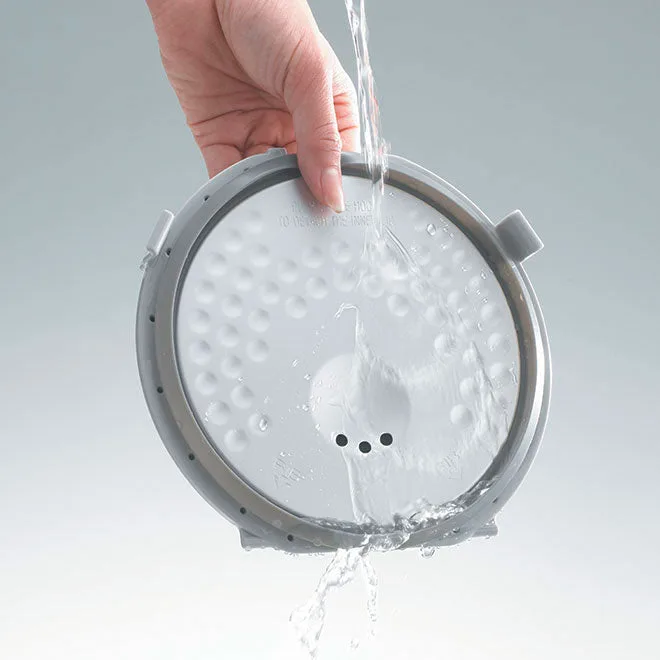
Wash the inner lid by hand in warm water with a few drops of mild dish soap. Use a soft sponge and pay attention to the gasket and the recessed areas where starch collects. Rinse well, because leftover soap can affect the taste of the next batch of rice. Dry it with a clean cloth and let it air dry fully before reinstalling it.
While the inner lid dries, wipe the inside of the outer lid and the area around the hinge with a damp cloth. Starch and condensation build up there too, and a clean cavity helps the inner lid seat properly. Do not pour water into the outer lid or immerse the cooker body.
- Rice cooker lid cleaning is easier if you do it after every few uses rather than waiting for a visible film to build up.
- Never put the cooker body, outer lid, or any electrical part in water.
Reinstall the inner lid
Line the inner lid up with the outer lid so the tabs or clips face their slots. Push it straight up and in until you feel or hear both sides click. Give it a gentle tug downward to confirm it is locked. If one side clicks and the other does not, remove it and try again rather than closing the lid on a loose part.
Close the outer lid slowly and check that it shuts flush. A lid that will not close completely usually means the inner lid is not seated, the gasket is folded, or the wrong part is installed. Run a short steam or rinse cycle if your model has one, or cook a small batch of rice and check that no water drips from the lid area.
- Common mistake: forcing the lid shut. If it resists, stop and reseat the inner lid.
- Checkpoint: both release points should click and the lid should sit flush with no gap.
Decide whether to clean or replace
Clean the existing inner lid if it is intact, seats firmly, and only has a starch film or light discoloration. Replace it if you see cracks, a warped or wavy edge, a torn or stretched gasket, or a lid that pops loose during cooking. A loose inner lid lets steam and starch escape into the outer lid, which affects texture and makes cleanup harder.
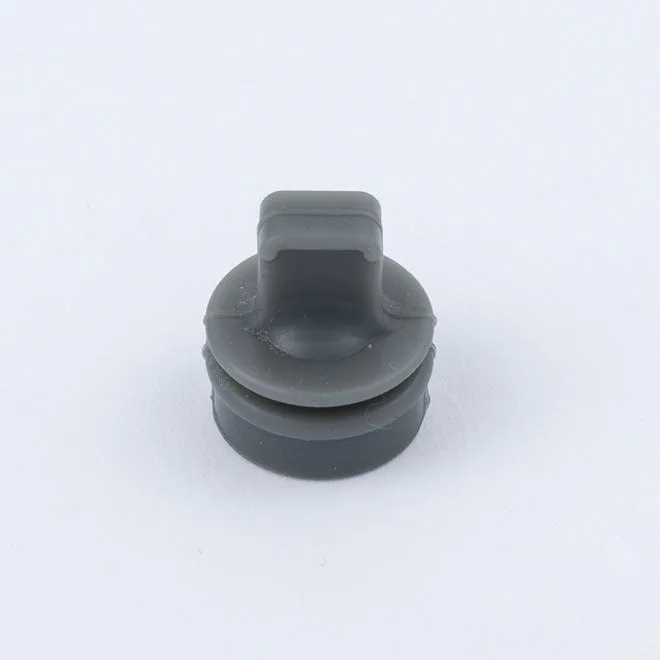
If the inner lid itself is fine but it will not stay attached, the small bushing or clip may be the worn part. That is a much cheaper fix than a full inner lid. Check both before ordering so you do not buy a lid you do not need, or a bushing when the lid is actually cracked.
- Write down your model number from the label on the cooker body or the bottom of the unit before you shop.
- If your manual is missing, the model number is the fastest way to confirm the correct part.
Match the part to your model
Inner lids are model-specific, and the naming is not always obvious. The NS-RNC10 and NS-RPC10 use one style of removable inner lid, while the NS-ZAC10 and NS-ZCC10 use an inner lid set, which is a different assembly. Two cookers that look nearly identical can take different parts, so match the part to the model number rather than to the size alone.
If you cannot find a specification such as a dishwasher-safe rating, do not assume it. Treat the part as hand-wash only unless your manual states otherwise. The same applies to material claims: use what the product listing or manual actually says, and contact support if a detail is missing.
- Keep the old inner lid until the new one is installed and confirmed to fit.
- Order the bushing at the same time if it is also worn, so you are not paying for a second shipment.
Inner lid replacement step by step
- Unplug and cool: Unplug the rice cooker and wait until the lid is cool to the touch, about 15 to 20 minutes after cooking. Checkpoint: no steam and no heat before you touch the inner lid.
- Release both sides: Open the outer lid, press or squeeze the release tabs on both sides of the inner lid at the same time, and pull it straight down and out. Common mistake: prying with a tool. Use your fingers only.
- Hand wash and dry: Wash the inner lid with mild dish soap and a soft sponge, rinse well, and dry it completely before reinstalling. Checkpoint: the gasket and recessed areas are free of starch film.
- Wipe the outer lid: Wipe the inside of the outer lid and around the hinge with a damp cloth, without pouring water into the cooker body. A clean cavity helps the inner lid seat correctly.
- Reinstall and click: Align the tabs with their slots, push straight in until both sides click, then tug gently to confirm it is locked. Checkpoint: the outer lid closes flush with no gap.
- Replace if worn: If the lid is cracked, warped, or will not stay seated, order the correct inner lid or bushing for your model number instead of forcing it. Next step: note your model number and check the part listing before buying.
Parts that fit these Micom models
- Inner Lid for NS-LAC/LGC/LHC (3 Cup Model): This inner lid is a replacement part for select Zojirushi rice cooker models, designed for the 3 cup model and compatible with the NS-LAC, NS-LGC, and NS-LHC series, with PFA-free construction and SKU 8-NSL-P180. It shows how specific inner lids are: this one is built for 3 cup NS-LAC, NS-LGC, and NS-LHC cookers, so it is not a universal fit. Use it as a reminder to match your own model number before ordering.
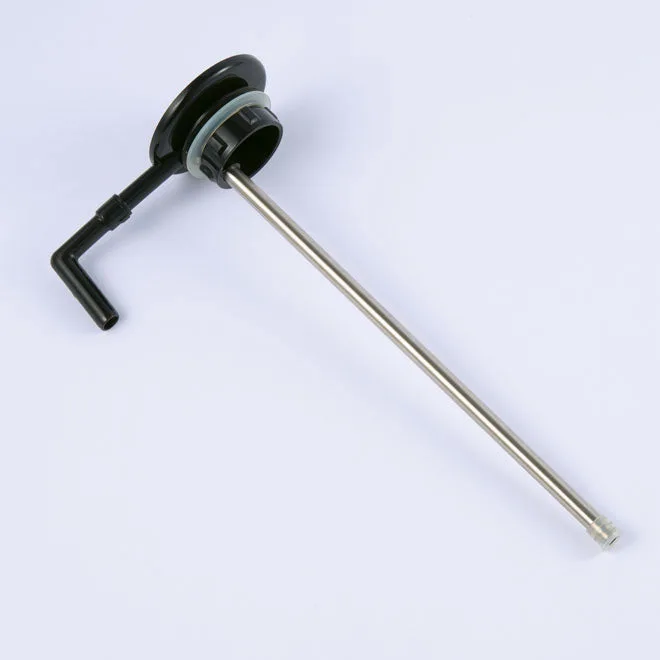
- Inner Lid Bushing for NL-AAC and NS-TGC / TSC / TPC / WAC / WPC / WRC / WSC / WTC / WXC: This inner lid bushing is a replacement part for select Zojirushi rice cooker models, including NL-AAC and NS-TGC, TSC, TPC, WAC, WPC, WRC, WSC, WTC, and WXC series, and some assembly is required. If your inner lid is intact but will not stay attached, this small bushing is the likely culprit and costs far less than a full lid. The assembly note means you should allow a few extra minutes for the repair.
- Inner Lid Set for NL-EAC10 / NL-EJC10: This is an inner lid set for the NL-EAC10 and NL-EJC10 models, listed as a Parts item. It illustrates the set format used by some models, where the replacement includes more than a single flat lid. Check whether your model takes a lid or a set before you order.
A removable inner lid is one of the easiest parts of a Micom rice cooker to maintain, and cleaning it regularly keeps rice tasting consistent and cleanup short. When cleaning is no longer enough, match the replacement part to your exact model number, and check the small bushing before you assume you need a whole new lid.