Quick answer
Restore a tired paddock by applying SureGrow Paddock Fertiliser in early spring or autumn, following a soil test, and resting the field until the grass is 6-8 inches tall before allowing horses back to graze.
Why paddock restoration matters for horse health
Overgrazed or compacted paddocks produce less nutritious grass and can harbor weeds. Restoring pasture with a balanced fertiliser improves grass density and reduces the risk of horses eating soil or toxic plants. SureGrow Paddock Fertiliser is formulated specifically for horse and pony paddocks, so it supplies the right nutrients without encouraging excessive lush growth that can lead to laminitis.
When to apply fertiliser for best results
Timing matters. Apply SureGrow Paddock Fertiliser in early spring (March-April) when soil temperatures rise above 8°C, or in early autumn (September) to strengthen grass before winter. Avoid fertilising during drought or waterlogged conditions, as the grass cannot absorb nutrients and runoff may harm nearby water sources.
Step-by-step paddock restoration plan
- Test your soil first: Take soil samples from several spots in the paddock, mix them, and send to a lab for pH and nutrient analysis. This tells you exactly what your pasture needs and prevents over-fertilising. Common mistake: skipping the test and guessing the fertiliser rate can waste money and harm grass.
- Choose the right day and spreader: Apply SureGrow Paddock Fertiliser on a calm, dry day when rain is forecast within 24 hours (to wash granules into soil). Use a calibrated broadcast spreader set to the rate recommended on the bag based on your soil test results. Checkpoint: calibrate the spreader on a small patch first to confirm the output matches the target rate.
- Apply evenly across the paddock: Walk at a steady pace, overlapping passes slightly to avoid stripes. For large fields, divide the paddock into sections and apply each section separately for consistent coverage. Common mistake: applying too thickly near gateways or water troughs, causing scorch and uneven growth.
- Rest the paddock after application: Keep horses off the treated area for at least 2-3 weeks, or until the grass reaches 6-8 inches in height. This allows the fertiliser to work and prevents horses from eating concentrated granules or tender new shoots. Checkpoint: if you must graze sooner, strip-graze a small section and monitor for any digestive upset.
- Manage grazing to maintain recovery: Once the grass is ready, rotate horses between paddocks so each area gets a 3-4 week rest between grazings. This keeps the pasture healthy and reduces weed invasion. Common mistake: turning horses back onto the full paddock at once, which quickly overgrazes the new growth and undoes the restoration.
Product facts
-
SureGrow Paddock Fertiliser 20kg: SureGrow Paddock Fertiliser is a high-quality fertiliser specifically formulated for use on horse and pony paddocks. It provides balanced nutrition that supports steady grass growth without the rapid protein spikes that can trigger digestive issues in horses.
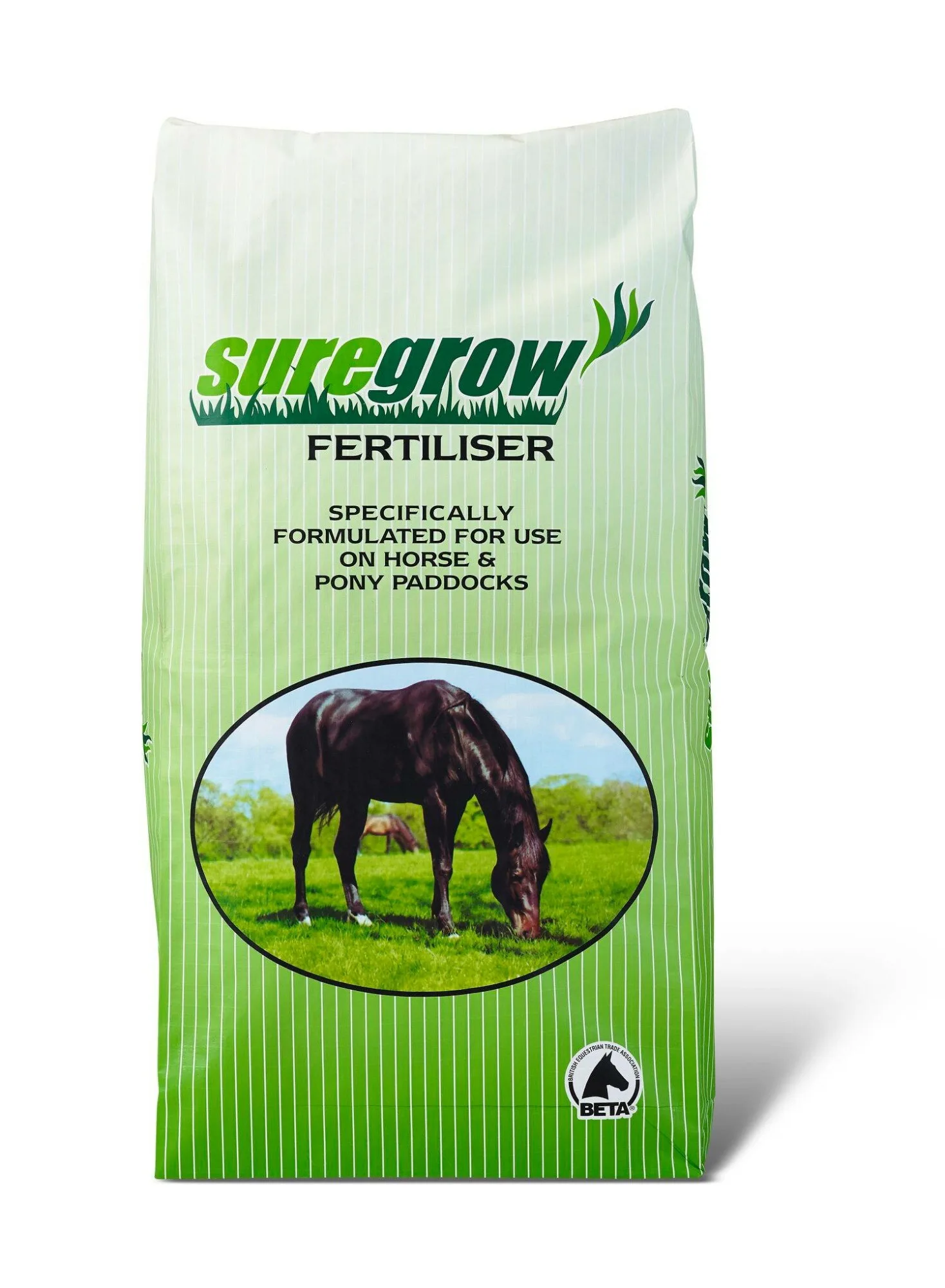
SureGrow Paddock Fertiliser 20kg