Quick Answer
To run an Adventure Party, start by reading the scenario aloud, then guide players through each encounter by encouraging creative solutions and interpreting rolls flexibly. Keep the pace lively, embrace the humor, and remember that a roll of '1' is not a failure—it's a twist. With the Adventure Party Signature Series Expansion, you get 24 new scenarios to keep your group engaged.
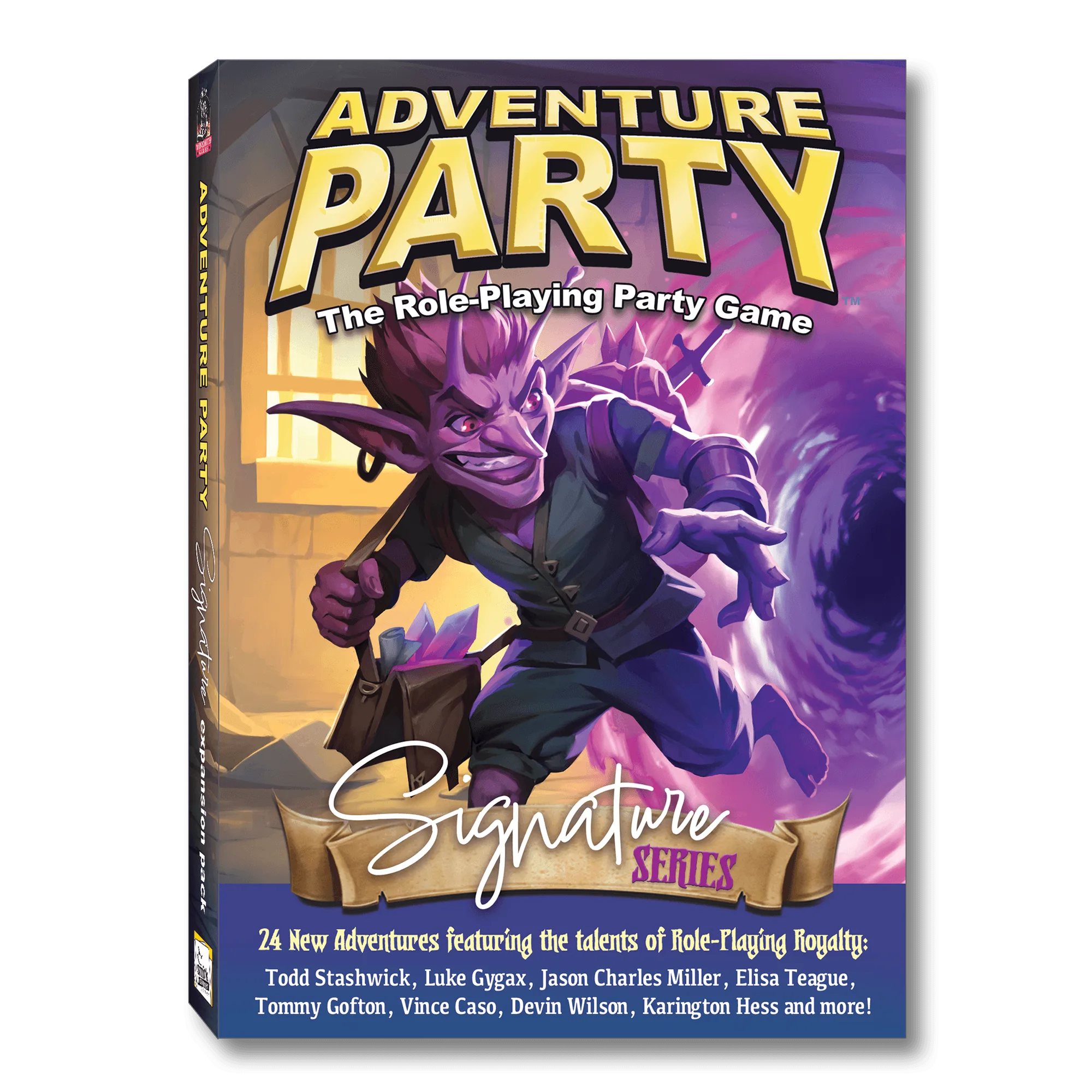
Adventure Party Signature Series Expansion
Running an Adventure Party is less about strict rule mastery and more about embracing chaos with a smile. As the game master, you set the tone, keep the story moving, and make sure everyone—including you—has a blast. Whether you're new to role-playing or a seasoned GM, this guide gives you a clear process to run a memorable session.
Adventure Party shines when players feel free to try anything, from sweet-talking a troll to battling the demon of sleep. Your job is to say 'yes' to their wild ideas, then interpret the dice in ways that push the story forward. Here's how to do it step by step.
Prepare Your Scenario
Before your group gathers, read the chosen scenario thoroughly. Note the key characters, locations, and possible outcomes. If you're using the Adventure Party Signature Series Expansion, you'll have 24 new scenarios written by celebrity role-players, each with a unique hook. Pick one that matches your group's mood—whether they want combat, mystery, or pure silliness.
Preparation also means knowing the rules well enough to bend them. You don't need to memorize everything, but understand the basics: how players propose actions, how dice rolls resolve, and how to handle failures. The more comfortable you are, the more confidently you can improvise when players go off-script.
- Checkpoint: Have you read the scenario twice? Do you know the main NPCs and their goals?
Set the Scene and Establish Tone
Start the session by setting the scene vividly but briefly. Describe the environment, the mood, and the immediate challenge. For example, 'You stand before a mossy bridge, and a troll with a sweet tooth blocks your path.' This immediately gives players something to react to.
Establish the tone early. Adventure Party is comedic, so encourage players to be creative and funny. Remind them that the goal is entertainment, not winning. If they know you'll reward clever ideas, they'll engage more deeply.
- Checkpoint: Did you give players a clear, engaging opening that invites action?
Guide Player Actions and Resolve Dice
When players propose actions, ask clarifying questions if needed. Then have them roll the appropriate dice. Interpret results with the scenario's guidance, but don't be afraid to add your own flavor. A success should feel heroic, a failure should be funny or dramatic—never punishing.
Remember the game's philosophy: even a roll of '1' is not a failure; it's a complication. Use low rolls to introduce unexpected twists that keep the story interesting. This approach reduces anxiety and encourages risk-taking.
- Checkpoint: Are you treating low rolls as story opportunities, not dead ends?
Keep the Pace and Manage the Table
Monitor the group's energy. If a scene drags, introduce an event—a new character, a sound, or a change in the environment. If players are stuck, offer a gentle nudge with a hint or a suggestion. Your goal is to keep the adventure flowing.
Also manage the spotlight. Ensure quieter players get chances to act, while talkative ones don't dominate. Use initiative order or simply ask, 'What does everyone else do?' to include the whole group.
- Checkpoint: Is everyone engaged? Are you moving toward a satisfying conclusion?
Wrap Up and Set Up the Next Session
Conclude the session at a natural break point—after a major victory, a cliffhanger, or when time runs out. Summarize what happened, highlight memorable moments, and tease what might come next. This builds anticipation for future sessions.
If you're running a campaign, keep notes on player choices and consequences. This continuity makes the world feel alive and rewards player investment. For one-shots, end with a satisfying resolution and a laugh.
- Checkpoint: Did you leave players excited for the next adventure?
Step-by-Step: Running Your First Adventure Party
- Step 1: Choose and Read Your Scenario: Pick a scenario from the base game or expansion. Read it thoroughly so you know the key NPCs, locations, and possible outcomes. Checkpoint: Can you summarize the scenario in one sentence without looking?
- Step 2: Explain the Premise and Rules: Give players a brief overview of the setting and the basic dice mechanics. Emphasize that creativity is encouraged and that low rolls lead to fun twists. Checkpoint: Did you clarify that a '1' is not a failure but a complication?
- Step 3: Guide the Action: As players interact with the scenario, ask for their actions, resolve dice, and narrate outcomes. Keep the pace lively and improvise when needed. Checkpoint: Are you rewarding clever ideas and keeping the story moving?
- Step 4: Wrap Up and Tease Next Time: End at a satisfying point. Summarize achievements, note any loose ends, and hint at future adventures if you're running a campaign. Checkpoint: Did you leave players eager for more?
Useful Resources for Adventure Party
- Adventure Party Signature Series Expansion: The Signature Series expansion delivers 24 exciting new adventure scenarios penned by some of your favorite role-playing celebrities. Fresh scenarios keep your game nights varied and introduce new challenges, perfect for groups that have played the base game and want more content.
- This Game is Killer: Franchise of Fear - PREORDER: A hilariously deadly party game about a possessed animatronic going on a killing spree in an abandoned old restaurant. If your group enjoys the cooperative chaos of Adventure Party, this semi-coop game offers a different flavor of teamwork and horror-comedy for a fun change of pace.
Running an Adventure Party is all about flexibility, humor, and shared storytelling. With a little preparation and the right mindset, you can turn any scenario into a memorable night. So gather your friends, roll the dice, and let the adventure unfold—even a '1' might lead to the best story of the evening.