Quick answer
Seasoning your Kuhn Rikon carbon steel pan builds a natural non-stick patina and protects against rust. Wash, dry, apply a thin oil layer, and heat until the oil polymerizes. Repeat 2–3 times for best results.
Why seasoning matters for carbon steel
Carbon steel pans are prized for their heat responsiveness and durability, but they lack the factory non-stick coating found on some other pans. Seasoning creates a polymerized oil layer that fills microscopic pores in the metal, giving you a slick cooking surface and shielding the pan from moisture. Without proper seasoning, your pan may rust or cause food to stick. The process is simple and uses ingredients you already have in your kitchen.
Step-by-step seasoning process
- Wash and dry the pan thoroughly: Scrub the pan with hot soapy water to remove the factory protective coating. Rinse well and dry immediately with a towel. Place on low heat for one minute to evaporate any remaining moisture. Common mistake: skipping the initial wash leaves a waxy residue that prevents the oil from bonding.
- Apply a thin layer of high-smoke-point oil: Pour about a teaspoon of oil (flaxseed, grapeseed, or canola work well) onto the pan. Use a paper towel to spread it evenly across the entire cooking surface, including the sides. Wipe off any excess — the layer should look almost dry. Too much oil creates a sticky, uneven finish. Less is more.
- Heat the pan until the oil smokes: Place the pan on medium-high heat. Wait until the oil begins to smoke and the pan changes color slightly — this means the oil is polymerizing. Let it smoke for 2–3 minutes, then turn off the heat and let the pan cool completely. Checkpoint: if the pan feels tacky after cooling, you used too much oil. Wipe it down and repeat the heating step.
- Repeat the oil-and-heat cycle: Once the pan is cool, apply another whisper-thin oil layer and heat again until smoking. Repeat this process 2–3 times. Each cycle builds a stronger, darker patina. For a deeper seasoning, you can repeat up to 5 times, but 3 cycles are enough for most home cooks.
- Cook a test batch of vegetables or onions: After the final cooling, cook something fatty like sliced onions or bell peppers over medium heat. This first cook helps fill any gaps in the seasoning layer and confirms the non-stick surface is working. Avoid acidic foods like tomatoes or lemon in the first few uses — they can strip the fresh seasoning.
Tools that help with seasoning
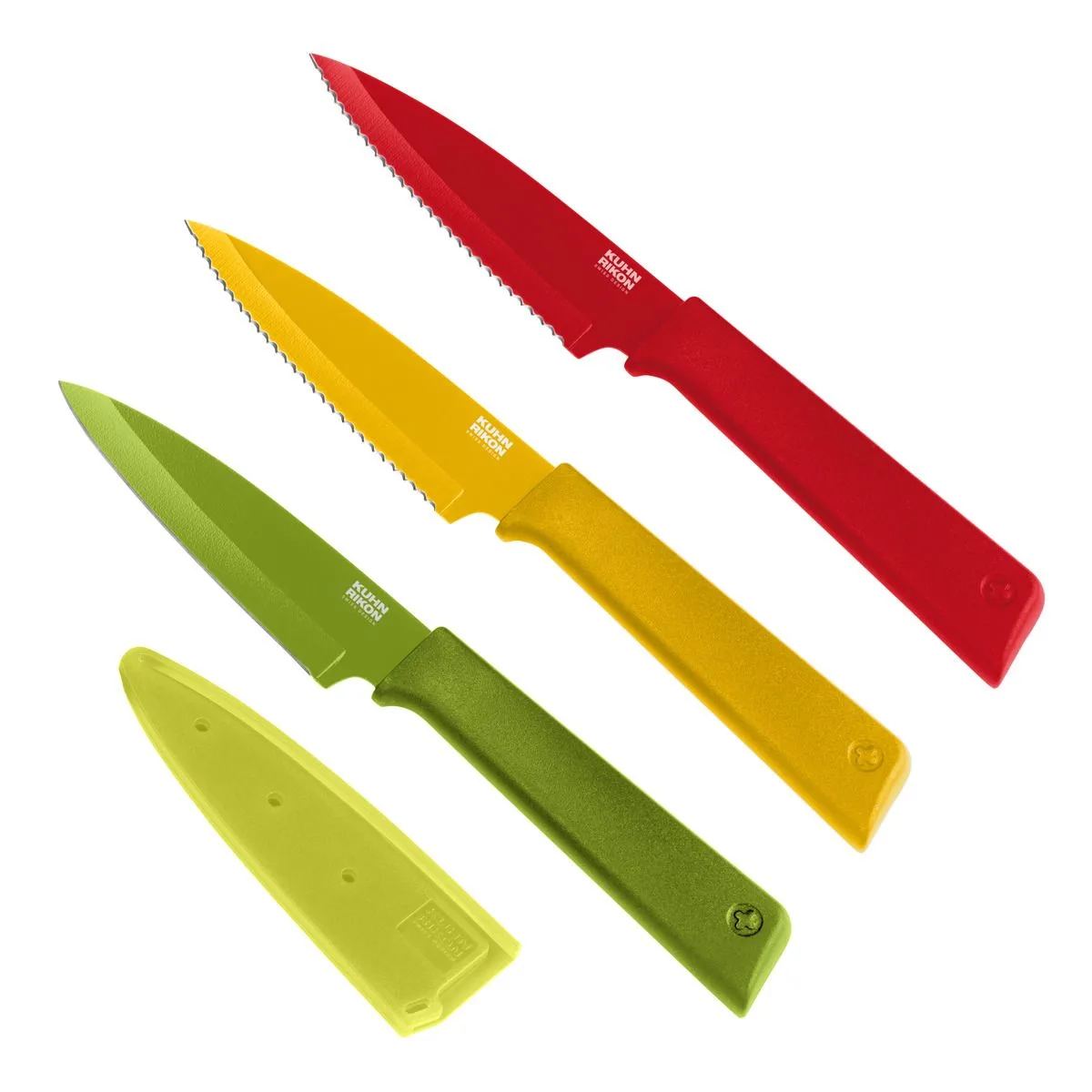
- COLORI®+ Rüstmesser Set 3 Stk.: Überzeugen Sie sich von ✓ Küchenmessern ✓ Messersets ✓ Scheren ✓ Spezialmessern ✓ bunten Messern und bestellen Sie jetzt! A sharp, comfortable prep knife makes slicing vegetables or onions for your first seasoning cook easier and safer.