Quick answer
Serve squashes baby food by offering thick, spreadable puree on pre-loaded spoons or as a dip for soft finger foods, adjusting texture and portion to your baby's stage.
Why Squash Is a Great First Food for Baby-Led Weaning
Squash is a naturally soft vegetable that becomes tender when cooked, making it a safe choice for babies who are just starting solids. Its mild, slightly sweet taste helps little ones accept savory flavors early, especially when you avoid sugary fruits and added sugars.
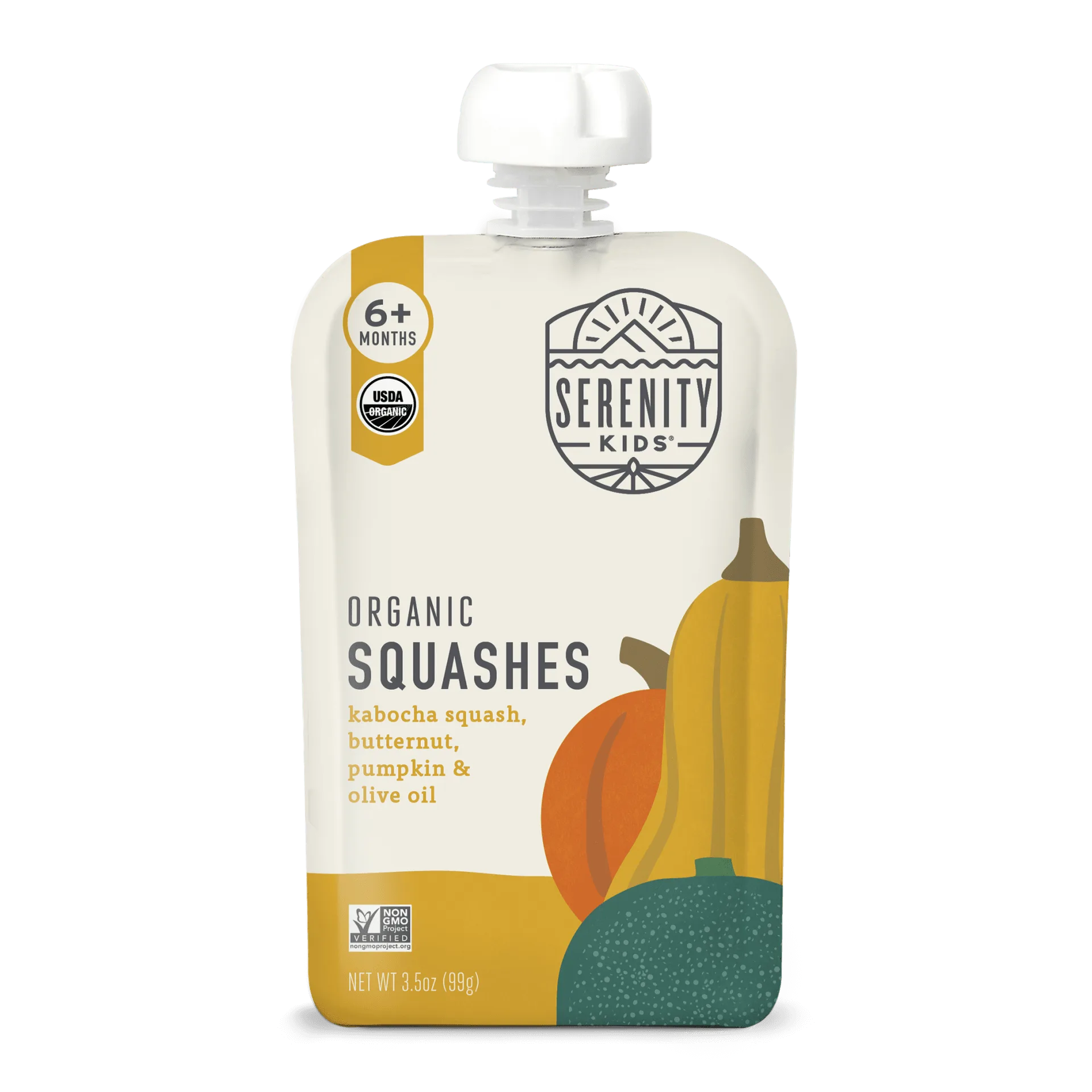
Serenity Kids Squashes USDA Organic Veggies with Olive Oil combines kobocha squash, butternut, and pumpkin. Because it contains no sugary fruits, it lets your baby develop a preference for the rich, earthy taste of squash rather than expecting sweetness in every bite.
Why Texture and Temperature Matter
For baby-led weaning, the texture of the squash should match your baby's chewing skills. Early eaters need soft, mashable pieces that can be gummed, while older babies can handle slightly firmer chunks. Temperature also matters: warm (not hot) food is more palatable and reduces the risk of burns. Always test the temperature on your wrist before serving.
Step-by-Step Guide to Serving Squashes for Baby-Led Weaning
- Step 1: Choose the right squash texture: For baby-led weaning, start with a thick, spoonable puree like Serenity Kids Squashes USDA Organic Veggies with Olive Oil. It should coat a spoon without dripping. If it's too thin, stir in a little unsweetened oatmeal or plain yogurt to thicken it. Check that the puree doesn't run off a spoon before offering it.
- Step 2: Offer pre-loaded spoons: Load a soft-tipped spoon and place it in front of your baby. Let them grab it and bring it to their mouth. Resist the urge to feed them; the goal is self-feeding. If your baby drops the spoon, simply reload it and hand it back—dropping is part of learning.
- Step 3: Try finger-food shapes for older babies: For babies around 8-9 months who are ready for more texture, spoon the puree onto a preloaded spoon or offer thick strips of roasted squash. The pouch's smooth texture works well as a dip or spread on teething-friendly strips. Watch for gagging vs. choking—gagging is normal, but always supervise.
- Step 4: Offer a preloaded spoon: Load a baby spoon with the squash puree and hand it to your baby. Let them bring it to their mouth at their own pace. Avoid feeding from the spoon yourself; baby-led weaning is about self-feeding. Expect mess as part of learning; resist the urge to take over the spoon.
- Step 5: Mix with other first foods: Combine the squash puree with a familiar iron-rich food like grass-fed beef or bone broth to boost nutrition and introduce new textures gradually. Check for any allergic reaction when introducing a new food; wait 2-3 days before adding another.
Product Spotlight
-
Squashes USDA Organic Veggies with Olive Oil: This organic squashes baby food pouch combines kabocha squash, butternut, and pumpkin with organic olive oil, and contains zero added sugars or sugary fruits. The savory blend helps your baby develop a taste for squash early, while the olive oil adds essential fatty acids that support nutrient absorption.
Squashes USDA Organic Veggies with Olive Oil