Quick answer
A CO2 drop checker with pre-calibrated 4dKH solution gives you a reliable visual reading of dissolved CO2, helping you adjust injection for healthy plant growth without harming fish.
Why a drop checker beats guessing
Without a monitor, it's easy to under- or over-inject CO2. Too little slows plant growth; too much can gas fish and shrimp. A drop checker uses a pH-sensitive indicator solution that changes color based on CO2 levels, giving you a constant visual reference.
The included 4dKH solution is pre-calibrated, so you don't need to mix it with tank water. This removes a common source of error and makes readings more consistent.
Step-by-step setup
- 1. Fill the drop checker with 4dKH solution: Open the glass drop checker and fill the inner chamber about halfway with the included 4dKH solution. Do not fill completely—leave a small air gap so the solution can move freely when the checker is inverted. Common mistake: filling to the brim prevents proper mixing with CO2. Leave a 1–2 mm air pocket.
- 2. Attach the suction cup and position inside the tank: Press the suction cup onto the back of the drop checker and mount it on the inside wall of your aquarium. Place it opposite the CO2 diffuser, at about mid-depth, so it samples water that has circulated through the tank. Avoid placing it directly above or next to the diffuser—this gives a falsely high CO2 reading.
- 3. Wait 1–2 hours for the color to develop: After installation, the solution needs time to equilibrate with the tank water. Wait at least one hour before reading the color. Blue means low CO2, green is ideal, and yellow indicates high CO2. Checkpoint: if the solution stays blue after 2 hours, increase your CO2 injection rate gradually.
- 4. Read the color and adjust CO2 accordingly: Aim for a steady green color during the photoperiod. If it turns yellow, reduce CO2 immediately and increase surface agitation or aeration. If it stays blue, raise the bubble rate or check for leaks in your CO2 system. Common mistake: chasing a perfect green every minute. Check once per hour; CO2 levels fluctuate naturally.
- 5. Replace the solution monthly: Over time, the 4dKH solution degrades and can give inaccurate readings. Empty the chamber, rinse with dechlorinated water, and refill with fresh solution every 4–6 weeks. Set a calendar reminder so you don't forget—old solution drifts the color scale.
Product used in this guide
-
Glass CO2 Drop Checker with 4dkh/PH Solution: The Castle Dawn Aquatics CO2 Drop Checker is a glass unit that includes a pre-calibrated 4dKH solution. Using the supplied solution avoids mixing mistakes and gives you reliable color readings from day one.
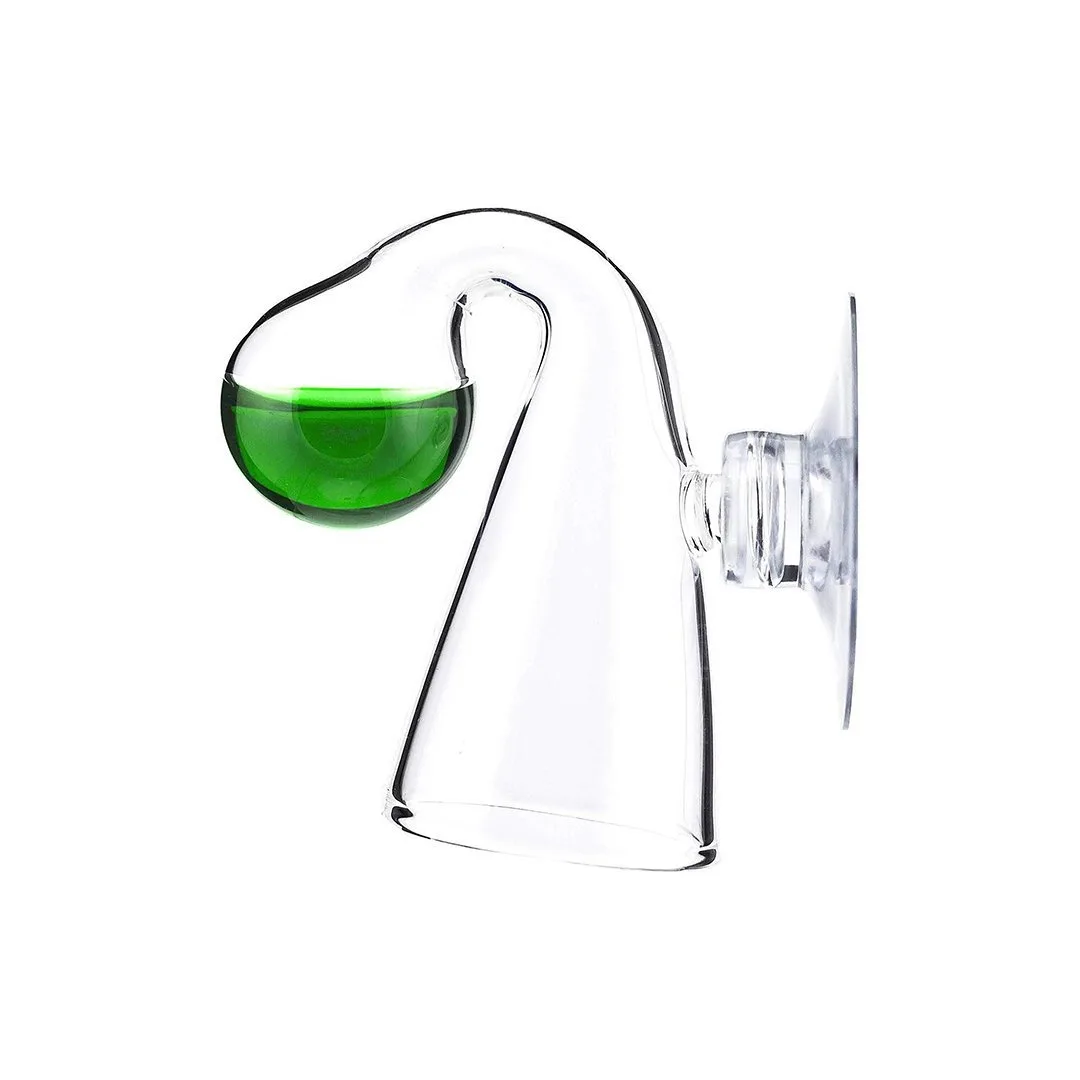
Glass CO2 Drop Checker with 4dkh/PH Solution