Quick answer
To set up a dog bike trailer safely, attach the hitch securely to your bike's rear axle, connect the trailer arm, perform a stability check, and then introduce your dog gradually with a harness and weight-limit check.
Why proper setup matters more than you think
A dog bike trailer that is not hitched correctly can wobble, tip, or detach mid-ride, putting both you and your dog at risk. Taking a few extra minutes during setup ensures the trailer tracks behind your bike smoothly and stays stable on turns and stops.
Weight limits are not just a suggestion. Exceeding the trailer's rated capacity stresses the frame and wheels, making the trailer harder to control and more likely to fail. Always check your trailer's specified weight limit and account for your dog's current weight plus any gear you carry.
Step-by-step setup for a safe ride
- Attach the hitch to your bike: Follow the manufacturer's instructions to secure the hitch to your bike's rear axle or frame. Tighten all bolts, but avoid over-tightening that could strip threads. Common mistake: attaching the hitch to a non-recommended part of the frame, which can cause instability or damage. After attaching, give the hitch a firm tug to confirm it doesn't move.
- Connect the trailer arm to the hitch: Align the trailer's coupling with the hitch ball or pin and push until it clicks or locks into place. Secure any safety pins or straps. Common mistake: forgetting the safety pin, which can allow the trailer to detach on bumps. Double-check that the locking mechanism is fully engaged before loading your dog.
- Perform a stability check: Lift the trailer slightly and rock it side to side to ensure it doesn't tilt excessively. Then walk the bike forward a few feet and turn gently to see if the trailer tracks straight. Common mistake: skipping this test and discovering a loose connection at speed. If the trailer wobbles or pulls to one side, re-check the hitch and tire pressure.
- Check the weight limit and secure your dog: Weigh your dog and compare it to the trailer's stated weight limit. Use a harness (not a collar) to attach the safety leash inside the trailer, and close all zippers or flaps. Common mistake: exceeding the weight limit or using a collar that could choke your dog during the ride. Ensure your dog can stand, turn around, and lie down comfortably without touching the top.
- Test ride before a long trip: Take a short ride in a safe, flat area to observe how your dog reacts and how the trailer handles. Stop and check the hitch and tires afterward. Common mistake: starting with a long ride before your dog is comfortable, which can cause anxiety or motion sickness. Gradually increase ride length over several sessions, and always carry water and a collapsible bowl.
Trailers that make setup easier
-
2-in-1 Large Dog Bike Trailer & Stroller Combo with Safety Hitch: This 2-in-1 trailer and stroller combo includes a safety hitch and a brightly colored flag for visibility. The safety hitch simplifies secure attachment, while the flag adds an extra layer of safety when the trailer is low to the ground.
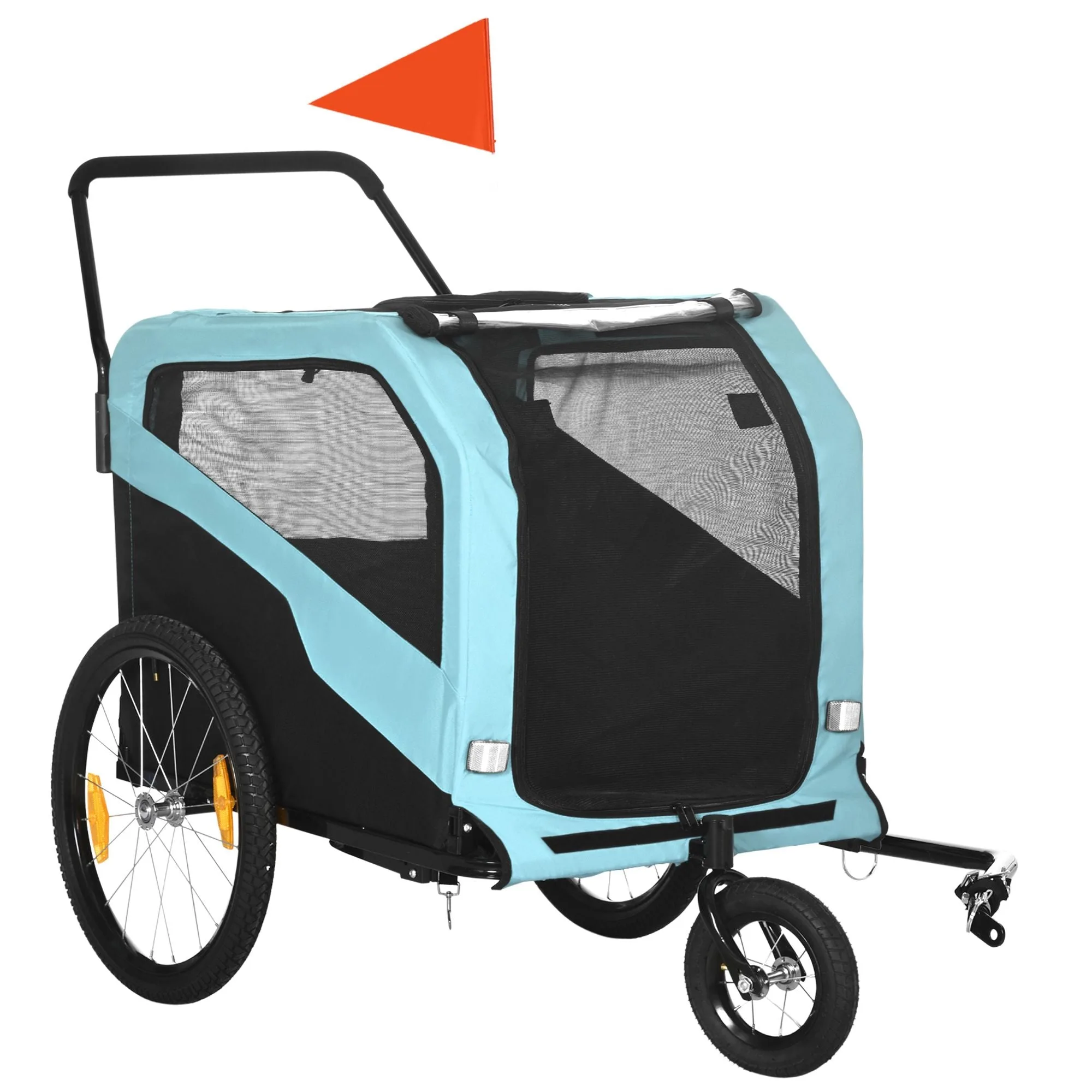
2-in-1 Large Dog Bike Trailer & Stroller Combo with Safety Hitch
-
Dog Bike Trailer for Small & Medium Dogs, Universal Bicycle, Red: This trailer features a quick-release design for easy storage and transport. Quick-release wheels let you break down the trailer fast, so you can store it compactly and set it up again without hassle.
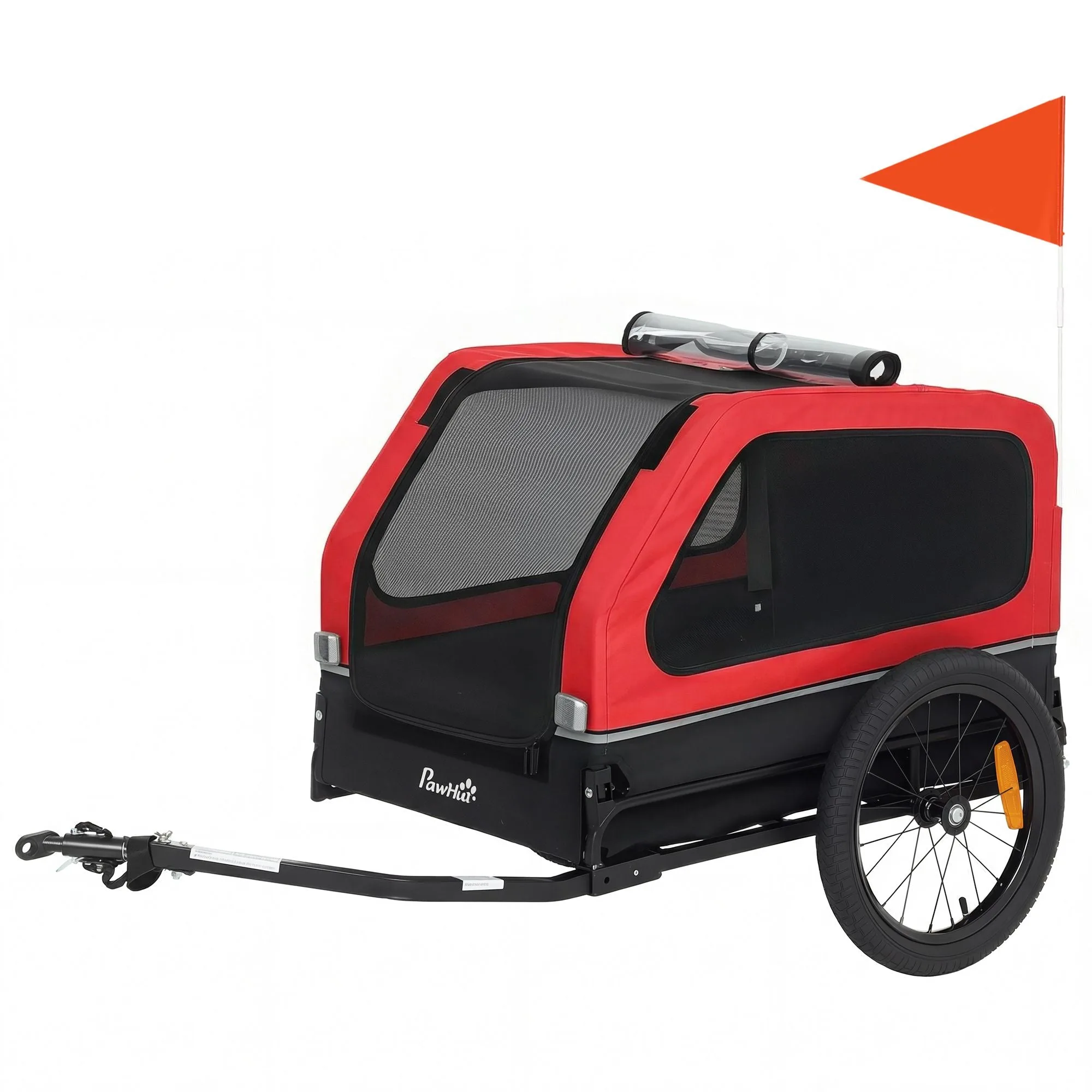
Dog Bike Trailer for Small & Medium Dogs, Universal Bicycle, Red
-
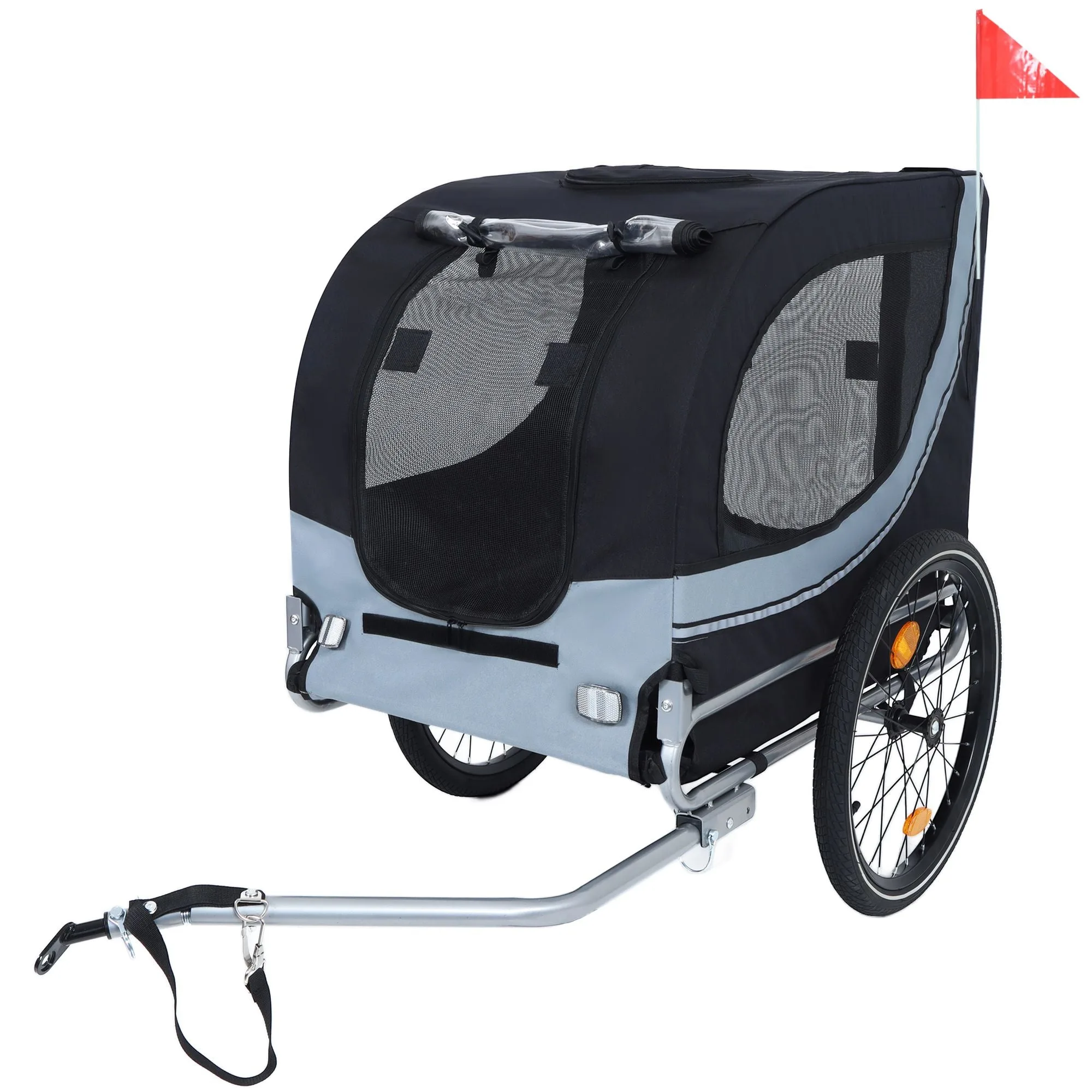
Large Folding Bike Trailer for Dogs – 66LB Capacity All-Terrain, Black- Gray: This large folding trailer arrives partially pre-assembled with a 20-inch quick-release wheel and all necessary tools. Minimal assembly means you can get to the ride sooner, and the fold-flat frame makes storage simple for limited spaces.