Quick answer
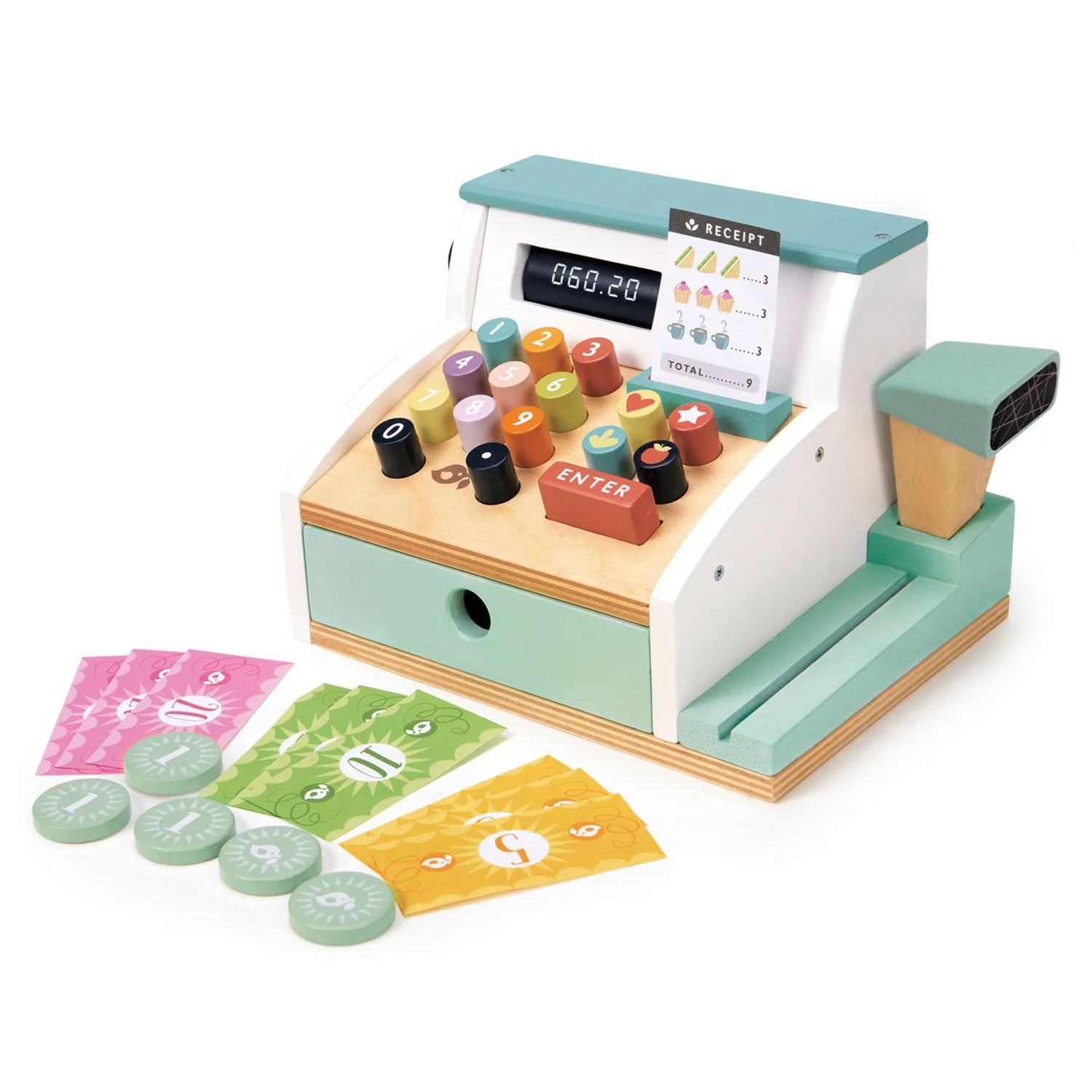
Put the till at the end of the counter, not the middle, so the child stands behind the shop and customers approach from the front. Sort stock into three or four shallow trays the child can reach, price everything in whole numbers, and keep one basket of goods plus one basket of returns beside the till. A wooden toy cash register only works as a shop when the space around it works first.
Most pretend shops fail for a boring reason: the till is in the wrong place. It sits in the middle of the floor, the stock is in a deep box, and within ten minutes the child is carrying the till around instead of running a shop. Fix the layout and the play lasts far longer.
This guide walks through a five-step https://tenderleaftoysenz.com/products/general-stores-till-e41ed162d9bdf1d99b7d91d8-1357377general stores till setup you can finish in one afternoon, using whatever counter, trays, and play food you already own. It also covers the mistakes that quietly end pretend shop play, and where a few well-chosen wooden pieces earn their place.
Start with the counter, not the till
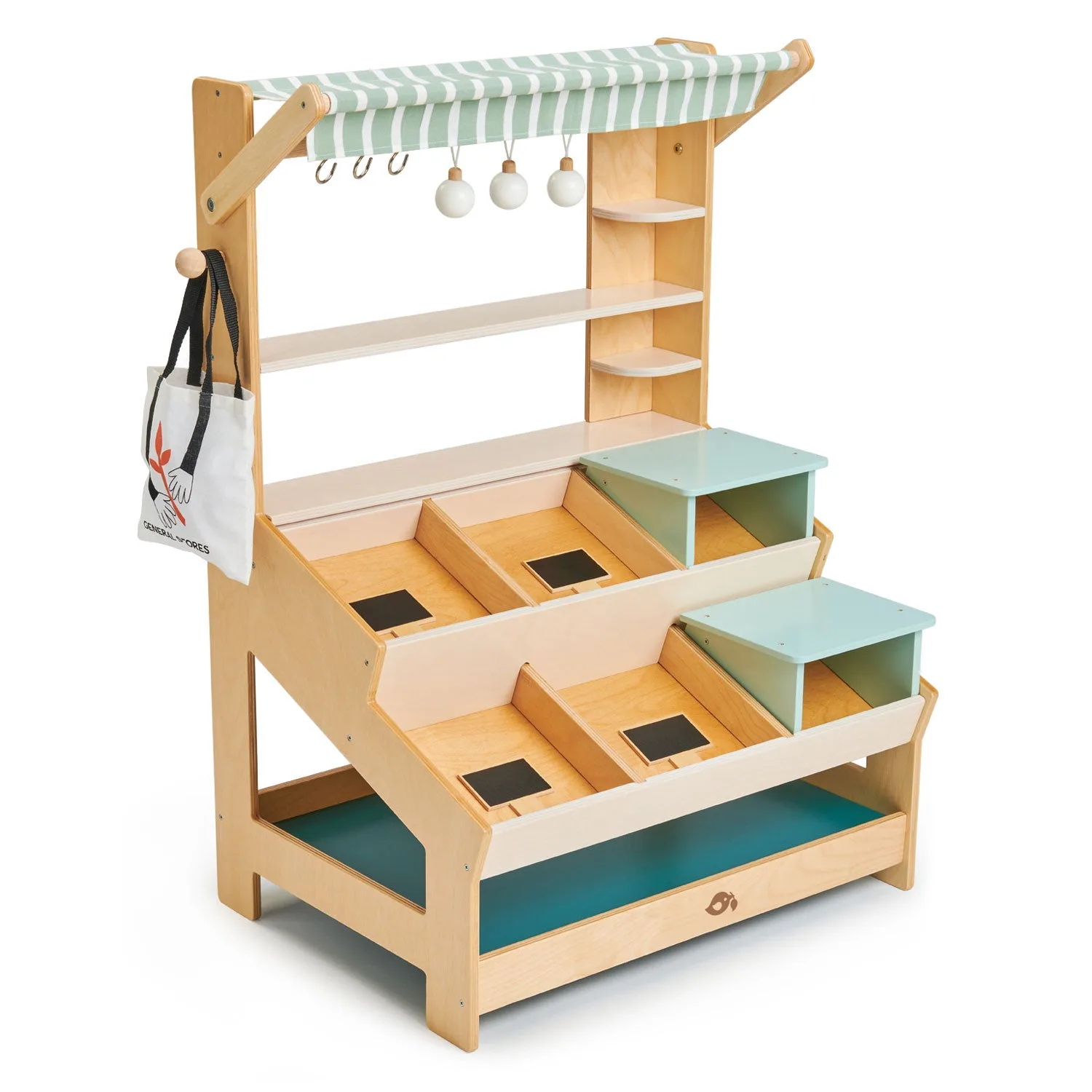
A play store setup for kids needs a clear customer side and a clear shopkeeper side. A low table, a shelf unit, or the end of a real kitchen counter all work, as long as the child can stand comfortably behind it and reach the far edge without climbing. If the counter is too tall, the child will abandon the shopkeeper role and play on the floor instead.
Before you place anything, walk the route: customer approaches, goods get scanned, money changes hands, customer leaves. If that path crosses the shopkeeper's spot, the layout will collapse the first time two children play together. Mark the customer side with a mat, a rug, or a strip of tape so the boundary is obvious without an adult repeating it.
- Checkpoint: the child can stand behind the counter and touch the far edge without stretching or climbing.
- Keep the counter clear of anything you do not want used as shop stock.
Sort stock into reachable trays
Deep toy boxes are the enemy of shop play. Children cannot see what they have, so they tip everything out and the shop becomes a pile. Use three or four shallow trays, baskets, or shoebox lids instead, and group goods by type rather than by size: food in one, household bits in another, small loose items in a third.
Place the trays on the shopkeeper's side, within arm's reach of the till. If a tray sits behind the child, they will turn their back on the customer every time they restock. Rotate what is on display rather than putting everything out at once; a shop with twelve items sells better than a shop with sixty.
- Common mistake: filling every tray to the top. Leave space so items can be picked up and put back without a landslide.
- Keep one small basket for goods waiting to be returned to the shelves.
Place the till and add the tools of the job
Set the till at one end of the counter, angled slightly toward the customer side. That position lets the child ring up items and still face the person buying, and it leaves the rest of the counter free for wrapping, bagging, and displaying goods. A till in the centre splits the counter into two awkward halves and usually ends up on the floor.
Next to the till, add only what the role needs: a bag or basket for purchases, a small pad for lists, and a tray for coins or tokens if your till uses them. Resist adding a full pencil case or a stack of paper. Every extra object is something to manage instead of something to sell, and younger children will drop the shopkeeper role to play with the extras.
- Checkpoint: the child can reach the till, the bag, and the first stock tray without stepping away from the counter.
- If your till has loose pieces, keep a shallow dish beside it so coins and tokens have a home.
Price the goods in whole numbers
Pricing is where pretend shop play ideas turn into real learning, but only if the numbers are readable. Write prices in whole numbers and keep the range small, so a child can add two or three items in their head. Stickers, sticky notes, or small tags all work; the important part is that the price sits on the item and does not fall off during play.
Match the pricing to the child's age. Younger children do better with one price for everything, which turns the till into a counting exercise rather than a maths test. Older children can handle different prices, a written list, and change given back. Change the prices when the game gets too easy, not before.
- Common mistake: pricing in decimals before the child is ready. Round numbers keep the shop moving.
- Keep a spare sheet of blank tags in the till drawer so prices can be changed mid-game.
Rotate the stock and change the shop
A general store that sells the same six items every day gets boring by day three. Swap two or three items each week, or change the shop's theme entirely: a bakery counter, a hardware counter, a pet supplies corner. The till stays where it is; only the goods and the sign change.
Rotating stock also solves the tidying problem. Because only part of the toy collection is out at once, packing up takes minutes rather than an argument. Store the rest in a labelled box within reach of an adult, and let the child choose what comes into the shop next time. That choice is often more motivating than any new purchase.
- Checkpoint: packing up takes under five minutes and the child can do most of it alone.
- Photograph the shop when it is set up well, so it can be rebuilt quickly another day.
The five-step shop setup
- 1. Choose and clear the counter: Pick a low table or shelf end the child can stand behind, clear it completely, and mark the customer side with a mat or tape line. Checkpoint: the child can reach the far edge without climbing.
- 2. Sort stock into three or four shallow trays: Group goods by type, place the trays within arm's reach of the shopkeeper's spot, and leave each tray part-empty so items can be picked up and returned. Common mistake: one deep box, which becomes a pile within minutes.
- 3. Put the till at one end of the counter: Angle it slightly toward the customer side, then add only a bag, a list pad, and a coin dish. Keep everything else off the counter. Checkpoint: the till, bag, and first tray are all reachable without stepping away.
- 4. Price the goods in whole numbers: Tag each item clearly, keep the range small, and use a single price for everything with younger children. Adjust as the game gets easy. Common mistake: decimals and long price lists before the child is ready.
- 5. Rotate two or three items each week: Swap stock or change the shop's theme, storing the rest in a labelled box the child can choose from next time. Checkpoint: pack-up takes under five minutes and the child does most of it.
Wooden pieces that earn their place in a play shop
- Birdie Tea Set: A wooden tea set with a solid wood teapot, a cupcake and tea bag, two cups and saucers, two teaspoons, a milk jug, and a round tray. The tray doubles as a stock tray, and the small pieces give a shop counter something worth wrapping and bagging.
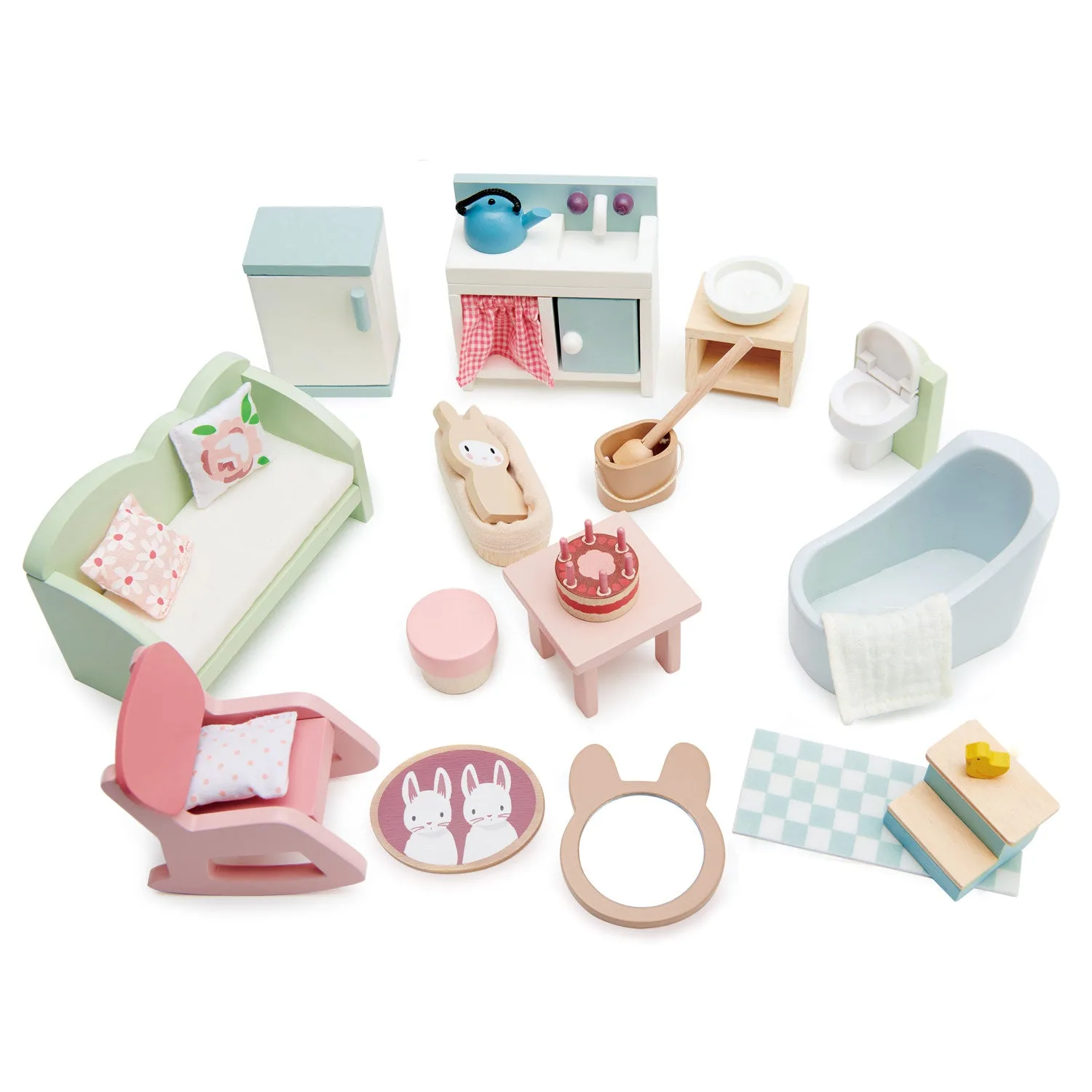
- Countryside Furniture Set: A dolls house furniture set with a day bed, rocking chair, three printed pillows, table, stool, birthday cake, steps, toy duck, fridge, two sink units, kettle, bathtub, mat, towel, toilet, mop and bucket, rabbit picture, rabbit mirror, crib, and baby bunny. Dolls are sold separately. The fridge, kettle, and sink units make convincing household stock for a general store, and the set spreads across several trays without running out.
- Tenderleaf Tool Bench: A 19-piece wooden tool bench with a back panel holding a removable drill and a circular saw, a shelf for the hammer, screwdriver and spanner, a ruler with a sliding right-handed corner, a working vice, and a toolbox that lifts out of the bench. The removable toolbox is the useful part here: it carries stock to and from the shop counter, then goes back on the bench when the shop closes.
Get the counter, trays, and till position right and the rest follows. Start with the five steps above, watch where the play stalls, and adjust one thing at a time rather than rebuilding the whole shop.