Quick Answer
Set up your X Chest Rig by first selecting the right harness and pad for your body type, then organizing your pouches for balanced weight and quick access during patrols or vehicle operations.
Why Setup Matters for Patrols and Vehicle Work
The Disruptive Environments X Chest Rig is built for lightweight patrols and reconnaissance where you need more storage without sacrificing maneuverability. Its design shines in urban, vehicle, and confined spaces, but only if you configure it correctly. A poor setup can snag on seat belts, shift during movement, or slow your reloads.
Before you start, note that the X Chest Rig ships as a placard only. You will need to add a harness and chest rig pad separately. This gives you flexibility to match your body and mission, but also means you must choose components that work together.
Step-by-Step Setup Guide
- Choose Your Harness and Pad: Select a harness that matches your torso length and a chest rig pad that provides comfort without adding bulk. The rig must sit high enough on your chest so it does not interfere with your belt or hip movement. Common mistake: using a harness that is too loose causes the rig to bounce during movement. Tighten until the rig stays put when you lean forward.
- Attach the Placard to the Harness: Use the integrated MOLLE or swift-clip system to secure the X Chest Rig placard to your harness. Ensure all straps are flat and evenly tensioned. The placard should not sag or tilt to one side. Checkpoint: after attaching, shake your shoulders. If the rig shifts more than an inch, re-tension the straps.
- Organize Your Pouches for Balance: Place heavier items like loaded magazines on the front of the rig, closer to your centerline. Distribute weight evenly left and right. Keep essential gear (tourniquet, radio, admin pouch) within easy reach of your support hand. Common mistake: overloading one side causes the rig to twist and slows access. Use the same pouch layout on both sides when possible.
- Route Retention and Communication Cords: Run any bungee retention cords or radio antenna wires along the inside of the rig, securing them with keepers or tape. This prevents snagging on vehicle interiors or brush during patrol. Checkpoint: sit in a vehicle or crouch behind cover. If any cord catches on your gear or seat, re-route it before you head out.
- Test Your Reload and Access Drills: Practice drawing a magazine from each pouch, activating your radio, and deploying a tourniquet. Adjust pouch placement or retention tension if any motion feels slow or awkward. Final checkpoint: time your reloads. If they take longer than your baseline, reconfigure the pouch order or retention method.
Product Facts
-
X Chest Rig: The D3CRX was purpose built for patrols and reconnaissance missions where a lightweight rig with more storage capacity is needed for carriage of essential equipment without sacrificing maneuverability in urban, vehicle, and other confined spaces. This means you should prioritize a slim, low-profile harness and pad that keep the rig close to your body to avoid snagging on vehicle seat belts or door frames.
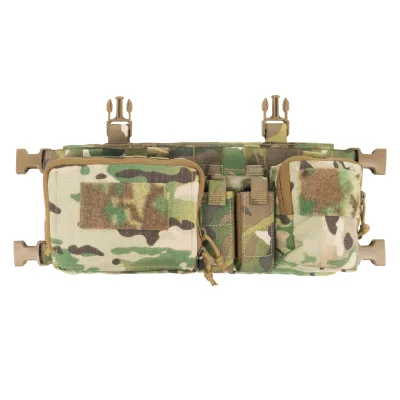
X Chest Rig