Quick answer
Yes, you can sharpen serrated knives, but only the beveled side of each tooth—never the flat back. Use a tapered round file or a fine rod that fits the scallop, make a few light passes per tooth, and stop before the teeth lose their height. If the points are worn flat or several teeth are bent, professional service is the safer choice.
Why serrated edges go dull differently
A serrated knife cuts with dozens of tiny points, not one continuous edge. Each tooth has a beveled face that does the slicing and a flat back that clears the cut. Dullness usually starts at the tips of the teeth, where the bevel wears thin and rounds over. The flat back rarely needs work, and grinding it will destroy the geometry that makes the knife slice rather than tear.
That is why a standard sharpening stone or electric pull-through can ruin a serrated blade in seconds. Those tools assume a flat edge. On a scalloped edge, they flatten the points and leave you with a wavy butter knife.
Tools that actually reach the scallops
You need an abrasive shaped like the gap between the teeth. A tapered round diamond file, a ceramic honing rod with a fine tip, or a narrow slip stone all work. The abrasive should be fine enough to polish rather than gouge—medium to fine grit is plenty for maintenance.
Skip the coarse bench stone, the carbide pull-through, and any powered sharpener with a fixed slot. They cannot follow the curve of a scallop and will remove the tooth points instead of refreshing them.
Step-by-step: refreshing the teeth
Secure the knife with the serrated side facing up and the tip pointing away. Identify the beveled face of each tooth—it is the angled side, usually facing the same direction along the blade. Work one tooth at a time: place the file or rod into the scallop at the same angle as the existing bevel, then push away from you with light pressure. Three to five strokes per tooth is usually enough for maintenance.
After every few teeth, wipe the blade and check your progress under a bright light. You are looking for a thin, bright line along the bevel, not a flattened tip. When the whole edge feels consistently grabby on your thumb pad—not sharp enough to cut, just grippy—stop. Move to the next tooth.
Finish by stropping the flat back lightly on a piece of leather or a fine stone to remove any burr. Do not grind the back; just two or three passes to clean up the edge.
How often to sharpen steak knives
Serrated steak knives used a few times a week typically need a touch-up every two to three months. If you cut on ceramic plates, expect more frequent maintenance because the plate abrades the teeth. A wooden cutting board or a steak resting on a wood block will extend the interval.
For everyday steak knives, a light honing with a tapered rod every few weeks keeps them slicing cleanly without removing much metal. Save the full tooth-by-tooth session for when the knife starts tearing instead of slicing.
When to stop and send them out
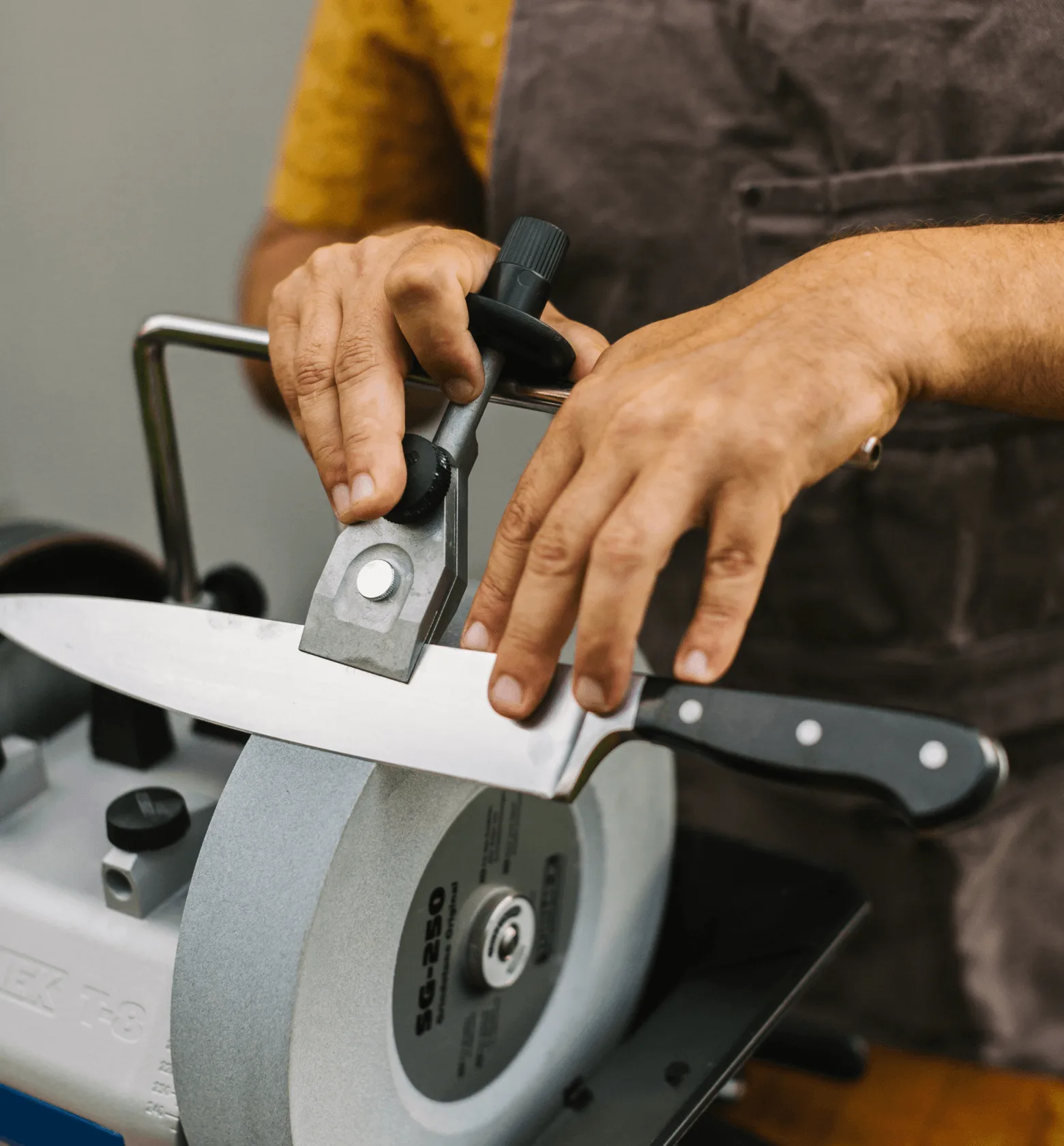
If more than a few teeth are bent, missing, or worn down to nubs, hand-sharpening will not bring the knife back. Re-cutting serrations requires a grinding wheel and a steady jig—tools most home cooks do not have. At that point, a mail-in service is the practical option. Misen's Mail-In Knife Sharpening accepts any brand, so you can refresh a mixed block in one shipment, and it offers tiers for 5, 7, 9, 10, or 14 knives with per-knife pricing that drops as you add more. Optional loaner knives are available if you do not want to be without a knife while yours are away.
Diagnose your serrated edge
- Teeth feel smooth and slide over tomato skin: The bevels are rounded but the tooth points are still intact. This is normal wear. Corrective action: sharpen each bevel with a tapered rod, 3–5 light strokes per tooth. Stop when the edge feels grippy.
- Teeth look flattened or shiny across the tips: The points have been ground down, often by a pull-through sharpener or a flat stone. Stop hand-sharpening. Re-cutting the serrations needs a professional service or replacement.
- One or two teeth are bent or missing: Impact damage from dropping or hitting a hard surface. The edge cannot be restored by honing alone. Choose another option: send the knife for professional sharpening or replace it if the blade is compromised.
Products that solve the problem
- Mail-In Knife Sharpening: Mail-In Knife Sharpening accepts knives from any brand and offers service tiers for 5, 7, 9, 10, or 14 knives, with per-knife pricing that decreases as you add more. If your serrated edges are past home maintenance, this service restores them without you buying professional equipment.
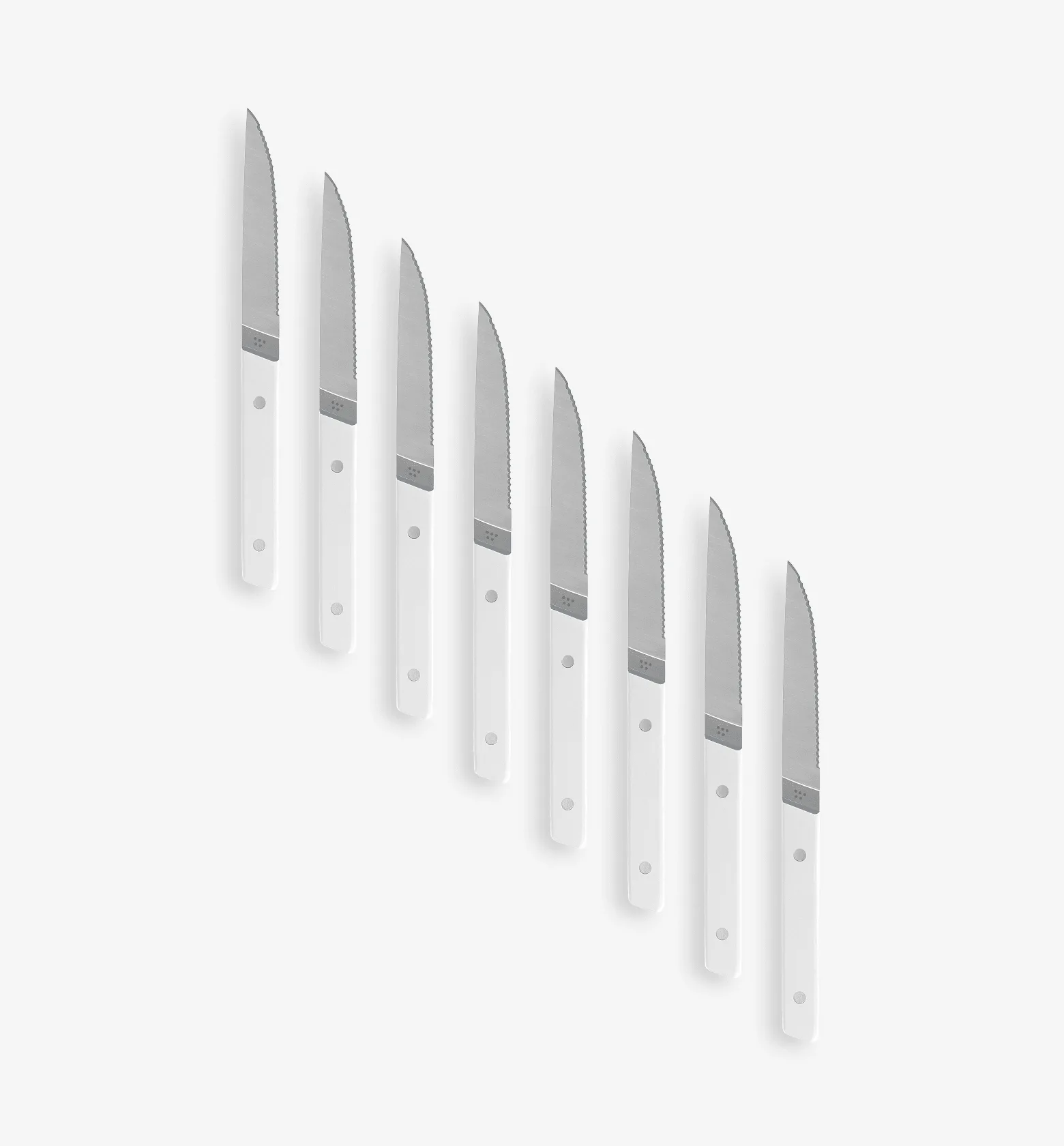
- 8-Piece Serrated Steak Knives (German Steel) - Final Sale - White: The 8-Piece Serrated Steak Knives are made from German steel and designed to slice cleanly through steak, chicken, and chops without sawing or shredding. A sharp, sturdy serrated edge from the start means less frequent sharpening and better cutting performance at the table.