Quick answer
Measure your puppy's length from nose to tail base and add 2-4 inches for growth; choose a folding crate that lets them stand, turn, and lie down comfortably without extra space that encourages bathroom breaks.
Why crate size matters for puppies
A crate that is too large can undermine house training because puppies instinctively avoid soiling their sleeping area. If they have room to eliminate in one corner and sleep in another, they lose that natural inhibition.
A crate that is too small causes discomfort and stress. Your puppy should be able to stand without bumping their head, turn around easily, and stretch out fully when lying down. Folding crates are popular because they collapse for storage, but the size selection rules are the same as for fixed crates.
Growth planning: buying for the future
For fast-growing large breeds, you can buy a larger folding crate and use a removable divider panel to reduce the interior space as your puppy grows. This gives you one crate that adapts over months, saving money and effort.
For small breeds that reach adult size quickly (like French Bulldogs or Miniature Pinschers), a crate sized for their adult dimensions works from the start. The AllPetSolutions Small Dog Crate Home Folding Kennel (78L x 48W x 54H cm) fits these breeds well and provides a secure den-like space for relaxation during stressful events or for non-housetrained puppies.
Step-by-step folding crate sizing guide
- Measure your puppy's length and height: Use a soft measuring tape. Measure from the tip of the nose to the base of the tail (not the tip). For height, measure from the floor to the top of the head when sitting, or to the top of the ears when standing. Common mistake: measuring to the tail tip adds unnecessary inches and can lead to a crate that is too large.
- Add growth allowance: For small breeds (under 22 lbs adult weight), add 2-3 inches to length and height. For medium to large breeds, add 3-4 inches. Consult your vet or breed standard for adult size predictions if unsure. Checkpoint: If using a divider panel, buy the adult-size crate now and adjust the panel monthly.
- Check the crate dimensions against your puppy: Your puppy should be able to stand without their head touching the top, turn around fully without rubbing the sides, and lie down with legs extended. The interior length should be at least the puppy's nose-to-tail-base measurement plus the growth allowance. Common mistake: choosing a crate based on weight alone—always verify the interior length and height measurements.
- Test the folding crate for stability and safety: Ensure the folding mechanism locks securely and there are no sharp edges or gaps where paws could get caught. Place a comfortable bed or mat inside, but avoid loose bedding that could be chewed. Checkpoint: The crate should feel solid when you shake it gently—if it wobbles, it may not be safe for a growing puppy.
- Introduce the crate gradually: Start with short, positive sessions: leave the door open, toss treats inside, and let your puppy explore. Gradually close the door for a few minutes while you are nearby. Never use the crate as punishment. Common mistake: forcing the puppy into the crate on the first day can create fear and resistance.
Recommended product
-
Elite Dog Crate Home Folding Kennel - S - 78L x 48W x 54H cm: This small kennel from AllPetSolutions is great for smaller dog breeds such as French Bulldogs and Miniature Pinschers and is an ideal place to relax during any stressful events, for dogs that are unwell, non-housetrained puppies or to allow you to reduce the area in which your pet can run around for a short amount of time. Its compact folding design fits small breed puppies perfectly, and the enclosed space helps with crate training by creating a safe, den-like environment.
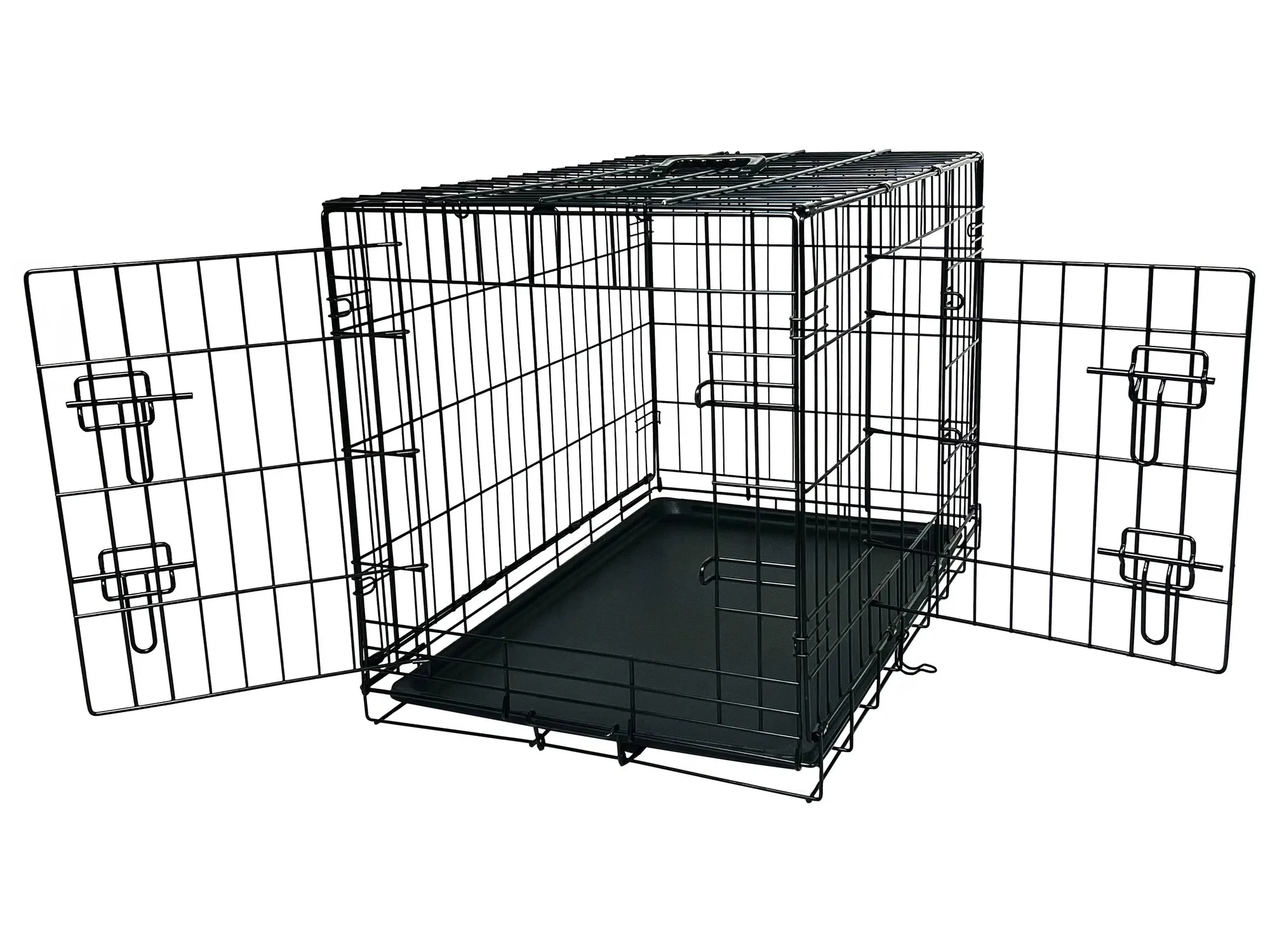
Elite Dog Crate Home Folding Kennel - S - 78L x 48W x 54H cm