Quick answer
Sort by edge pieces first, then by color family, then by shape. Work on a surface you can leave undisturbed, and keep each group in its own tray or shallow bowl so you never have to re-sort mid-build. For a 1000-piece wooden puzzle, budget 20 to 30 minutes for sorting before you place the first piece.
Why sorting matters more with wooden puzzles
Wooden puzzle pieces are thicker and often have more irregular shapes than standard cardboard pieces, which makes a random pile harder to scan by eye. Sorting first gives you smaller, more uniform groups to work through, so you spend less time hunting and more time placing. It also reduces the temptation to force a piece that almost fits, which is a common cause of bent tabs.
Set up your sorting space
Choose a flat, stable surface that you can leave in place for the whole build. A felt mat or a large board with a raised edge keeps pieces from sliding off. If you are short on permanent space, a roll-up puzzle mat lets you pack the sorted groups away without scrambling them. Keep the box lid or a shallow tray nearby for pieces you are unsure about.
Sort in three passes, not one
A single pass usually fails because you try to make too many decisions at once. Instead, do three quick passes: first pull all edge pieces, then group the remaining pieces by dominant color, then within each color group separate obvious shapes like long straights, knobs, and holes. Each pass should take only a few minutes for a 250-piece puzzle and longer for a 1000-piece one.
Use trays to keep groups separate
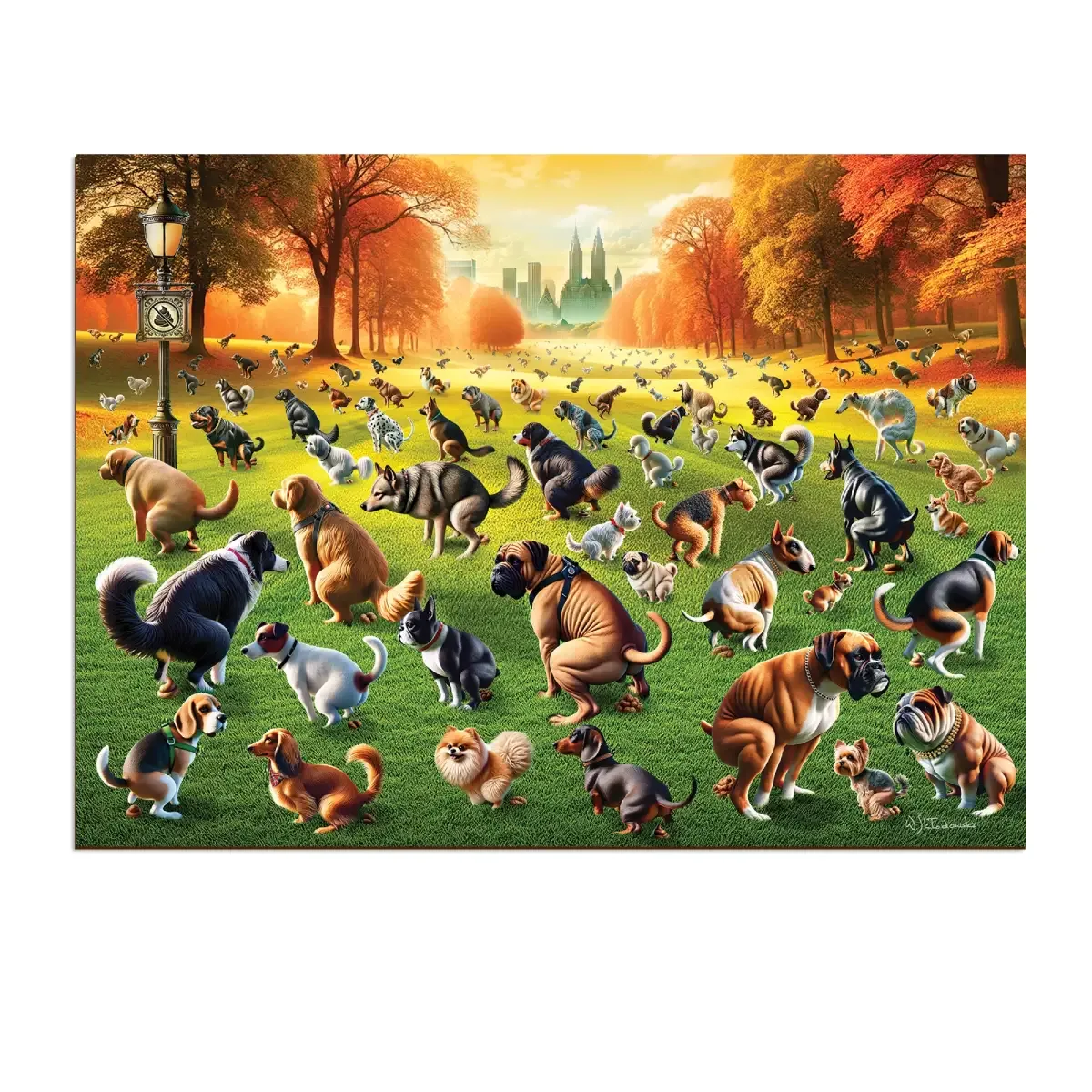
Shallow trays, muffin tins, or small bowls work well because they let you see the pieces without stacking them. Label each tray with a sticky note if you are sorting a busy scene like the Puppies Poopies 1000 Wooden Puzzle, where the color palette repeats across the image. Clear containers are better than opaque ones because you can spot a needed piece without dumping the whole tray.
When to stop sorting and start building
Stop sorting when your groups are small enough that you can scan one tray in a few seconds. If you find yourself re-sorting the same pieces, you have gone far enough. Start with the edge frame, then fill in the most distinct color block, and leave the sky, water, or other repetitive areas for last.
Sorting steps that work
- Clear the box and flip every piece face up: Tip the pieces onto your mat and turn them all picture-side up in one pass. This is the only time you should touch every piece. Common mistake: leaving pieces face down, which forces you to flip them again later.
- Pull all edge pieces into one tray: Scan for straight sides and set them aside. On a 1000-piece puzzle this usually gives you 100 to 150 pieces, enough to build the frame first. Checkpoint: your edge tray should be noticeably smaller than the remaining pile.
- Group the rest by dominant color: Make broad groups like sky, green, red, and dark. Do not aim for perfect matches yet; just separate the obvious color families. Common mistake: creating too many tiny color groups, which slows you down instead of speeding you up.
- Split each color group by shape: Within a color tray, separate pieces with two knobs, two holes, and mixed shapes. This makes it faster to test a piece without trying every candidate. Checkpoint: you can describe each tray in one short phrase, such as 'blue sky, two knobs'.
- Park uncertain pieces in a single tray: Anything you cannot classify goes into one 'later' tray. Revisit it once the frame and main color blocks are built. Common mistake: forcing an uncertain piece into a color group, which pollutes that group and costs you time later.
Products that suit a sorted build
- Puppies Poopies 1000 Wooden Puzzle: Puppies Poopies 1000 Wooden Puzzle is a cheeky mosaic of Central Park with repeating autumn colors and many small figures. The repeating palette makes color sorting essential, and the 1000-piece count rewards a tray system you can leave out over several sessions.
- Colorful Cat Fantasy 250 Wooden Puzzle: Colorful Cat Fantasy 250 Wooden Puzzle forms a rainbow-colored cat with a whimsical blend of colors. At 250 pieces, this is a good size for practicing the three-pass sorting method without committing a whole table for days.
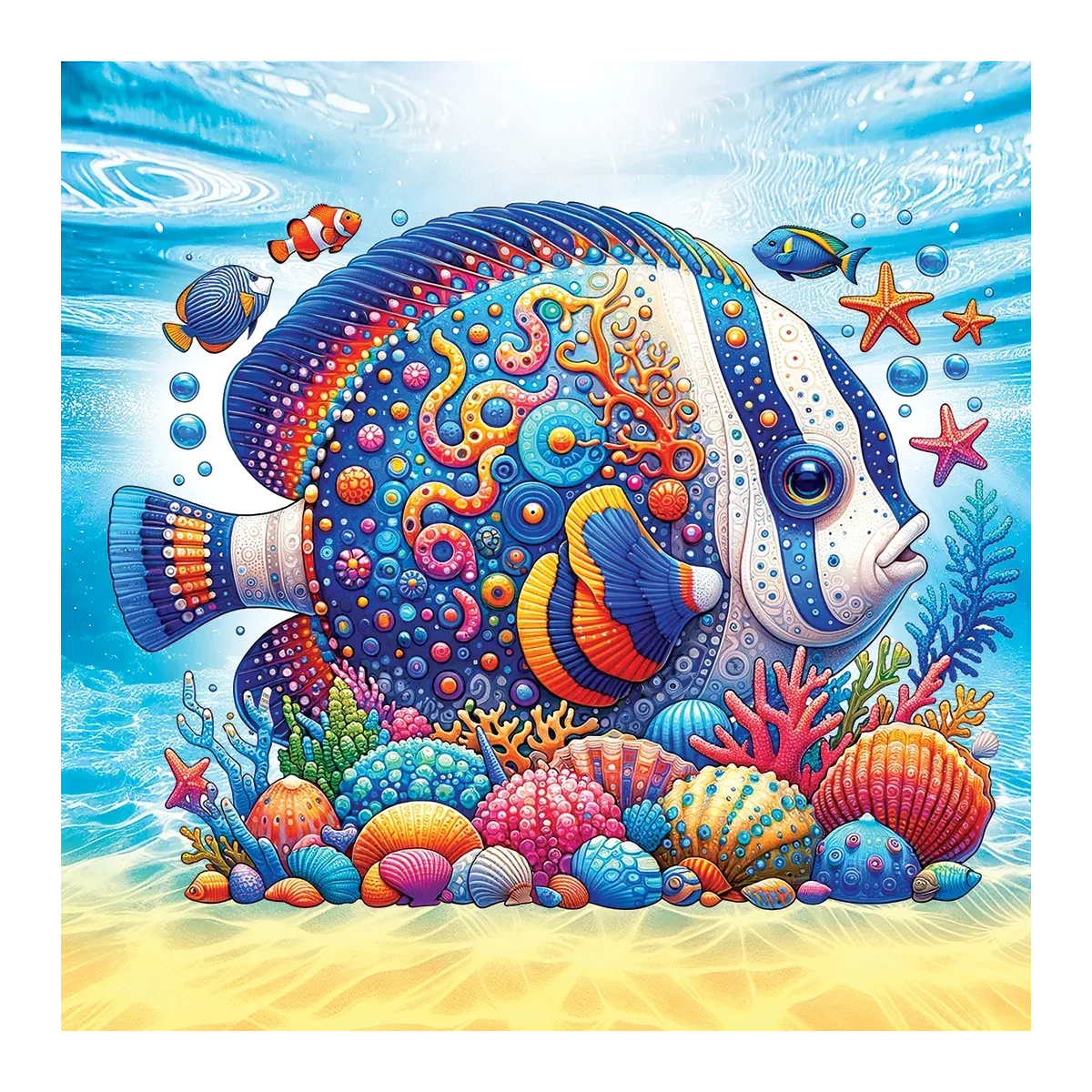
- Exotic Fish 250 Wooden Puzzle: Exotic Fish 250 Wooden Puzzle shows a colorful exotic fish surrounded by shells. The distinct fish and shell shapes give you natural sorting categories, so you can group by motif instead of only by color.