Quick Answer
To identify a rare salt and pepper diamond, look for a balanced mix of white and black inclusions that create a striking pattern, a well-executed cut that maximizes light return, and a unique character that sets it apart from more common stones.
Why Rarity Matters in Salt and Pepper Diamonds
Salt and pepper diamonds are valued for their unique inclusions, but not all are equally rare. The rarest stones have a harmonious distribution of inclusions that create a visually appealing pattern, rather than dense clusters or large cracks that weaken the stone.
A rare salt and pepper diamond often comes from specific mines known for producing stones with distinctive inclusion patterns. However, origin alone doesn't guarantee rarity; the overall visual impact and durability also play a crucial role.
When assessing rarity, consider that each stone is one-of-a-kind. The most sought-after examples have a balanced mix of white and black inclusions that catch light beautifully, making them true conversation pieces.
The Role of Cut in Highlighting Inclusions
The cut of a salt and pepper diamond dramatically affects how its inclusions appear. A well-cut stone will have facets that reflect light through the inclusions, creating a sparkling effect rather than a dull or muddy look.
Rose cuts and trillions are popular choices for salt and pepper diamonds because their open facets showcase the internal pattern. For example, a rose-cut trillion can throw light in every direction, making the inclusions dance like a disco ball.
When examining a stone, look for symmetry and polish. A poorly executed cut can make even a rare inclusion pattern look unappealing, so the cut is just as important as the inclusions themselves.
Steps to Identify a Rare Salt and Pepper Diamond
- Examine the inclusion pattern: Look for a balanced mix of white and black inclusions spread evenly throughout the stone. Avoid stones with large cracks or dense clusters that may weaken the diamond. A rare stone has a visually pleasing, balanced pattern, not just many inclusions.
- Check the cut quality: Assess the symmetry, polish, and facet arrangement. A well-cut stone will reflect light through the inclusions, creating sparkle. Rose cuts and trillions often showcase inclusions beautifully. A poor cut can ruin the appearance of even rare inclusions.
- Evaluate the overall visual impact: Hold the stone under different lighting conditions. A rare salt and pepper diamond should captivate you with its unique pattern and light performance, not look dull or muddy. Trust your eye: if the stone doesn't wow you, it's not rare for you.
- Consider the stone's origin and story: Ask the seller about the diamond's origin and any known characteristics. While origin isn't the only factor, stones from certain mines may have distinctive inclusion patterns that add to their rarity. A documented origin can add value, but the visual pattern is the primary indicator.
- Verify durability: Inspect for large fractures or inclusions that reach the surface, which could compromise the stone's integrity. A rare diamond should be durable enough for regular wear. If you see major cracks, the stone may be more fragile than it is rare.
Salt and Pepper Diamonds in Our Collection
-
Salt & Pepper Diamond 0.73ct – SOLD: This salt and pepper diamond trillion weighs 0.73ct and measures 6mm, with a rose cut that makes facets throw light in every direction. The rose cut maximizes the visual impact of the inclusions, making it a striking example of how cut enhances a salt and pepper diamond's uniqueness.
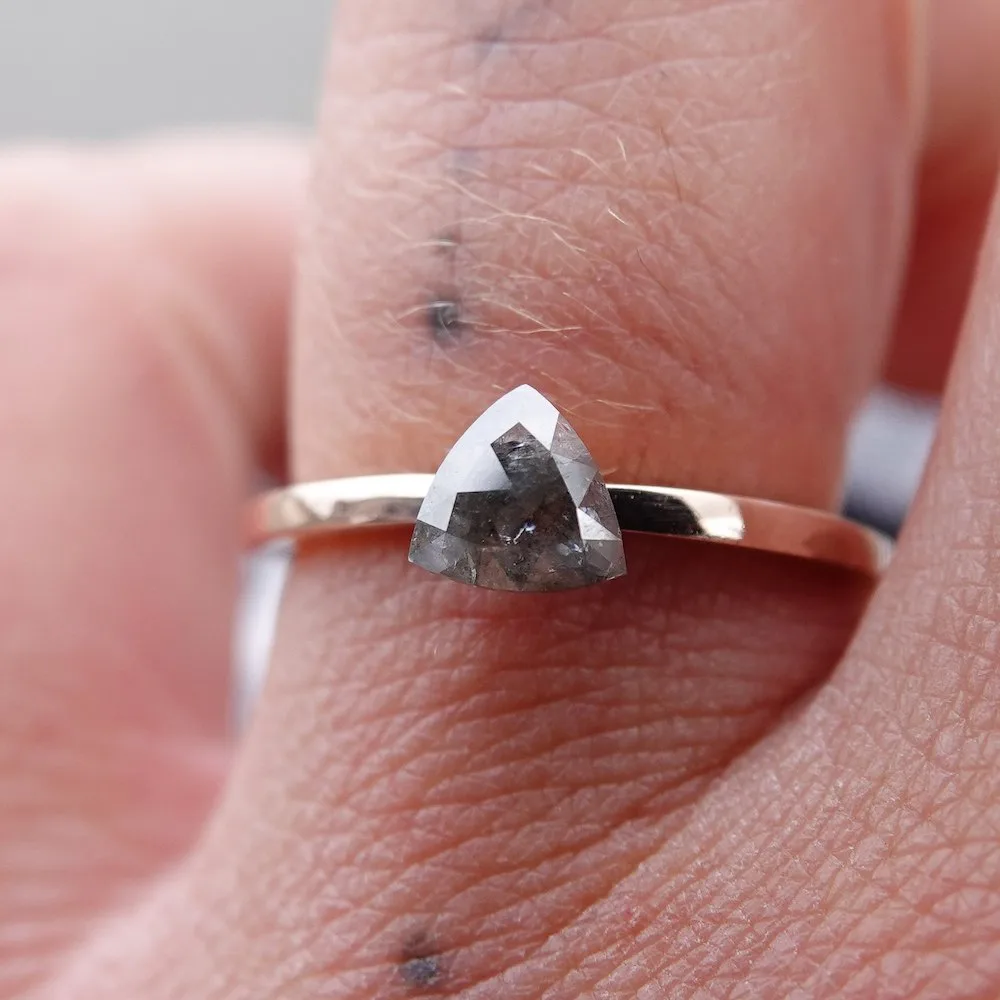
Salt & Pepper Diamond 0.73ct – SOLD
-
Salt & Pepper Diamond 0.46ct – SOLD: This pear-shaped salt and pepper diamond weighs 0.46ct and measures 6.3×4.8mm, with glittering ripples that resemble the sea on a calm night. The pear shape and inclusion pattern create a calming, transfixing effect, showing how shape and inclusion distribution contribute to a stone's character.
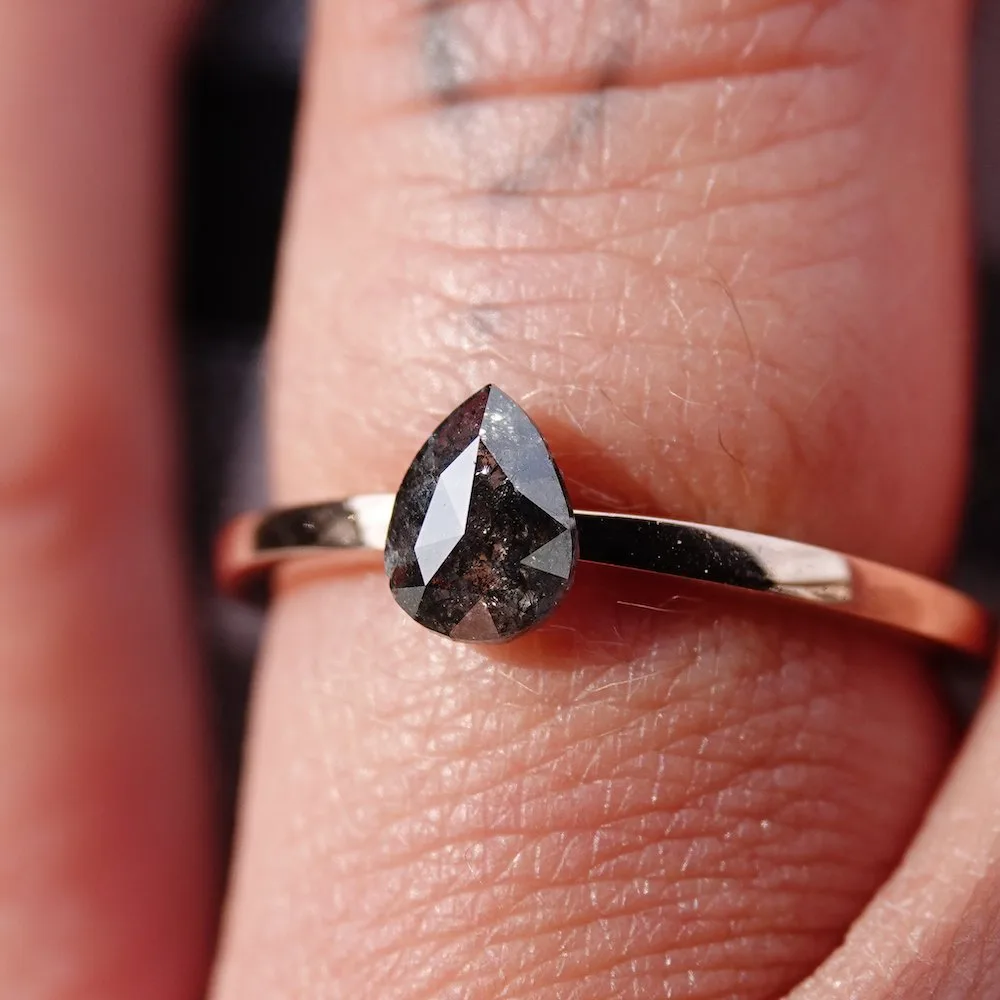
Salt & Pepper Diamond 0.46ct – SOLD