Quick answer
Spot fake anime figures by checking the box print quality and logo placement, the base or foot stamp, paint edges and seam lines, joint fit, and the price versus the official release. If two or more checks fail, treat the figure as a bootleg until the seller proves otherwise with a receipt or a direct-from-Japan dispatch record.
Start with the box, not the figure
Counterfeiters copy the figure first and the packaging last, so the box is usually where a fake gives itself away. Look for blurry or pixelated character art, misspelled Japanese text, a missing Bandai or Banpresto logo, or a logo that is the wrong color or size compared with the official release. Genuine Japanese releases also carry a manufacturer address and a JAN barcode; a box with no Japanese text at all is a strong bootleg sign.
Check the base stamp and foot markings
Most authentic figures have a copyright line, a manufacturer mark, or a production code stamped on the base or the underside of a foot. On a fake, this stamp is often missing, shallow, or printed in the wrong font. Compare the stamp with the copyright year shown on the box: if the box says one year and the base says another, the parts did not come from the same production run. For Prize figures, a clean stamp matters more than a perfect paint job, because the stamp is much harder to fake convincingly.
Inspect paint edges and seam lines
Run a fingernail along the hair tips, belt edges, and any two-tone area. Authentic figures usually have crisp color boundaries; bootlegs bleed paint across the line or leave a visible ridge where two molds meet. Look at the eyes under bright light: genuine decals sit flat and centered, while fakes are often slightly crooked or glossy. A single small flaw is normal on a mass-produced Prize figure, but the same flaw repeated across several areas points to a counterfeit mold.
Test joint fit and stance
If the figure has joints, move one gently. Real joints hold a pose without sagging; fake joints are often loose, squeaky, or too tight and can crack the plastic. Stand the figure on a flat surface and check that both feet touch evenly. A figure that leans or rocks usually has a warped bootleg base, not a shipping problem. Do not force a stiff joint, because a snapped peg cannot be repaired and will not be covered as a defect.
Six-step authenticity check
- 1. Verify the release exists: Search the character name plus the series and prize letter, such as Prize A or Prize C, and confirm the figure was actually produced. If no official listing appears, stop here. Checkpoint: a real release has a series name, a prize rank, and a manufacturer.
- 2. Compare the box print: Put the seller's box photos next to official images and check logo color, font weight, and Japanese text. Blurry art or a missing Bandai or Banpresto logo is a bootleg sign. Mistake to avoid: trusting a clean box photo that hides the logo side.
- 3. Find the base or foot stamp: Ask for a close-up of the base underside or foot. Look for a copyright line, manufacturer mark, or production code that matches the box year. Checkpoint: no stamp at all is a stronger warning than a slightly imperfect paint edge.
- 4. Inspect paint and seams in daylight: Request photos of the face, hair tips, and any two-tone area under neutral light. Crisp edges and flat eye decals are good; bleeding color and ridges are not. Mistake to avoid: judging paint from a single filtered photo.
- 5. Test joint fit and stance: If you can handle the figure, move one joint gently and stand it on a flat surface. Loose joints, squeaks, or a rocking stance suggest a counterfeit base or mold. Checkpoint: both feet should touch evenly without force.
- 6. Sanity-check the price and seller: Compare the asking price with the official release price and the current market. A sealed Prize figure far below the usual range, or a seller who cannot confirm dispatch from Japan, is a red flag. Next step: if two or more steps fail, walk away or ask for a receipt and a Japan dispatch record.
Authentic examples to compare against
- Ichiban Kuji Dandadan Dance In The Music Room Begins Prize A Okarun Figure: Ichiban Kuji Dandadan Dance In The Music Room Begins Prize A Okarun Figure, Bandai, Okarun Turbo Granny Transformation (Prize A MASTERLISE), 7.02 inches / 18 cm, authentic Japan figure dispatched from Osaka. Use the listed 18 cm height and MASTERLISE prize label as a reference point when a seller's photos show a much shorter or unlabeled Okarun.
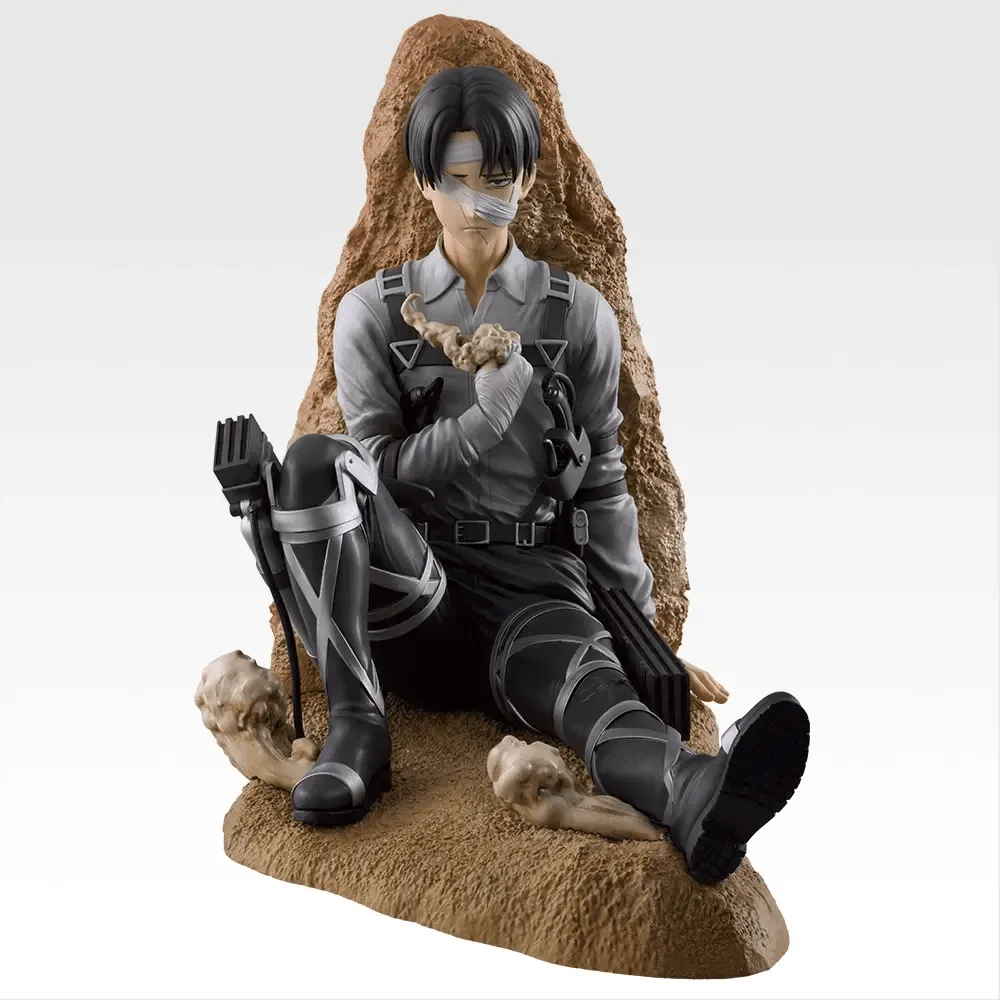
- Ichiban Kuji Attack on Titan Each One’s Resolve Prize C Levi Figure: Ichiban Kuji Attack on Titan Each One's Resolve Prize C Levi Figure, Bandai, Levi Ackerman (Prize C Dedicate Your Hearts), 4.29 inches / 11 cm, authentic Japan figure dispatched from Osaka. A 11 cm Levi is a small prize figure, so expect a compact box and a base stamp rather than a large scale-figure presentation box.
- Banpresto Umamusume: Pretty Derby Rice Shower Casual Wear Ver. Figure: Banpresto Umamusume: Pretty Derby Rice Shower Casual Wear Ver. Figure, Bandai Banpresto, Rice Shower Casual Wear Ver., 6.24 inches / 16 cm, authentic Japan figure dispatched from Osaka. Banpresto prize figures are heavily counterfeited, so verify the Banpresto logo and the 16 cm height before trusting a low price.