Quick Answer
Start your Candela Obscura campaign journal by capturing the essentials—your circle, the assignment, and key clues—then build a consistent note-taking rhythm that works at the table.
Why a campaign journal matters in Candela Obscura
Candela Obscura is a horror investigation TTRPG where details and atmosphere matter. A campaign journal helps you track clues, NPCs, and the creeping dread your Lightkeeper describes—so you don't forget the thread that connects one session to the next.
Journaling also gives you a space to reflect on your character's arc and the moral costs of wielding magic. That reflection can make your decisions at the table more deliberate and more satisfying.
Trade-offs: digital vs. paper journaling
Digital notes are searchable and easy to edit, but they can feel disconnected from the tactile, atmospheric tone of the game. Paper journals keep everything in one place and add a ritual feel, but they require more handwriting and can be slower to update during play.
A hybrid approach works well: use a paper journal for character voice and session summaries, and keep a digital doc for searchable clue lists and NPC records. Choose the method that fits your table's pace and your personal style.
Your First Campaign Journal in 5 Steps
- Set up your journal's front matter: Dedicate the first page to your circle's name, your character's name, and a one-line summary of your current assignment. Add a section for the Lightkeeper's name and the session date so you can quickly orient yourself when you reopen the journal. Check that you have a clear 'who, what, when' on the first page—this prevents confusion later.
- Create a clue tracker: Reserve a page or spread for clues. For each clue, write a short description, where you found it, and any connections you suspect. Use symbols or color coding to mark whether a clue is confirmed, speculative, or dead-ended. Keep the clue tracker separate from your session summary so you can scan it quickly without rereading pages of prose.
- Write session summaries in character: After each session, write a brief summary from your character's perspective. Include what happened, what you learned, and how your character feels about it. This builds a rich narrative record and helps you stay in character between sessions. If you miss a session, ask a fellow player for a quick recap so your summaries stay consistent.
- Track NPCs and factions: Keep a dedicated page for NPCs you've met. For each, note their name, appearance, attitude toward your circle, and any secrets you've uncovered. Add a section for factions or organizations you suspect are pulling strings. Update NPC entries as new information emerges—don't let them become static.
- Review and update before each session: Before you sit down to play, spend two minutes reviewing your clue tracker and NPC list. Highlight any loose ends you want to follow up on. This keeps your journal active rather than a passive record. If you don't know what to investigate next, your journal should point you to an unresolved thread.
A Journal Built for the Investigation
-
Candela Obscura Investigator’s Journal: The Candela Obscura Investigator’s Journal includes an expandable inner pocket, custom printed letterhead on each page, a ribbon bookmark, and an elastic band. The expandable pocket is perfect for stashing loose handouts or index cards, while the letterhead and bookmark keep your notes organized and easy to flip back to.
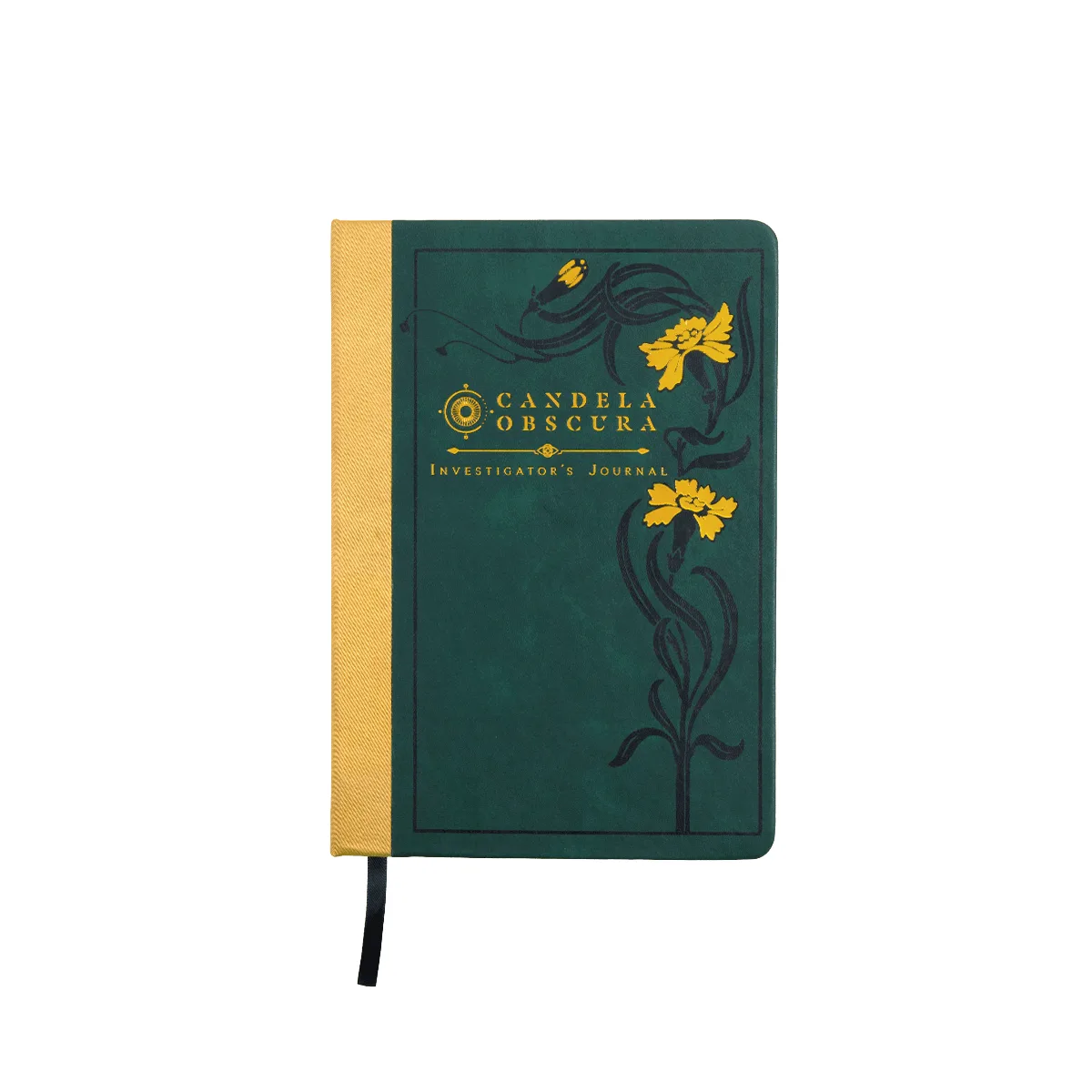
Candela Obscura Investigator’s Journal