Quick answer
Stop cat scratching furniture by giving your cat a better scratching option and making the sofa less rewarding. Place a sturdy cardboard scratcher directly beside the damaged spot, reward scratching there, and cover the furniture edge temporarily. Cats scratch to mark territory and shed claw sheaths, so blocking alone rarely works without a replacement surface.
Why your cat targets the sofa instead of the scratcher
Cats scratch for three reasons: to shed old claw layers, to stretch, and to leave both visual and scent marks. A sofa corner is tall, stable, and in a busy room, which makes it excellent territory-marking real estate. A small, wobbly scratcher on the floor does not compete with that.
Punishment backfires because it does not remove the reason for scratching. It only teaches your cat to scratch when you are not watching. The practical fix is to make the unwanted spot less useful and the approved surface more attractive.
- Scratching is normal marking behavior, not spite.
- Vertical height and stability matter as much as material.
- The scratcher must sit where your cat already scratches, not in a spare room.
Choose the right surface for your cat's style
Watch how your cat scratches before buying anything. Cats who reach up and pull down want a vertical surface. Cats who crouch and rake toward themselves want a flat pad. Some cats do both.
Cardboard works because it is dense enough to catch claws and cheap enough to replace when it shreds. Corrugated cardboard pads suit horizontal scratchers especially well. For vertical pullers, a cardboard box-style scratcher that also functions as a bed can hold position better than a thin pad that slides.
- Horizontal scratcher: flat pad on the floor near the sofa.
- Vertical scratcher: tall, stable post or box your cat can grip.
- Mixed scratcher: offer one of each and note which gets used.
Place the scratcher where the scratching happens
This is the step most owners skip. Putting the new scratcher across the room and hoping your cat finds it rarely changes behavior. Place it within a few feet of the damaged furniture, ideally touching or overlapping the scratch zone.
Once your cat uses it consistently for a week or two, you can move the scratcher a few inches at a time toward its permanent spot. Move too fast and your cat will return to the sofa.
- Start beside the sofa arm or corner being scratched.
- Keep the scratcher in a room your cat already spends time in.
- Move it gradually only after consistent use.
Make the sofa boring and the scratcher rewarding
Temporarily cover the scratched area with a tightly fitted throw, double-sided tape, or a plastic sheet. The goal is not to scare your cat but to remove the satisfying texture and grip. Combine this with a reward every time you see your cat using the scratcher.
A treat, a calm verbal marker, or a short play session right after scratching reinforces the habit. Do not pick your cat up and place their paws on the scratcher; that usually creates resistance.
- Cover the sofa edge until the new habit sticks.
- Reward scratching on the approved surface immediately.
- Never punish or spray; it damages trust and hides the behavior.
Cardboard scratcher vs scratching post: which to use
A cardboard scratcher is inexpensive, easy to replace, and often preferred by cats who like a rough, shreddable surface. A carpeted or sisal post lasts longer but some cats ignore it because the texture is too soft or too loose.
Many cats do best with both. Use a cardboard pad or box for daily claw maintenance and a stable post for full-body stretching. If your cat only scratches horizontally, a cardboard pad is often the faster fix.
- Cardboard: best for horizontal scratchers, low cost, replaceable.
- Sisal or carpet post: best for vertical pullers, longer lifespan.
- Both: covers stretching and claw-shedding needs.
Your 7-step redirect plan
- Identify the exact scratch spot: Look for frayed fabric, pulled threads, or a repeated corner. Note whether your cat reaches up or crouches down while scratching. Checkpoint: you should be able to point to one specific location and one scratching posture.
- Match the scratcher to that posture: Choose a flat cardboard pad for horizontal raking or a stable box or post for vertical pulling. Do not buy a tall post if your cat only scratches the floor. Checkpoint: the scratcher surface should feel firm, not soft or loose.
- Place it beside the damage: Put the scratcher within a few feet of the scratched furniture, ideally touching it. Keep it in the same room your cat already uses. Common mistake: placing it in a quiet corner where your cat never scratches.
- Cover the sofa edge temporarily: Wrap a throw tightly over the scratch zone or apply double-sided tape. This removes the grip and texture that make the sofa rewarding. Checkpoint: your cat should not be able to sink claws into the covered area.
- Reward every approved scratch: The moment your cat uses the scratcher, offer a treat, a calm marker word, or a short play session. Timing matters more than the reward size. Common mistake: rewarding after your cat has already walked away.
- Trim claws and refresh the surface: Keep claws blunt with regular trims and replace or rotate cardboard pads when they become shredded and flat. A worn pad loses its grip. Checkpoint: if the pad is smooth or falling apart, it is time to replace it.
- Move the scratcher gradually: After one to two weeks of consistent use, shift the scratcher a few inches at a time toward its permanent spot. Stop if your cat returns to the sofa. Next step: once the habit holds, remove the sofa cover and keep the scratcher in place.
Cardboard scratchers worth trying
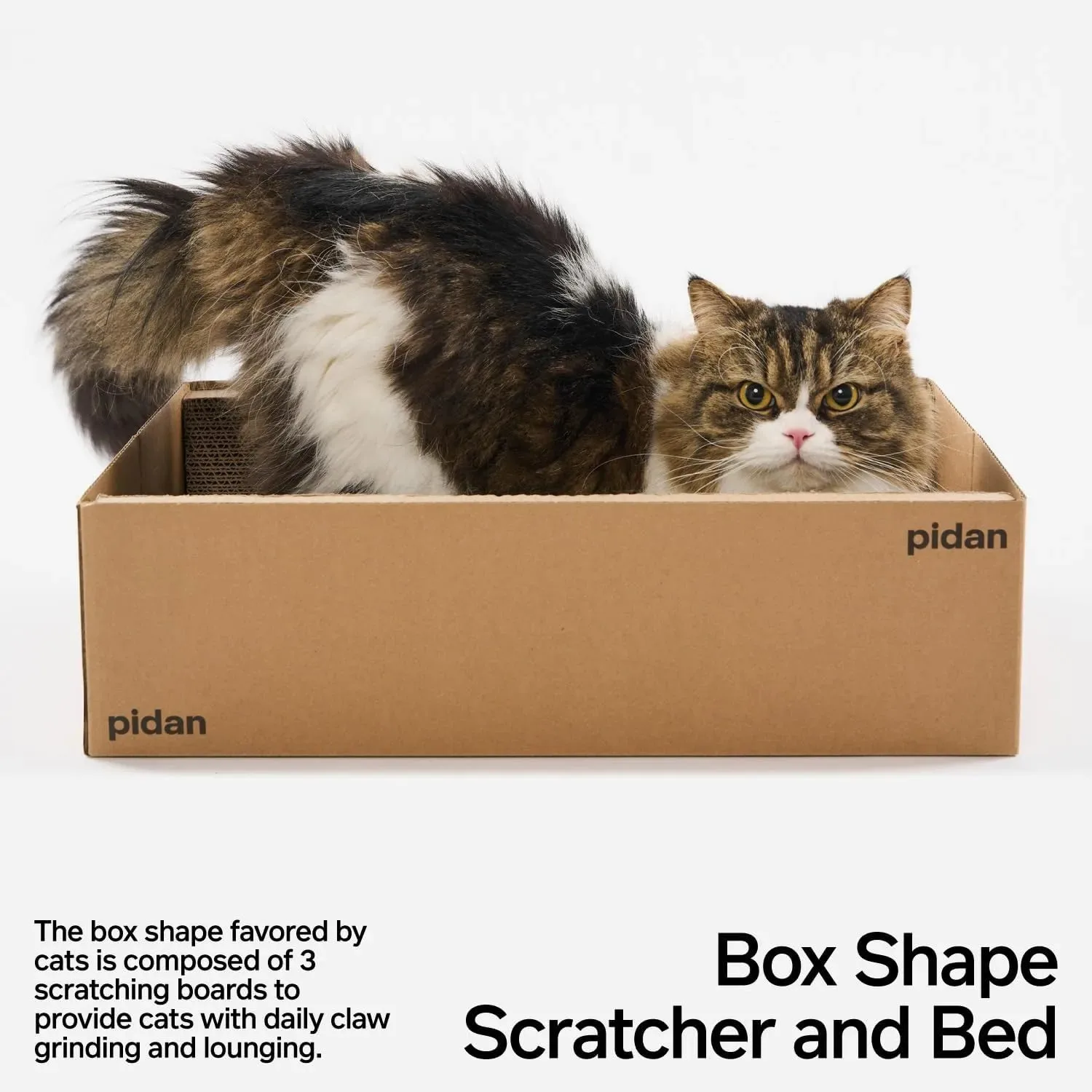
- pidan Cardboard Box Cat Scratcher: Made from high-proportion virgin wood pulp, A-grade corrugated base paper, and A-grade kraft paper with a smooth texture and optimum hardness. Dense corrugated cardboard catches claws without crumbling immediately, so it holds up to daily scratching better than loose or thin pads.
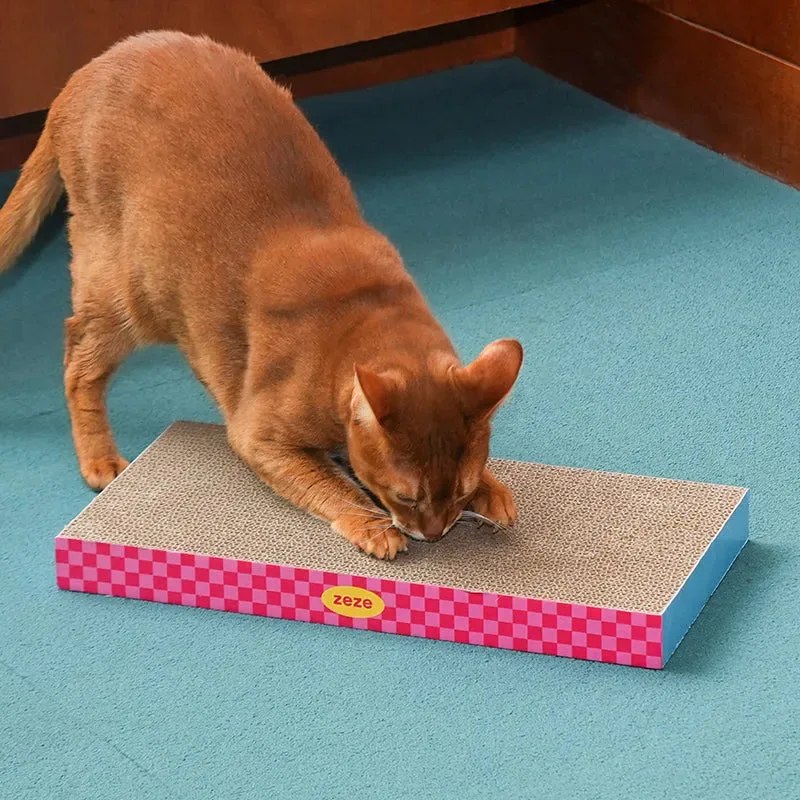
- ZEZE Neon Sweetheart Cat Scratcher – 44cm Corrugated Cardboard Pad: 44 cm corrugated cardboard scratcher pad with a neon checkerboard print along both long sides. A flat 44 cm pad suits cats who scratch horizontally; the printed sides make it easy to leave out in a living room instead of hiding it.
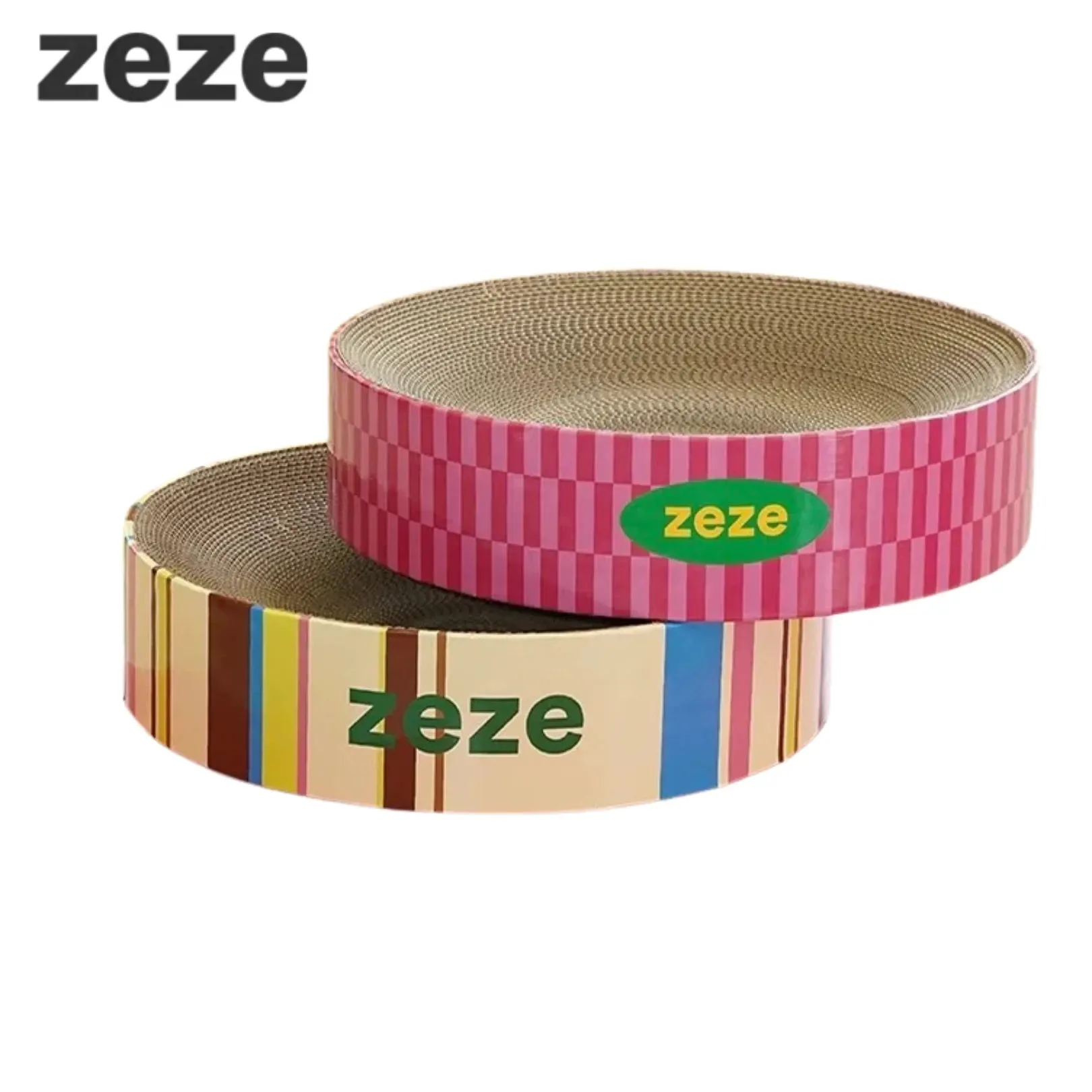
- ZEZE Retro Cat Scratcher – 3-in-1 Cardboard Bed & Play Lounge: 3-in-1 scratcher, lounge, and play nest with a curved bowl-shaped structure. The concave shape gives cats a stable place to scratch and then settle, which can keep them near the scratcher instead of returning to the sofa.